

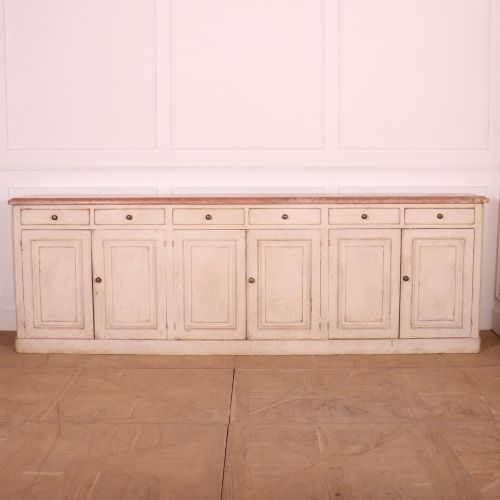
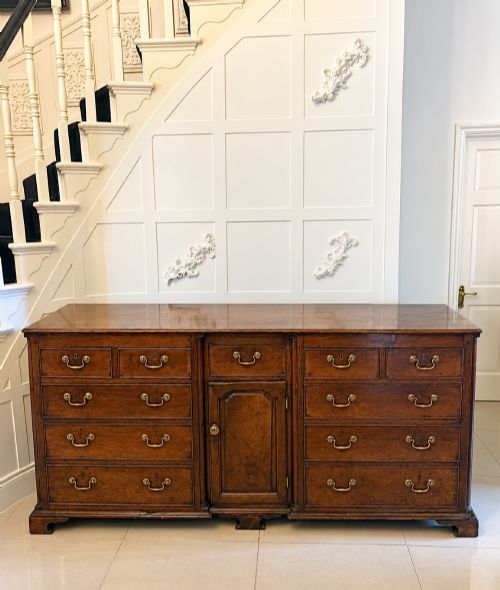
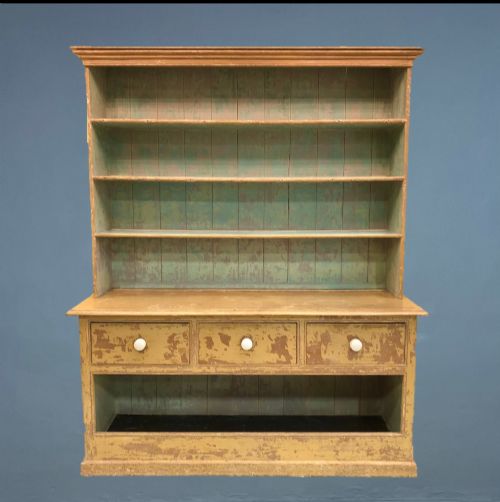
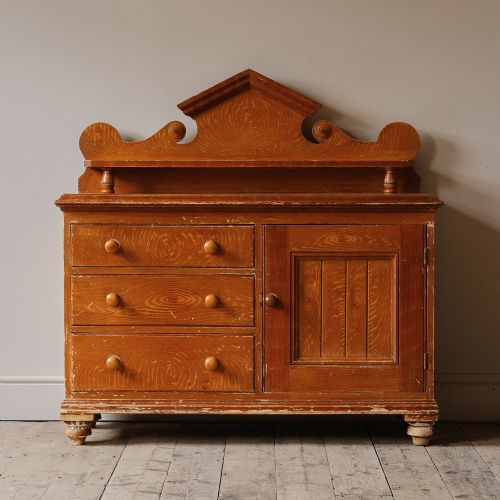


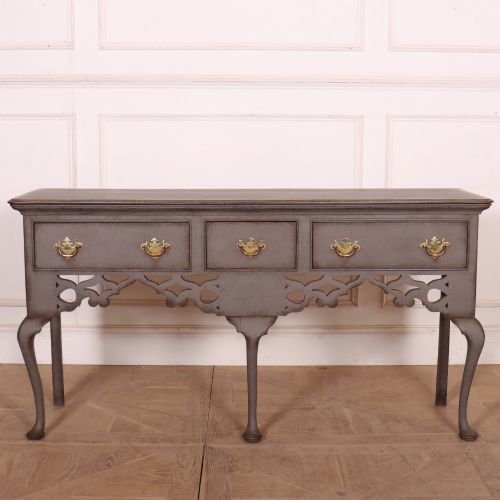
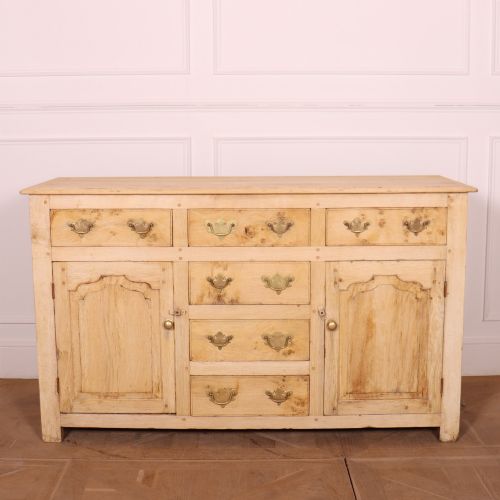
Antique Country Sideboard
An antique country sideboard brings honest, working-timber character to a room through centuries of utilitarian craft.
Antique Country Sideboard
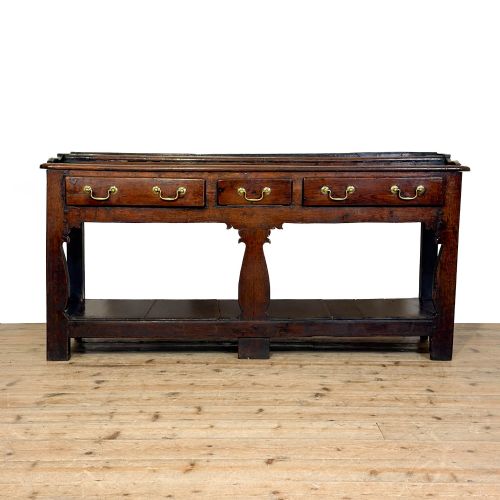
When you search for an antique country sideboard, you encounter substantial utilitarian furniture built for rural domestic life rather than formal salons. These pieces span dresser bases, potboards, and low cupboards originating from regional British workshops and continental farmhouses.
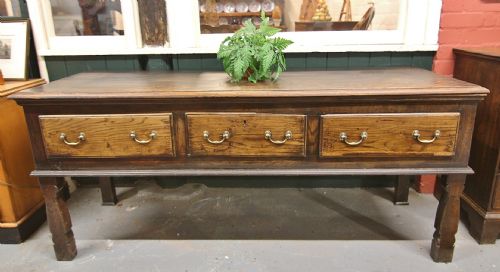
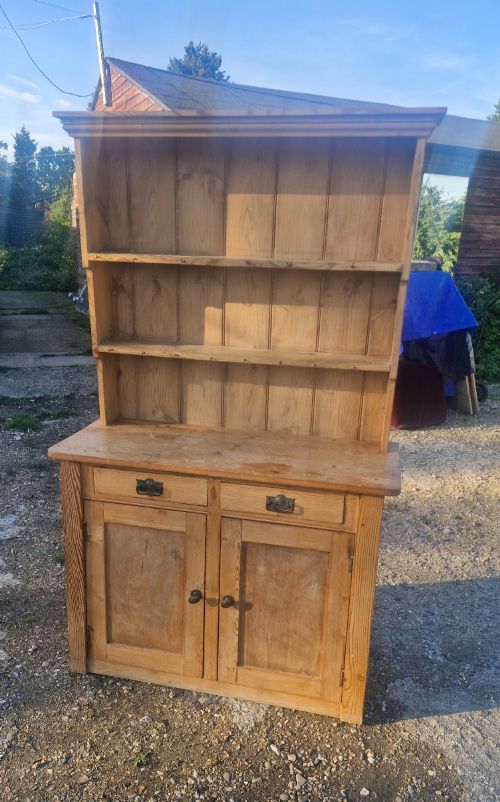
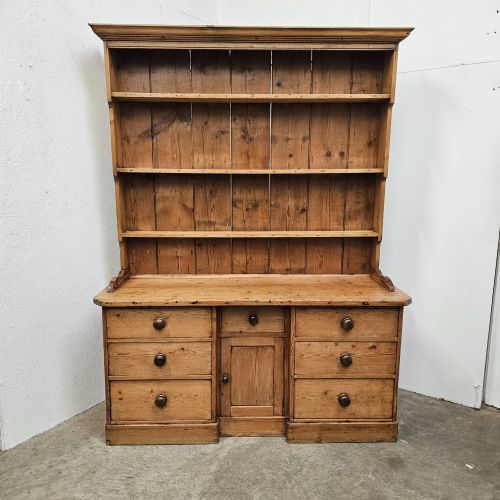
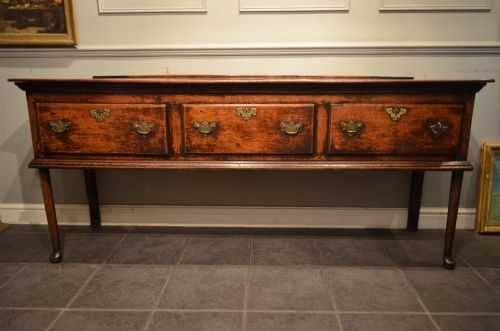
The most common examples on this page are oak and pine dresser bases and sideboards dating from the eighteenth and nineteenth centuries. These sturdy storage pieces combine deep drawers and lower shelves designed originally for farmhouse kitchens and pantries.
Materials and Construction
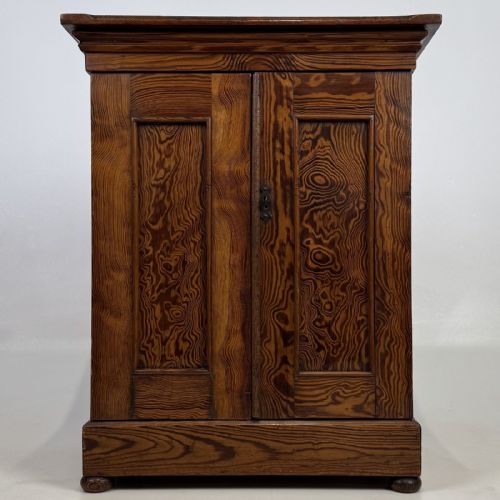
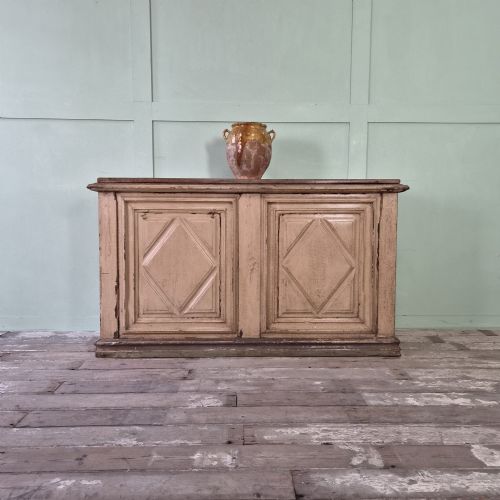
Makers relied heavily on solid oak and pine, supplemented by elm and mahogany for specific structural or decorative elements. Surfaces were frequently left untreated, waxed, or finished in historic painted coats that developed rich patinas through decades of daily use.
Hardware typically involved cast brass drop handles and keyplates fixed to heavy timber drawer frames joined with traditional pegs and dovetails. Iron hinges and glass panels appear on later cupboards and glazed top additions.
Antique Country Sideboard Retail Price Guide 2026
Typical asking prices for country sideboard among the pieces listed under this phrase on Sellingantiques today, from the lower quarter to the upper quarter. They describe what is for sale here now, not the wider market.
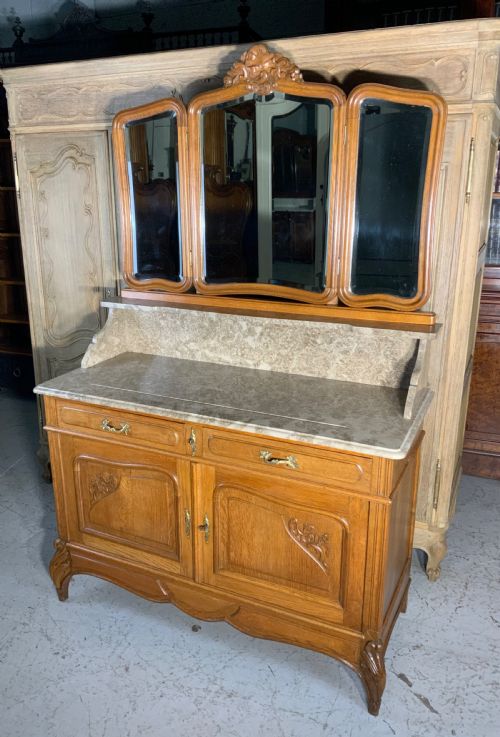
Listings feature oak, pine, and elm sideboards spanning the eighteenth and nineteenth centuries, alongside painted continental pieces.
Assessing Quality
Quality rests primarily in the integrity of the timber selection and the retention of original surface finishes and patination. Superior examples display dense, well-figured grain without excessive timber replacement in the primary carcase.
Proportion and regional detailing set finer pieces apart from standard utility items. Well-executed mouldings, crisply carved panels, and original brass hardware elevate a basic kitchen base into a sophisticated regional statement.
The Antique Country Sideboard Glossary
- Dresser base
- A low wooden sideboard fitted with drawers and frequently a lower potboard shelf, lacking the upper plate rack of a full dresser. This form served as a primary food preparation and storage surface in historic kitchens.
- Potboard
- An open slatted lower shelf incorporated into the base of a dresser or sideboard for storing heavy pots and pans. This structural feature helps stabilize the upright legs.
- Patina
- The deep, lustrous surface sheen developed on timber through age, handling, and wax polishing over generations. It provides a visual indicator of authenticity and continuous use.
- Enfilade
- A long continental sideboard or buffet featuring a continuous line of multiple doors, typically three, used for serving and storage in dining spaces.
- Breakfront
- A cabinet or sideboard whose central section projects forward from the flanking outer sections, creating architectural depth.
Antique Country Sideboard: Frequently Asked Questions
What is an antique country sideboard?
An antique country sideboard is a utilitarian storage cabinet or dresser base built from regional timbers like oak and pine for rural homes.
These pieces were constructed for daily domestic work in kitchens and pantries, offering deep drawers and surface space rather than formal display.
How do I tell an 18th-century piece apart from a Victorian one?
Eighteenth-century pieces typically feature hand-cut dovetails, pegged joints, and heavy native oak with deep natural patinas built up over generations of use.
Victorian and later items often incorporate machine-sawn timber, softer pine, or different secondary woods alongside more standardised iron and brass hardware.
Were these sideboards used only in kitchens?
While primarily designed for rural farmhouses and country kitchens to store food and utensils, many served dining rooms and pantries.
Larger versions with potboards and cupboards accommodated heavy kitchen wares, while refined variations functioned as serving tables.
How do I care for a waxed oak sideboard?
Maintain the timber surface by applying a quality beeswax sparingly and buffing it gently with a soft cloth to preserve the historic finish.
Keep the piece away from direct heat sources and strong sunlight to prevent the solid wood from drying out or splitting.