
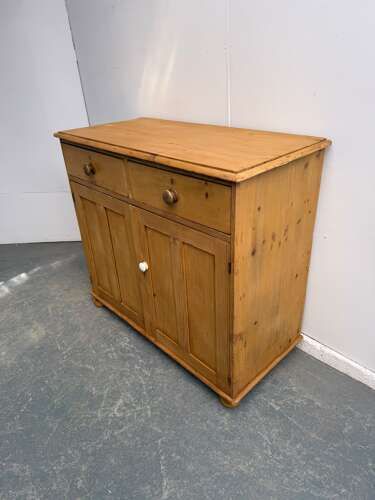
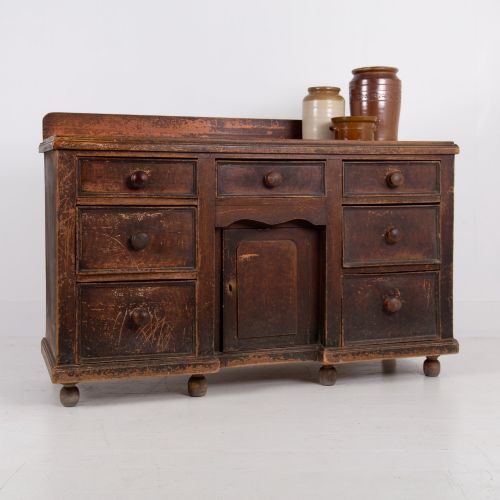

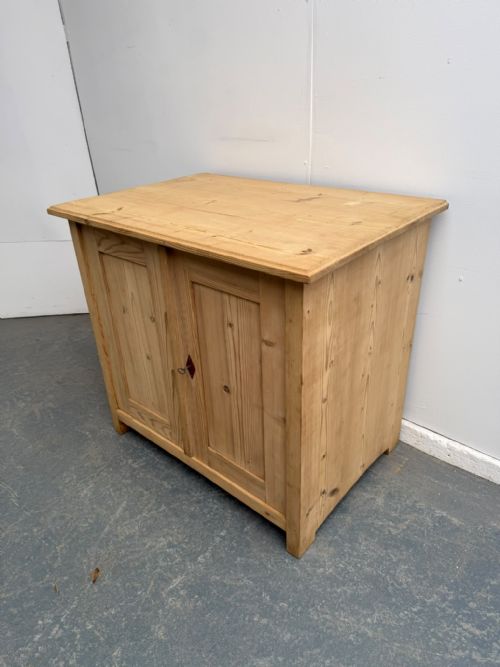
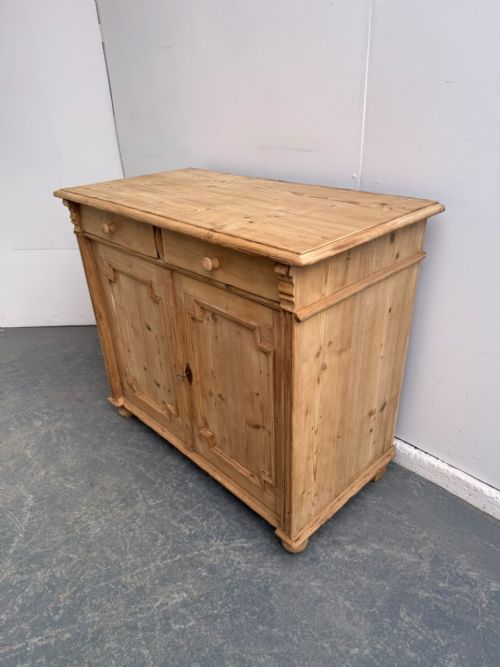


Traditional Pine Credenza
These traditional pine credenza options bring honest utility and warm timber grain to a room, offering sturdy storage rooted in centuries of vernacular craft.
Traditional Pine Credenza
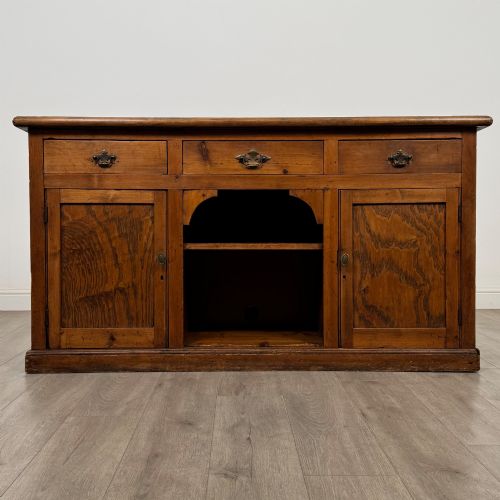
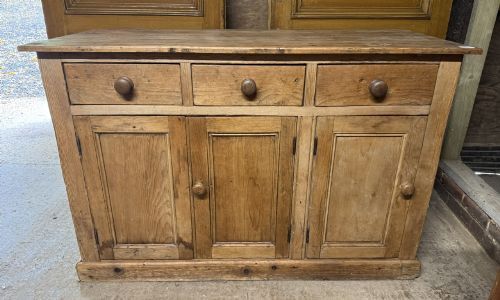
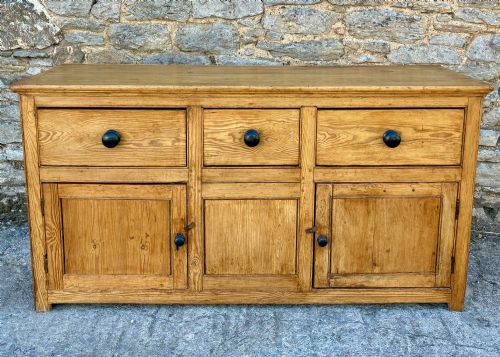
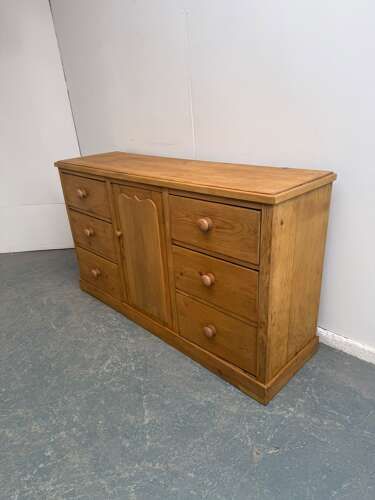
A traditional pine credenza search brings up robust storage furniture built for practical rooms, spanning dresser bases, cupboards, and chiffoniers. These utilitarian pieces originate primarily from the nineteenth century, encompassing Victorian and Georgian eras alongside country house styles.
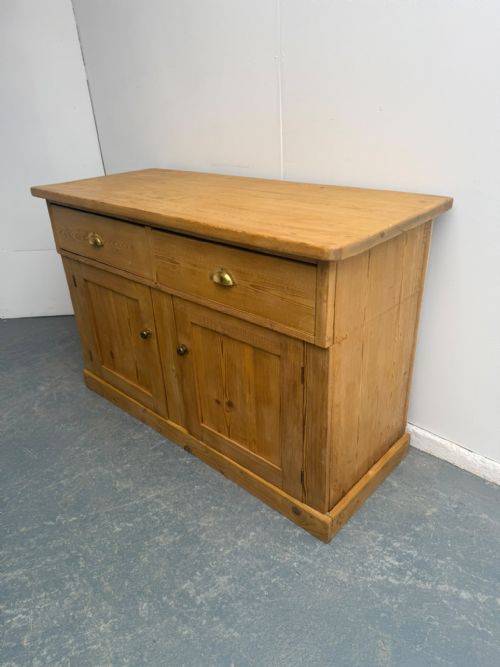
The most common formats on this page are dresser bases and storage cupboards, often featuring two doors and two drawers. They emerge from domestic and institutional settings, displaying straightforward proportions built for daily use rather than formal display.
What varies in quality
Quality rests in the integrity of the timber and the retention of original surfaces, whether that is aged wax or untouched historic paint. Pieces with balanced proportions and uncompromised structural frames stand apart from simpler iterations.
Finer examples show thoughtful joinery and minimal alterations over time. The character of the wood grain and the natural softening of edges through decades of handling define the upper tier of these utilitarian forms.
Listings span from the 18th century through the Victorian era, showcasing solid pine, painted wood, and brass hardware.
Melissa White
The Traditional Pine Credenza Glossary
- Dresser base
- A low sideboard or cabinet featuring cupboards and drawers, traditionally used in kitchens for food preparation and storage. It forms the lower section of a larger kitchen dresser.
- Chiffonier
- A low sideboard or cabinet developed in the Regency period, equipped with doors enclosing shelving for domestic storage. It provides a more compact alternative to full-scale sideboards.
- Potboard
- An open slatted lower shelf built into dresser bases to store heavy kitchen pots and pans. This practical feature distinguishes traditional country furniture.
- Housekeeper cupboard
- A tall storage cabinet designed for linens, dry goods, and household provisions in large country houses. They utilise deep proportions and sturdy shelving.
- Waxed finish
- A surface treatment using natural wax applied to bare pine to nourish the timber and develop a soft sheen. This finish highlights the natural knots and grain of the wood.
Traditional Pine Credenza: Frequently Asked Questions
What is a traditional pine credenza?
A traditional pine credenza is a robust storage piece, typically encompassing nineteenth-century dresser bases, cupboards, and chiffoniers built from solid pine.
These items were originally made for kitchens, country houses, and schools to handle heavy domestic storage before finding a place in modern interiors.
How do I care for waxed pine furniture?
Waxed pine benefits from occasional applications of beeswax to nourish the timber and maintain its protective layer against moisture. Avoid placing these pieces near direct heat sources to prevent the wood from splitting.
Cleaning should be done with a soft, dry cloth rather than harsh modern chemical polishes.
Are these pieces painted or natural wood?
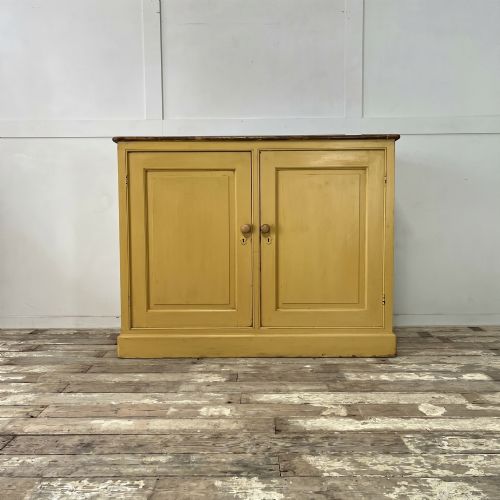
The inventory includes both waxed natural pine and examples retaining their original historic paint or schoolhouse finishes. Some pieces are left bare or stripped for buyers to wax or paint themselves.
Original paint surfaces add distinct character and show the working history of the cabinet.
How do I date a nineteenth-century pine cupboard?
Dating relies on construction methods, hardware types, and timber characteristics observed across Georgian, Victorian, and Regency periods. Hand-cut joints and original iron or brass fittings help establish the era of manufacture.
Stylistic cues such as potboard bases or chiffonier formats also point to specific decades of origin.