

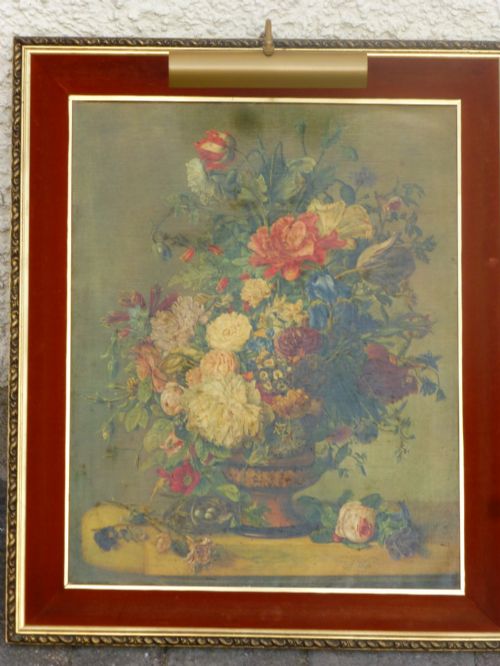
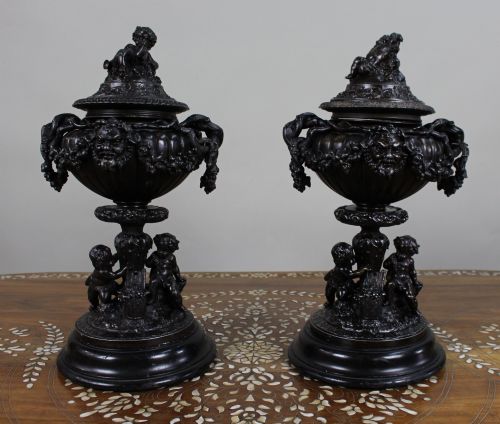
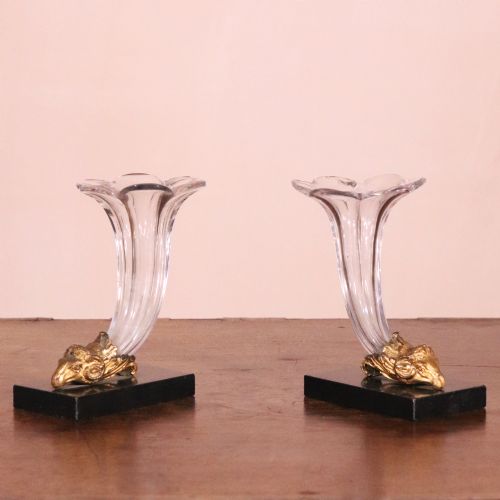
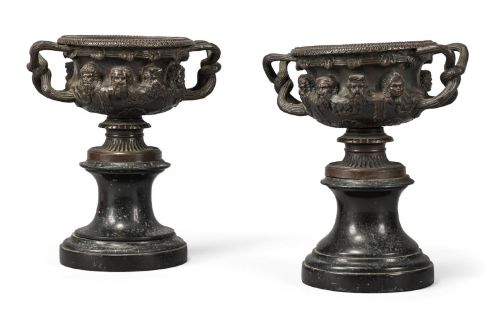
Antique Classical Vases
These antique classical vases bring the enduring poise of ancient Greece and Rome straight into a nineteenth-century interior.
Antique Classical Vases
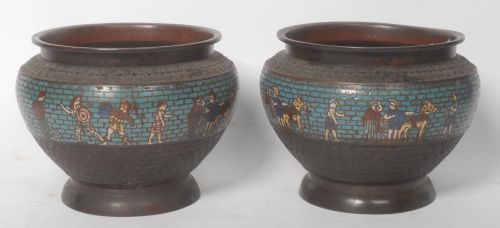
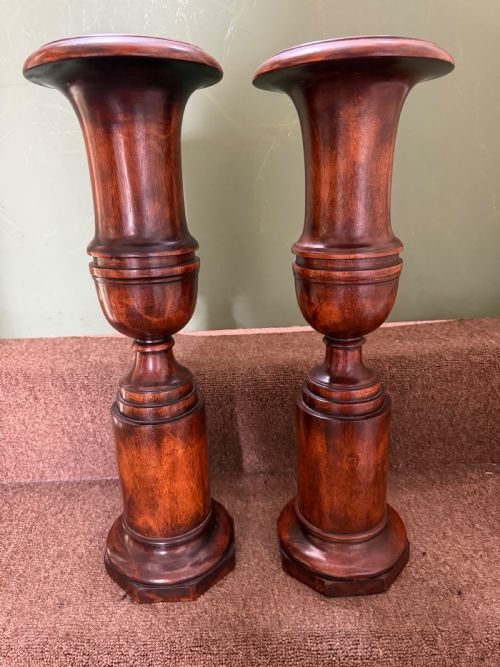
When you search for antique classical vases, you encounter decorative vessels shaped by nineteenth-century revivals of Greek and Roman forms. The pieces on this page lean heavily towards Grand Tour souvenirs, French Empire designs, and Victorian interpretations of antiquity.
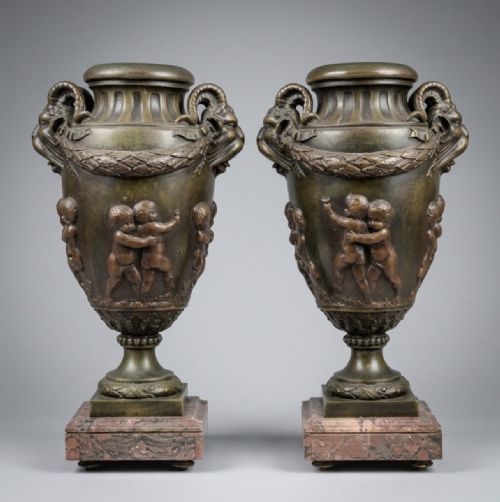
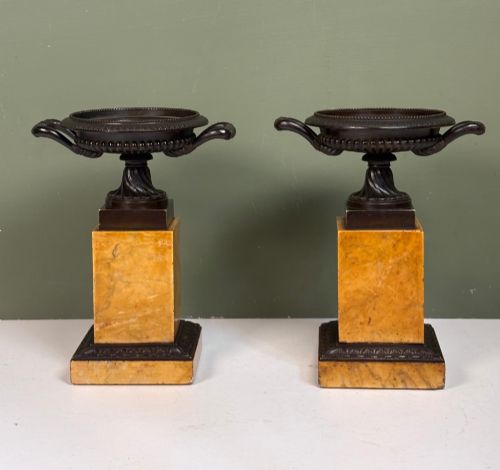
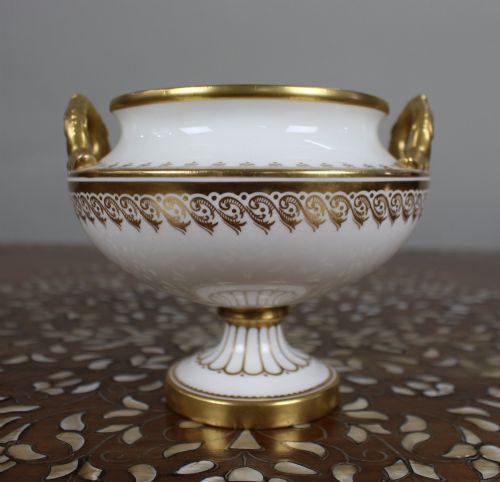
The most common formats you meet are campana urns, tazzas, and architectural ewers rather than fragile earthen vessels from ancient excavations. These later objects were cast in bronze, turned in marble, or thrown in porcelain to serve as formal garnitures and centrepieces.
Makers drew directly from archaeological discoveries, producing bronze reductions of famous monuments like the Warwick and Albani vases. They sit comfortably on pedestals, mantelpieces, and garden terraces, carrying forward motifs of acanthus leaves, Bacchic masks, and putti.
Materials and methods
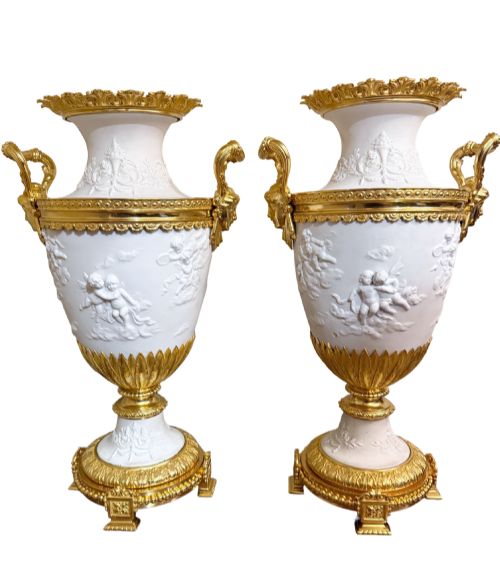
Foundry workers cast bronze and spelter using traditional methods, frequently applying patination, gilding, or ormolu mounts to heighten sculptural detail. Many metal urns combine patinated bodies with polished brass handles or gilt bronze enrichment.
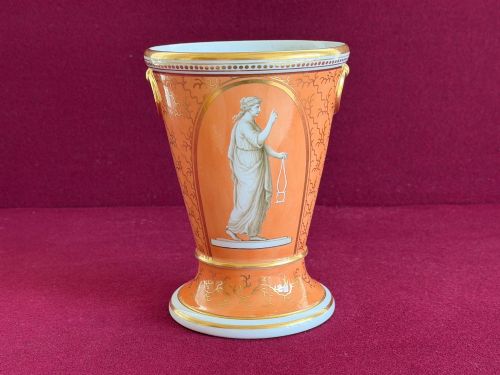
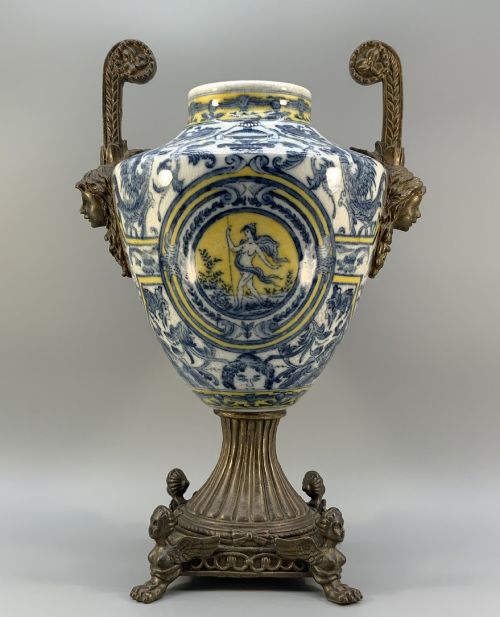
Potteries shaped kaolin into fine porcelain bodies, applying enamel painting and gilt highlights before high-temperature firing. Factories like Vienna and Worcester produced lidded amphorae and jardinieres with crisp neoclassical decoration.
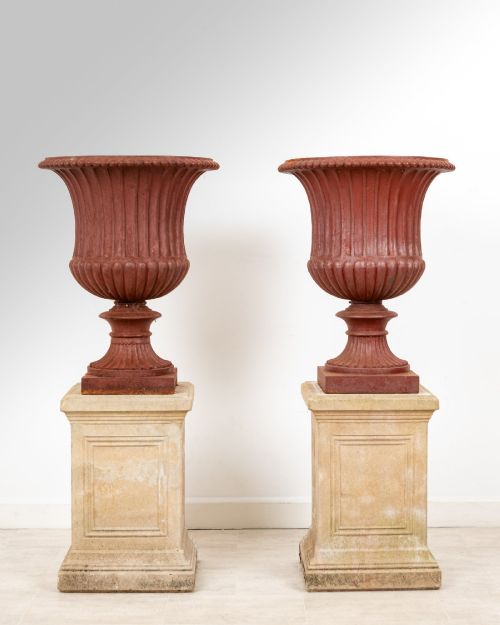
Masons turned blocks of white onyx, Sienna marble, and cast iron into solid pedestals, cassolettes, and terrace urns. These heavy mineral supports provided the necessary counterweight and architectural dignity for large display vessels.
The archive includes souvenir bronzes, Regency gilt vessels, and Victorian campana urns.
Judgements of quality
The selection of secondary materials heavily influences the overall execution. Superior pieces utilise genuine Sienna or white onyx marble bases fitted with finely hand-chased ormolu mounts rather than plain plated alloys.
Painted porcelain achieves distinction through precise brushwork and stable enamel adherence, particularly on signed amphorae and finely gilded garnitures.
Coalbrookdale·Flight And Barr Worcester·Meissen·R Lalique·Sevres·Vienna
The Antique Classical Vases Glossary
- Campana urn
- A bell-shaped vessel with a flared lip and foot, derived from ancient pottery forms. These pieces often feature scrolling handles and classical friezes.
- Grand Tour
- A cultural journey undertaken by wealthy Europeans in the eighteenth and nineteenth centuries. Souvenirs purchased on these travels included bronze reductions of famous antique monuments.
- Ormolu
- Gilt bronze produced by applying a mercury-gold amalgam to a base metal. This technique imparts a rich golden lustre to mounts and handles.
- Ewer
- A large jug with a wide spout and looped handle, modeled after classical vessels used for pouring water. Victorian examples frequently double as decorative display ewers.
- Tazza
- A shallow bowl set upon a pillar and foot, resembling a formal drinking vessel. These objects were cast in bronze or turned in marble for display.
Antique Classical Vases: Frequently Asked Questions
What is a campana urn?
A campana urn is a bell-shaped vessel that mimics ancient garden and table pottery found in archaeological digs across Italy. Nineteenth-century founders cast these pieces in bronze, iron, and spelter to decorate formal rooms and terraces.
Their characteristic flared rims and mounted handles make them instantly recognisable among classical revivals.
How do I style these vases at home?
These decorative objects work best as symmetrical pairs on mantelpieces, sideboards, or architectural pedestals. Their metallic patinas and marble bases anchor traditional and transitional interior schemes alike.
Larger cast iron or composition versions suit garden terraces and stone porticos.
How do I tell bronze from spelter?
Bronze is a heavy, durable copper alloy that takes a deep, stable patination and cold-chiselling with ease. Spelter is a softer zinc-based metal that feels lighter and can show pitting or flaking beneath old paint.
Magnetic tests and examination of the interior casting surfaces often clarify the metal composition.