


Sienna Marble Urns
These sienna marble urns bring the rich, golden warmth of Italian stone and classical bronze into a room.
Sienna Marble Urns
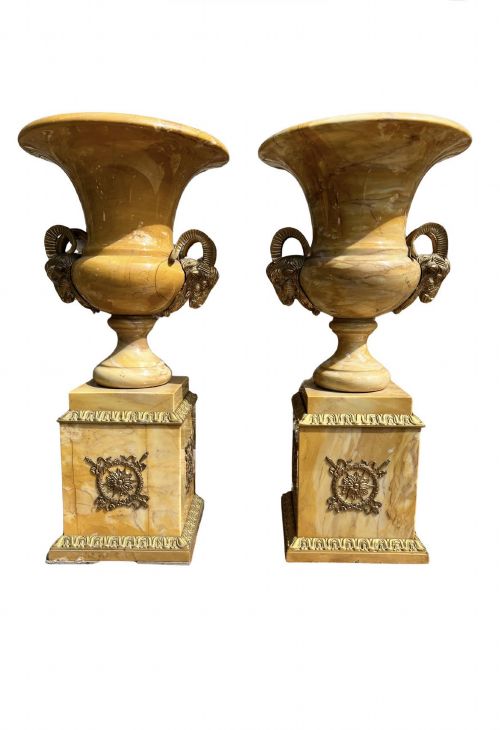
When you search for sienna marble urns, you are looking at decorative objects, garnitures and mantel ornaments shaped from distinctively yellow and veined Italian stone. Most examples you meet on this page date from the nineteenth century, reflecting periods such as Regency, Empire and the Grand Tour.
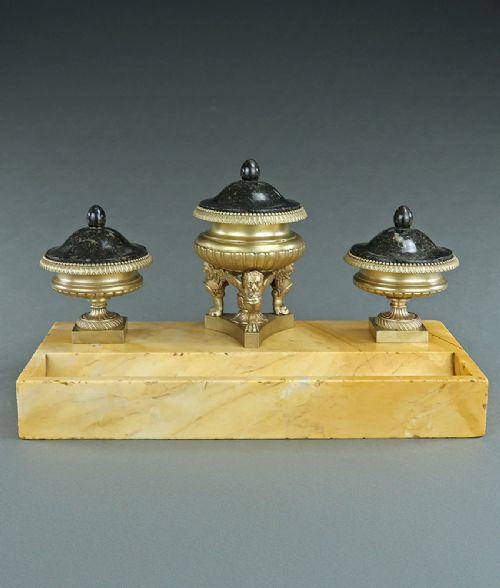
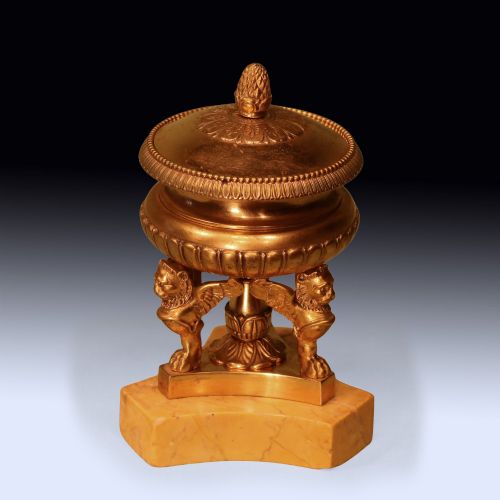
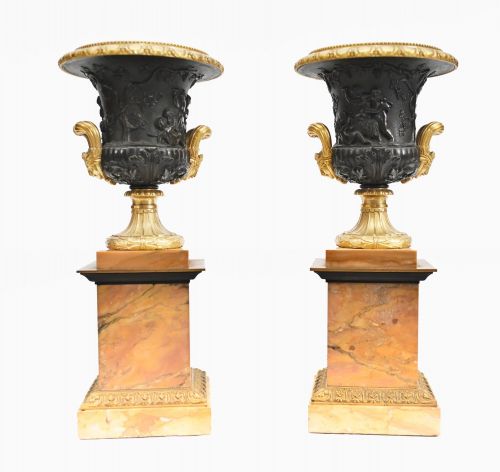
The forms range from campana-shaped vessels with handles to lidded urns and clock garnitures, often mounted with brass, bronze or ormolu. Makers frequently paired the warm yellow marble with dark patinated bronze figures or mounts to create striking neoclassical contrasts.
You will also find related decorative objects in the evidence, including inkstands, tazzas, bowls and mantel clocks utilising the same stone. These pieces capture the nineteenth-century fascination with classical antiquity, bringing architectural dignity into domestic spaces.
What varies in quality
The distinction between ordinary and exceptional sienna marble urns lies in the depth of the stone's colour and the crispness of the cast metal mounts. Better examples feature finely chased ormolu or bronze details like cherubs and classical masks that integrate cleanly with the turned stone.
The weight and selection of the marble also set pieces apart, with superior items showing unbroken veining and careful symmetry across matching pairs. The precision of the turning and the tightness of the joinery between stone and metal determine the overall finish.
Listings show sienna marble combined with brass, bronze, gilt bronze, ormolu, enamel and malachite across nineteenth-century forms.
The Sienna Marble Urns Glossary
- Sienna marble
- A decorative limestone quarried in Tuscany, known for its warm yellow colour and dramatic dark veining. It became hugely popular during the eighteenth and nineteenth centuries for grand architectural ornaments.
- Ormolu
- Finely ground high-carat gold applied to a bronze base through a mercury amalgamation process, or simply cast gilt-bronze. It provides a bright, lasting metallic contrast against dark stone.
- Campana
- A bell-shaped vessel form derived from ancient Roman pottery. These urns typically feature flared rims and sweeping handles.
- Grand Tour
- A cultural journey undertaken by wealthy young Europeans through France and Italy to study classical art. Travellers routinely brought home decorative stone urns and bronzes as souvenirs.
- Garniture
- A set of matching decorative objects, typically a clock flanked by urns or vases, designed to sit on a mantelpiece.
Sienna Marble Urns: Frequently Asked Questions
How do I clean sienna marble?
Dust the stone regularly with a soft, dry cloth to prevent dirt from settling into the natural fissures. Avoid water, soap or chemical cleaners, which can dull the polished surface and damage older metal mounts.
If the bronze or ormolu requires attention, keep metal polishes away from the adjacent stone. A gentle wipe with a dry microfibre cloth is usually sufficient to maintain the finish.
Were these urns made in pairs?
Many decorative urns and tazzas survive as matching pairs intended for symmetrical display on mantelpieces or side tables. Makers frequently turned and mounted two similar blocks of stone side by side to create balanced garnitures.
Single urns also appear in the evidence, often functioning as centrepieces or paired originally with clocks as part of larger garniture sets.
How can I tell the period?
Nineteenth-century pieces often display the distinct casting techniques and classical revival styles popular during the Regency and Empire eras. Examining the patination of the bronze and the wear on the underside of the marble base helps indicate age.
Hand-cut fixings and traditional assembly methods provide further clues, pointing away from twentieth-century reproductions.
What is a tazza?
A tazza is a shallow saucer-like bowl raised on a stem and foot, used historically for display or serving. In nineteenth-century collections, marble tazzas served purely decorative purposes on tables and cabinets.
Examples on this page combine sienna marble bowls with classical bronze pedestals, mirroring ancient Roman forms.