


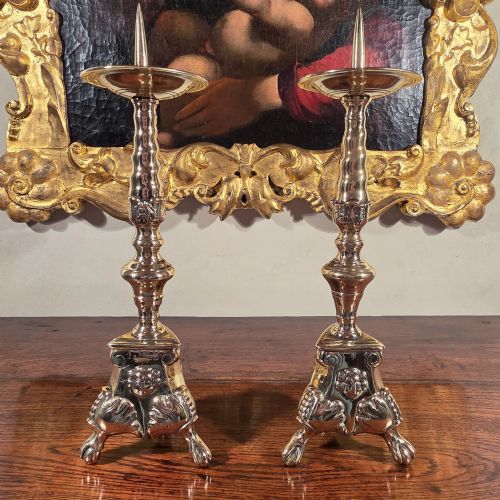


Antique Church Prickets
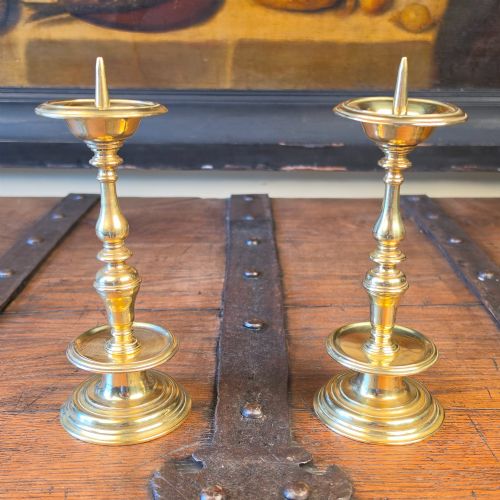
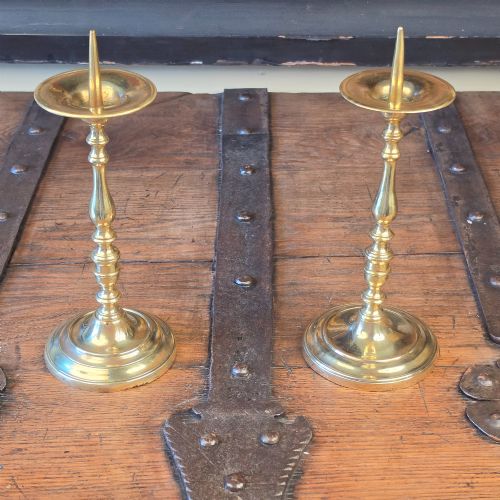
These antique church prickets are candle holders featuring a central spike to secure heavy wax tapers, bringing solemn ecclesiastical character into domestic interiors.
Antique Church Prickets
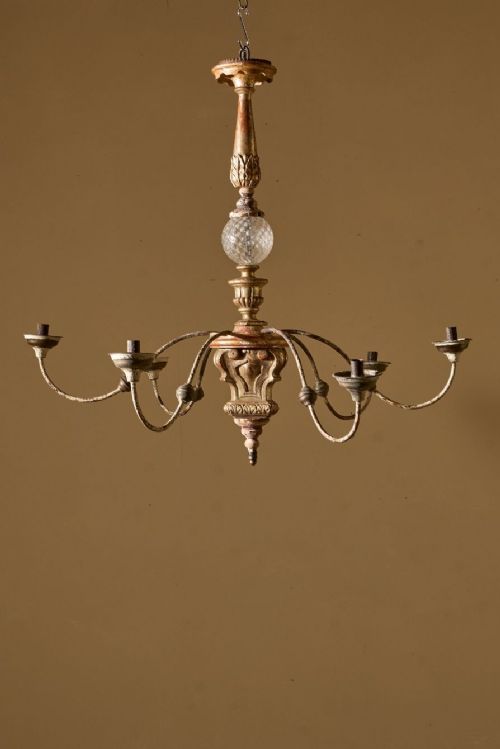
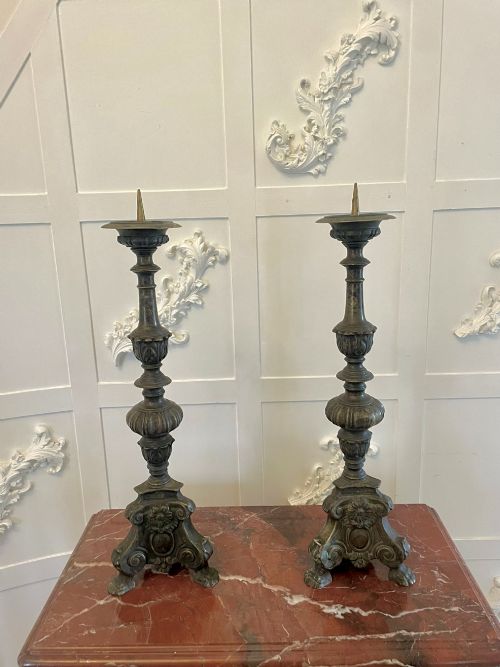
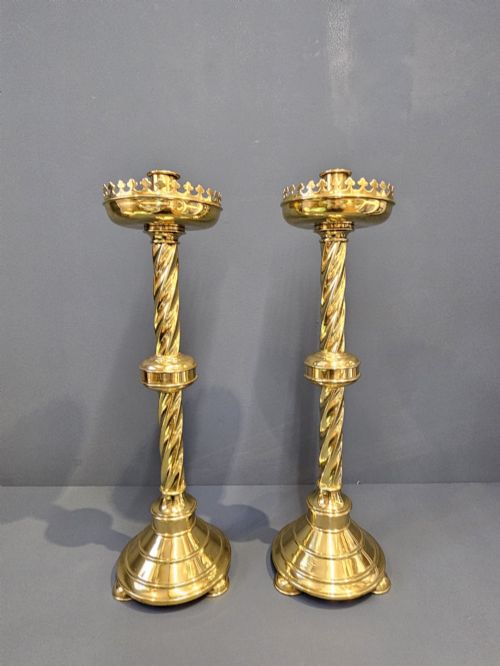
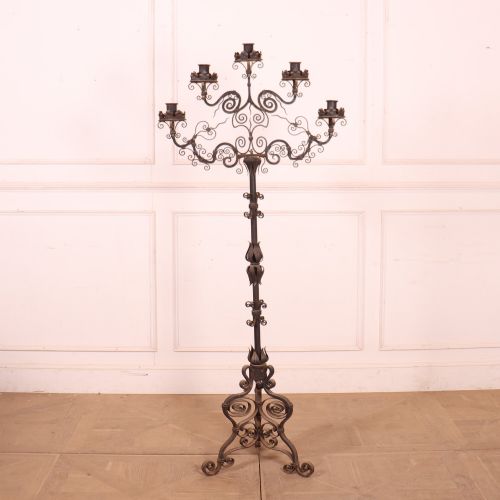
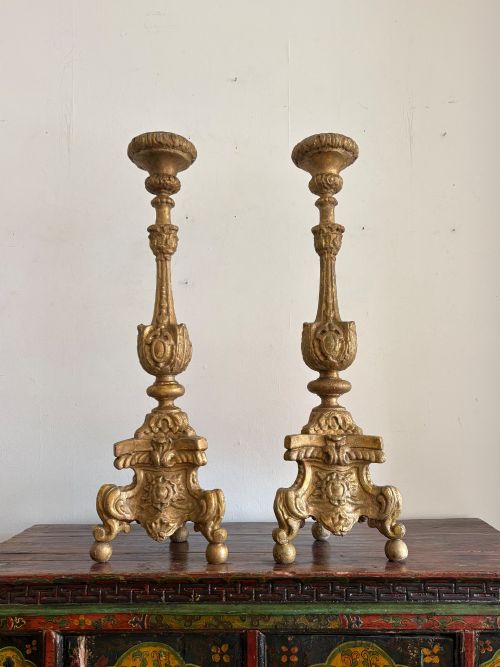
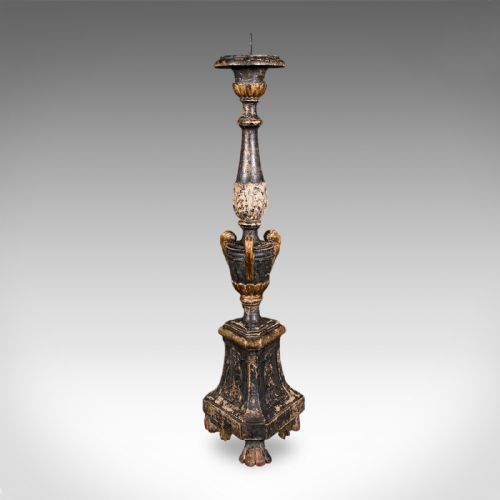
Antique church prickets comprise altar candlesticks, floor-standing torcheres, and chandeliers designed for ecclesiastical settings. The selection spans the eighteenth and nineteenth centuries, including Victorian Gothic Revival interpretations and Italian Baroque giltwood pieces.
Brass, bronze, and wrought iron examples sit alongside carved and gilded wood variants from continental workshops. Buyers encounter everything from small table models to tall floor standards that once illuminated chapels.
Quality and Proportion
The standard of carving and casting dictates the visual strength of the piece, separating rigid commercial production from expressive artisan work. Crisp detail in the brass turning or depth in the wooden acanthus foliage indicates superior craftsmanship.
Proportion and scale heavily influence the presence of the object, particularly in tall floor models and large pairs designed for high altars. Weight and structural integrity in the base ensure these tall candle holders remain stable in use.
Acolyte candlesticks were sized specifically for junior altar servers, creating diminutive proportions that charm modern collectors.
The Antique Church Prickets Glossary
- Pricket
- A sharp metal spike projecting upwards from the centre of a drip pan to hold a candle in place. This method predates the socket candlestick.
- Torchere
- A tall ornamental stand or candlestick designed to carry a single light. They often feature carved wooden shafts and tripod bases.
- Giltwood
- Timber that has been coated with a thin layer of gold leaf or gesso and gold paint. It was widely used on continental altar furnishings to catch candle light.
- Mecca
- A transparent golden varnish applied over silver leaf or tin to imitate true gold leaf. It is frequently found on eighteenth-century Italian altar pieces.
- Gothic Revival
- An architectural and decorative style drawing inspiration from medieval forms. It dominates nineteenth-century ecclesiastical metalwork and woodwork.
Antique Church Prickets: Frequently Asked Questions
How do I use an antique pricket candlestick?
Using a pricket requires candles with a small pre-drilled base hole that fits securely onto the central metal spike. The spike holds the wax taper firmly upright above the drip pan.
Modern pillar candles can also be adapted for display, though care must be taken to ensure stability on the spike. Many buyers use these pieces unlit as sculptural decorative objects on tables or sideboards.
How do I clean brass church candlesticks?
Dusting with a soft dry cloth is usually sufficient to maintain the surface without disturbing the natural aged patina. Aggressive metal polishes should be avoided because they strip historic character from the brass.
For wooden or gilded examples, moisture must be kept away from the surface to protect the gold leaf and gesso layers. A gentle brush removes debris from carved crevices safely.
What is the difference between an altar stick and a torchere?
Altar sticks are generally shorter and designed to sit on a table, ledge, or altar surface during services. They are scaled for close viewing and intimate ritual spaces.
Torcheres are taller floor-standing supports built to illuminate larger areas of a church or hall. Their substantial height and heavier bases give them a commanding architectural presence.
How can I date an antique wooden church candlestick?
Dating relies on stylistic clues such as the transition from Baroque scrollwork to the geometric lines of later periods. Tool marks, timber species, and the composition of the gesso underneath the gilding also offer chronological indicators.
Continental pieces often retain regional characteristics in their carving styles, helping to distinguish eighteenth-century Italian work from later Victorian revivals.