


Antique Altar Candleholders
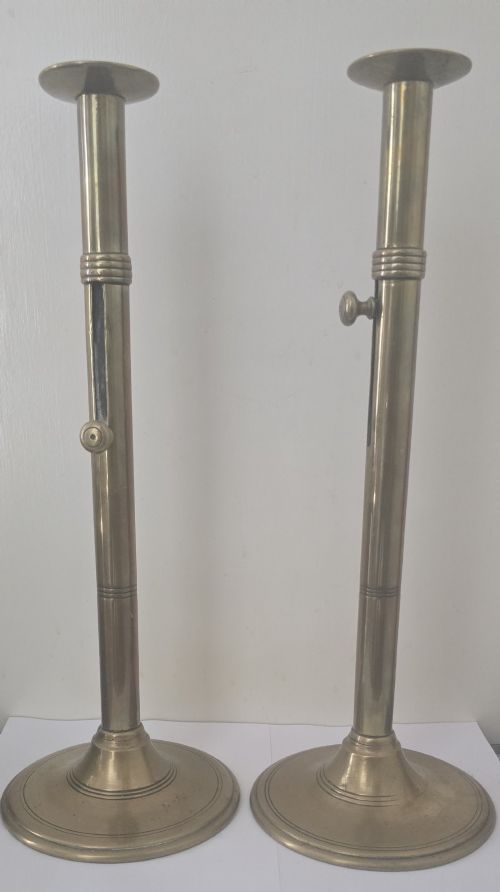
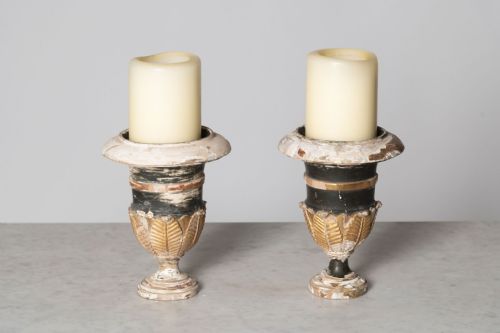
These antique altar candleholders bring heavy brass, carved giltwood and formal ecclesiastical presence straight from church interiors into the home.
Antique Altar Candleholders
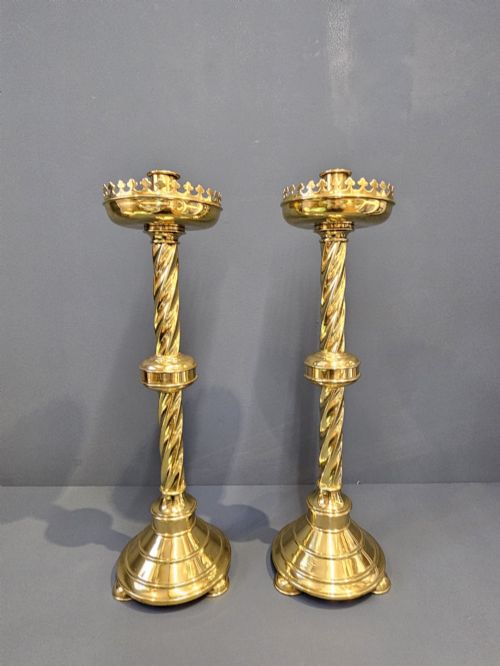
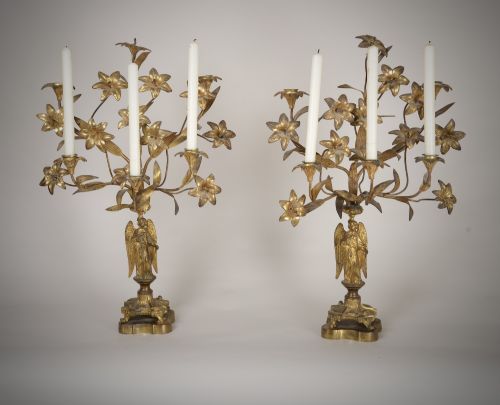
When searching for antique altar candleholders, buyers encounter substantial ecclesiastical lighting created for churches, chapels and private devotional spaces. These pieces range from robust church candlesticks and pricket stands to decorative candelabra designed for altars.
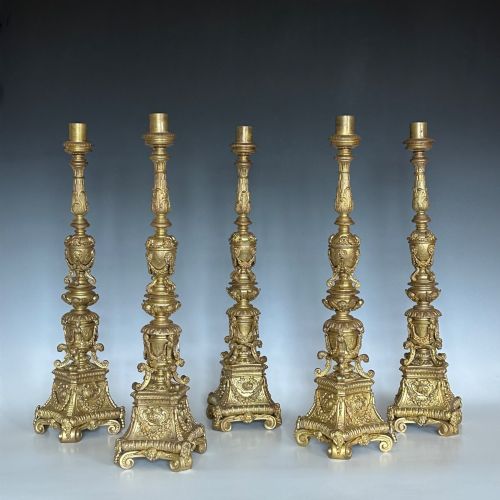
The selections available here rely heavily on brass and carved wood, frequently reflecting Gothic Revival, Baroque and Victorian design principles. Brass examples dominate the offerings, appearing alongside gilded, silvered and polychrome wooden variants.
Most items arrive in matched pairs, spanning origins from English workshops to Italian studios and French ateliers. Dating stretches from the eighteenth century through the Victorian era and into the early twentieth century.
Materials and construction
Makers utilised cast and turned brass as the primary metal medium, often producing heavy shafts and wide base plates designed to support tall candles securely. Ormolu and gilt brass finishes provide reflective metallic surfaces across various ecclesiastical forms.
Wooden alternatives feature carved wood, gesso and giltwood, sometimes finished with silvered mecca or polychrome paint layers. Turnery techniques shaped oak and other timbers into barley twist profiles and classical columns before gilding or painting.
Some heavy pricket sticks still bear the ancient drip-frozen wax layers left by decades of uninterrupted church services.
Distinctions in craftsmanship
Quality rests in the crispness of the casting work and the depth of hand-carved detail across wooden surfaces. Superior items display clean proportions, robust weight and uncompromised structural integrity in the socket and base joints.
The sophistication of the period ornamentation dictates the upper tiers of the range, where Baroque scrollwork or Gothic tracery is executed with precision. Patina and original surface treatments, such as genuine period gilding or aged brass oxidation, separate superior examples from later reproductions.
T Thomason and Co
The Antique Altar Candleholders Glossary
- Pricket candlestick
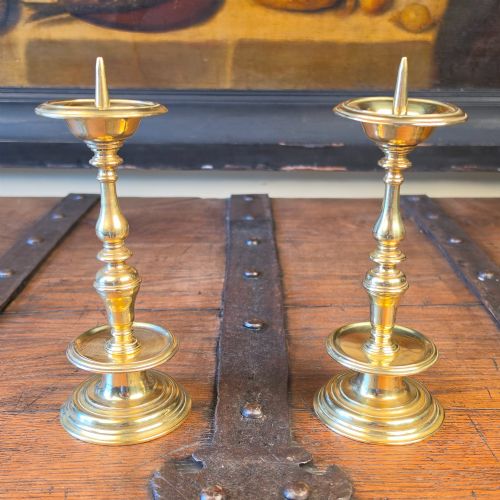
- A candlestick featuring a sharp metal spike at the top designed to impale the base of a large candle. This traditional altar format holds wide wax columns securely in place during church services.
- Giltwood
- Timber that has been coated with a thin layer of gold leaf or gold powder over a prepared gesso ground. This technique creates a rich decorative surface frequently seen on continental altar furnishings.
- Mecca
- A transparent yellow varnish applied over silver leaf or silvered wood to imitate the appearance of gold. Italian craftsmen utilised this finish to achieve warm metallic tones economically.
- Ecclesiastical
- Pertaining to the Christian church or clergy. Items bearing this description were originally manufactured for use within places of worship rather than domestic residential settings.
- Ormolu
- Finely ground high-carat gold cast and mercury-gilded onto a bronze or brass base object. This luxurious finish provides a bright metallic lustre on high-status lighting.
Antique Altar Candleholders: Frequently Asked Questions
What is a pricket candlestick?
A pricket candlestick uses an upright metal spike instead of a traditional hollow socket to secure the candle. The wax pillar presses directly onto this sharp point.
This form appears frequently in ecclesiastical settings because large candles stayed firmly positioned during long church services and ceremonies.
How do I clean antique brass?
Antique brass requires minimal intervention to preserve the aged surface tone that collectors value. Gentle dusting with a dry cloth removes accumulated particles safely.
Avoid harsh chemical polishes or abrasive pads, as these strip away historical patination and diminish the visual character of the metal.
Were these used in homes?
Most pieces originated inside churches, chapels and formal ecclesiastical institutions rather than domestic spaces. Their grand scale and heavy proportions suited large stone altars.
Today, buyers place them on mantels, sideboards and dining tables to introduce architectural weight and historical presence into modern interiors.
How to tell Gothic Revival apart?
Gothic Revival items display architectural motifs drawn from medieval buildings, including pointed arches, quatrefoils and heavy structural mass. These design elements returned to popularity during the nineteenth century.
Baroque examples instead showcase dynamic curves, exuberant scrollwork and classical asymmetry derived from seventeenth and eighteenth-century continental styles.