


Baroque Altar Candlesticks
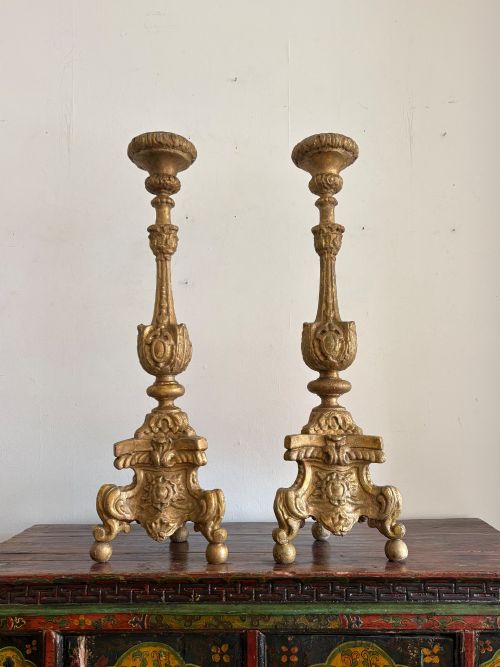
Baroque altar candlesticks bring dramatic carved presence and ecclesiastical history into a room, offering grand scale and rich gilded surfaces.
Baroque Altar Candlesticks
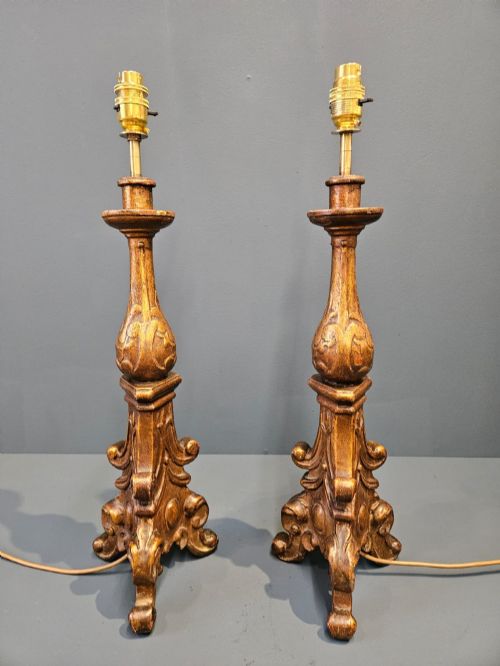
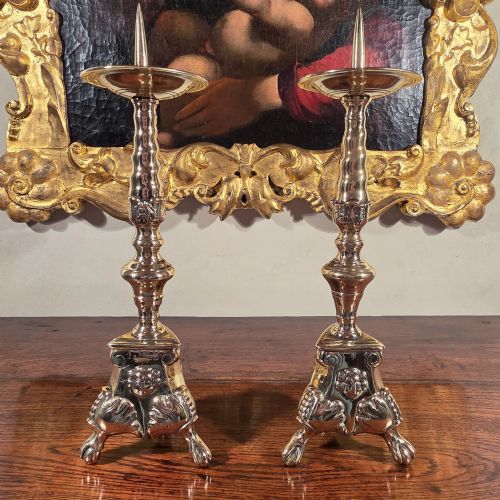
Baroque altar candlesticks are ecclesiastical lighting pieces designed for church altars, spanning periods from the seventeenth century through to later revivals. Buyers looking at this selection encounter tall torcheres, pricket candlesticks, and converted lamps originating from Italy, Spain, and the Netherlands. The typical pieces available here showcase the robust proportions and decorative flourishes characteristic of the style.
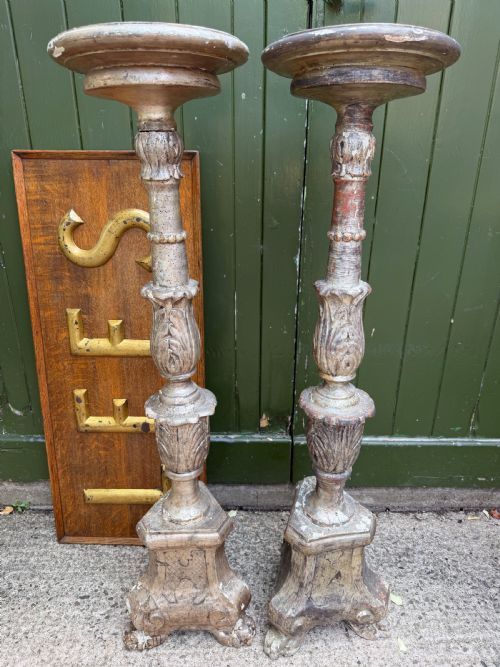
Italian and Spanish examples dominate the selection, frequently taking the form of carved giltwood candle holders or tall torcheres. Many seventeenth and eighteenth century originals appear alongside nineteenth century revivals and early twentieth century interpretations. The inventory balances traditional pricket sticks with standard lamps adapted from original altar pieces.
Quality variations
Quality rests in the depth and clarity of the hand carving, where vigorous execution separates superior pieces from static later copies. The crispness of the acanthus foliage and the anatomical definition on figural elements indicate the skill of the original workshop. Finer items retain their original gilded surfaces with harmonious ageing.
Proportion and scale dictate the visual impact of the pieces, with taller torcheres and matched pairs commanding greater presence. The survival of original gilding and gesso without excessive modern repainting marks the distinction between well-preserved antiques and heavily restored examples.
The Baroque Altar Candlesticks Glossary
- Pricket candlestick
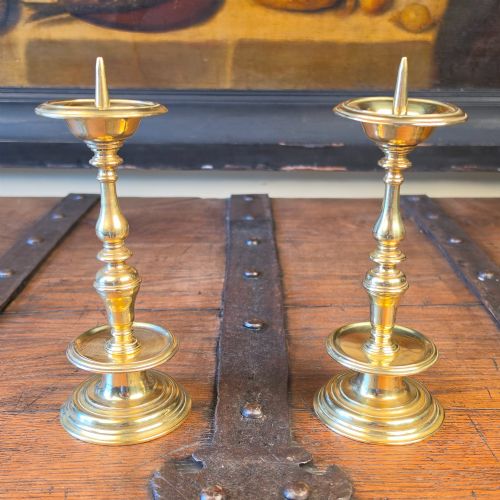
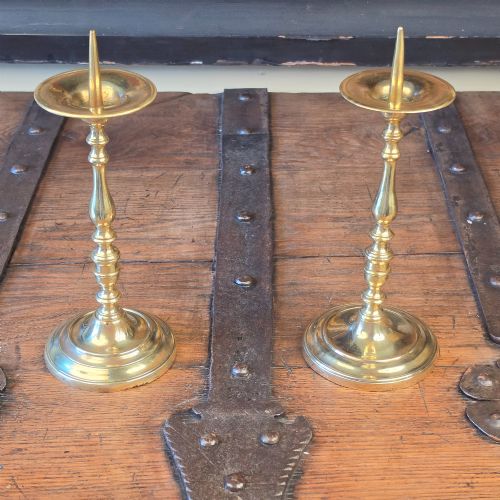
- A candlestick featuring a sharp metal spike at the top to secure a candle, common on church altars. This design predates socket candlesticks.
- Giltwood
- Wood that has been coated with gold leaf or gold paint over a gesso base. This finish provided a luxurious appearance under candlelight.
- Torchere
- A tall ornamental stand or candlestick designed to hold a light. They often feature elaborate carved decoration and substantial height.
- Gesso
- A plaster-like mixture applied to wood surfaces to prepare them for gilding or painting. It allows for smooth carved details beneath the metal leaf.
- Rococo
- An ornate style following the baroque, characterised by asymmetrical scrollwork and shell motifs. Elements of this style occasionally blend into later revivals.
Baroque Altar Candlesticks: Frequently Asked Questions
What is a pricket candlestick?
A pricket candlestick uses an upright metal spike instead of a socket to hold the candle in place. Candles used on these required a hollow base to sit securely upon the spike.
This format appears frequently on seventeenth and eighteenth century altar pieces designed for ecclesiastical settings.
How do I light my home with altar candlesticks?
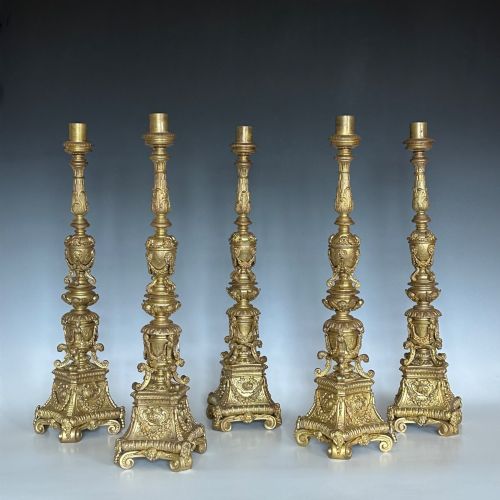
Many pieces on the market have been converted into table lamps or standard lamps to accommodate modern electrical wiring. This allows them to function safely as primary lighting sources while retaining their antique carved bases.
Unconverted items can still hold pillar candles for ambient room lighting.
How can I tell an eighteenth century piece from a nineteenth century revival?
Eighteenth century pieces display hand-carving with tool marks and wear patterns consistent with age, alongside authentic patination on the gilt surfaces. Nineteenth century revivals often use heavier gesso layers and mimic earlier styles with different tool execution.
Examining the wood species and construction joints helps confirm the production period.
Where were these candlesticks originally used?
These pieces stood on church altars and within large chapels in regions such as Italy, Spain, and the Netherlands. They provided ceremonial lighting during religious services.
Their impressive scale and gilded decoration were intended to catch the candlelight within large, dim sacred spaces.