
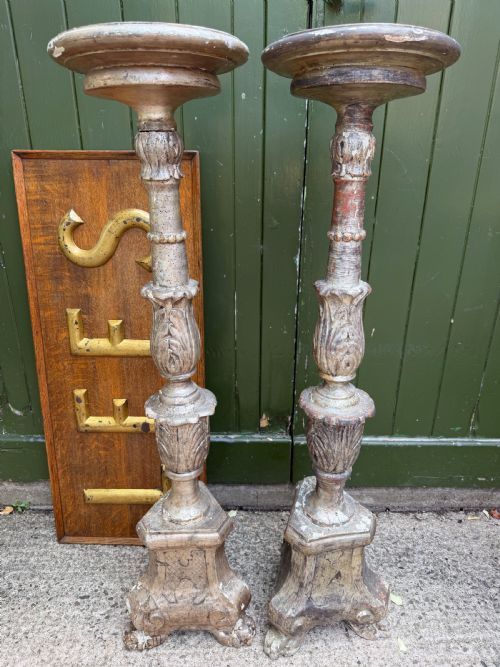
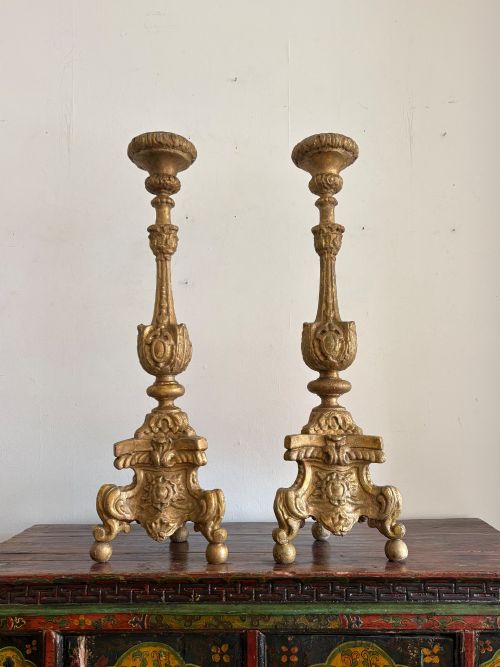


Italian Carved Candlesticks
These Italian carved candlesticks bring sculptural presence to a room, offering centuries of hand-carved woodwork and gilded surfaces.
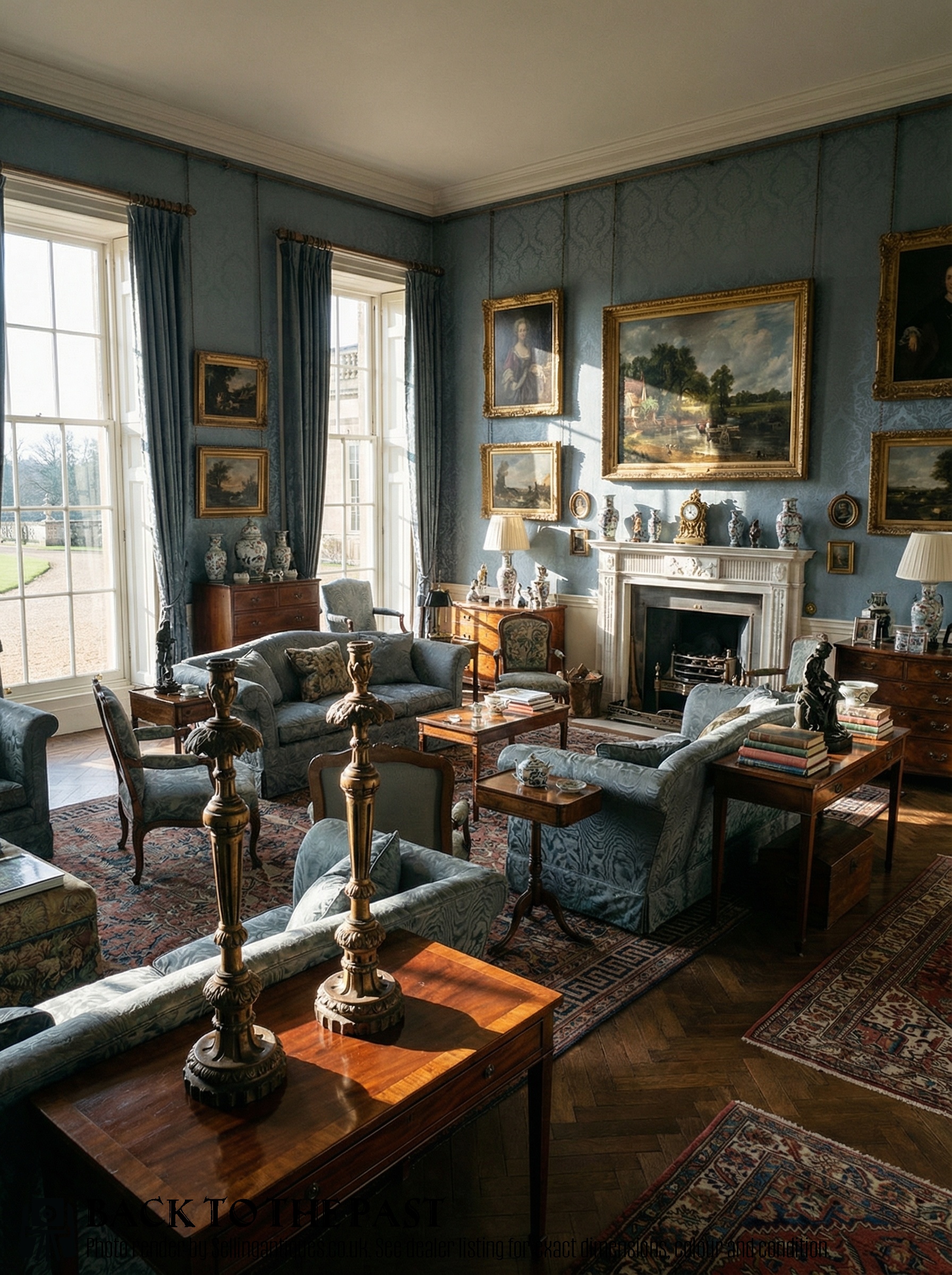
Italian Carved Candlesticks
When you search for italian carved candlesticks, you encounter a distinct group of wooden liturgical and domestic lighting objects originating from Italy across several centuries. The selection spans grand eighteenth-century altar-style supports and smaller nineteenth-century chambersticks, alongside standard lamps and torcheres adapted for modern use.
The most common examples you meet on this page are eighteenth-century giltwood altar candlesticks and nineteenth-century revival pieces designed with pronounced Baroque and Neoclassical characteristics. Many of these sturdy turned and carved wooden shafts served original functions on church altars before finding new life as table lamps or decorative torchere pedestals.
How they were made
Artisans carved these pieces primarily from solid pine or other local timbers, shaping the timber on a lathe or working the core by hand before applying decorative gesso layers. This fine plaster preparation provided a smooth, responsive ground for subsequent gilding techniques.
Surfaces received rich coats of gold leaf, silver leaf, or polychrome paint, often finished with translucent mecca varnish to impart a warm, aged metallic lustre. The combination of deep hand-carving and layered surface treatments gives each object its distinct tactile weight.
Listings feature Italian pieces spanning the eighteenth century through the nineteen-twenties, incorporating carved wood, giltwood, brass, and marble.
What varies in quality
The distinction between standard items and exceptional pieces rests upon the crispness of the hand-carving and the depth of the original gesso and gilding layers. Master carvers achieved fluid acanthus leaves and balanced proportions that lesser workshops merely approximated through heavier, coarser cuts.
Preservation of the original surface patination fundamentally separates superior examples from those heavily restored or stripped down over time. Pieces retaining their undisturbed historical gold leaf or polychrome pigment demonstrate an integrity that mechanical cleaning or modern repainting diminishes.
The Italian Carved Candlesticks Glossary
- Giltwood
- Wood that has been coated with fine gold leaf over a prepared gesso ground. This technique creates a radiant surface that reflects candlelight effectively.
- Pricket
- A sharp metal spike set into the top of a candlestick to hold a large wax candle in place. This form appears frequently on traditional altar pieces.
- Torchere
- A tall decorative stand or candlestick designed to elevate a light source or decorative object. Examples range from slender wooden pillars to substantial pedestal forms.
- Gesso
- A plaster mixture applied to carved wood to create a smooth surface for gilding or painting. It allows intricate details to be crisply defined before leafing.
- Mecca
- A transparent yellow-gold varnish applied over silver leaf to imitate the warmer tone of gold. It creates a distinctive aged metallic appearance on Italian altar pieces.
Italian Carved Candlesticks: Frequently Asked Questions
What is a pricket candlestick?
A pricket candlestick uses a central metal spike to secure a candle rather than a socket. This traditional design accommodated large wax candles used in liturgical settings.
Many surviving altar sticks retain these original spikes even when converted for modern electrical wiring. They represent an older method of candle placement common in European churches.
How do I date these candlesticks?
Dating relies upon stylistic markers such as Baroque scrollwork, Neoclassical symmetry, and the specific composition of the underlying gesso and wood. Eighteenth-century examples typically display deeper, more fluid hand-carving than later nineteenth-century revival pieces.
Material analysis also helps distinguish period work, as older pine cores and hand-hammered metal spikes differ noticeably from later manufacturing methods. Comparing proportions against documented church silver and altar furnishings provides further chronological clarity.
Were these used in homes?
While many grand candlesticks originated in churches and monastic chapels, smaller chambers sticks and decorative torcheres served domestic interiors. Wealthy travellers on the Grand Tour also brought back portable lighting items for their residences.
Over subsequent centuries, taller altar pieces frequently transitioned from ecclesiastical settings into private drawing rooms. This domestic adaptation often involved conversion into table lamps during the early twentieth century.
How do I care for giltwood?
Giltwood requires gentle dusting with a soft, dry brush to protect the delicate gold leaf and underlying gesso. Avoid chemical cleaners, moisture, and direct sunlight, which can cause the finish to flake or discolour.
Because historical surfaces are fragile, handling the pieces by their sturdier wooden sections prevents unnecessary wear on the gilded ornamentation. Maintaining stable room humidity preserves both the timber core and the historic preparation layers.