



Gilded Wood Lamps
Gilded wood lamps bring warmth and sculptural presence to a room, catching the light through layers of gold leaf and carved detail.
Gilded Wood Lamps
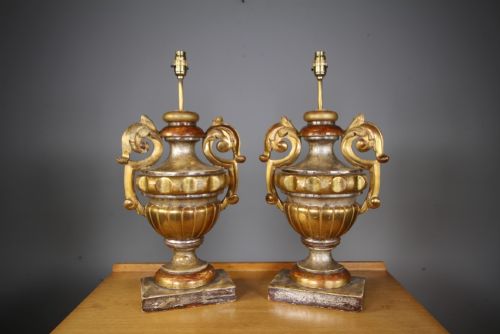
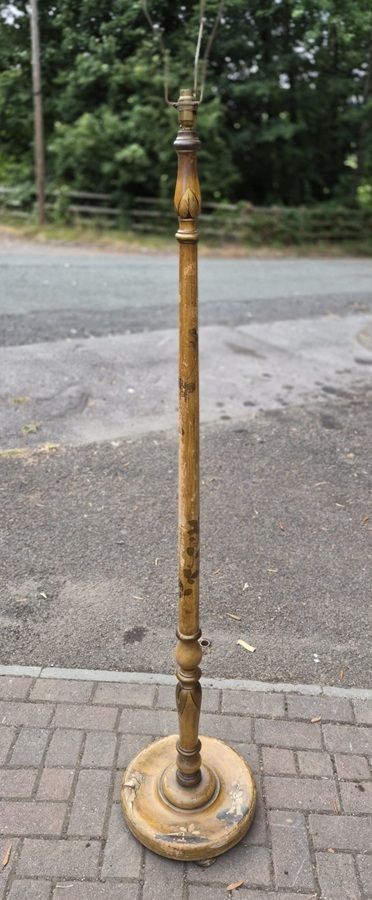
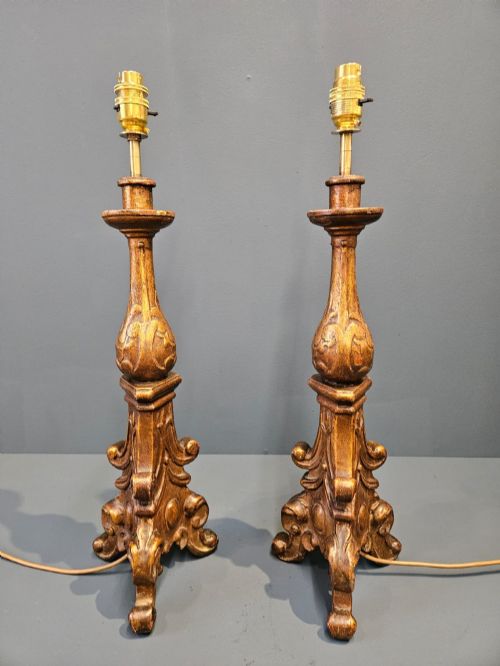
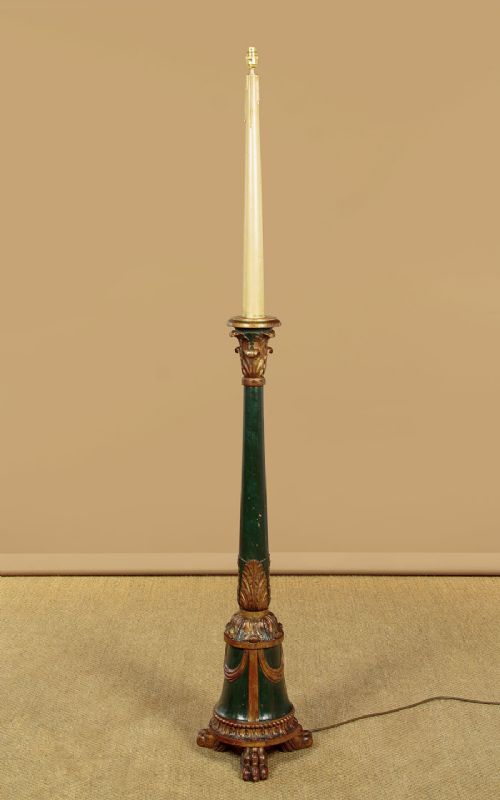
When you search for gilded wood lamps, you encounter a variety of lighting fixtures and illuminated pieces derived from nineteenth and early twentieth-century decorative traditions. These items range from towering standard and floor lamps to smaller table lamps and converted candlesticks, often drawing on Italian Baroque, French Rococo, or Neoclassical styles.
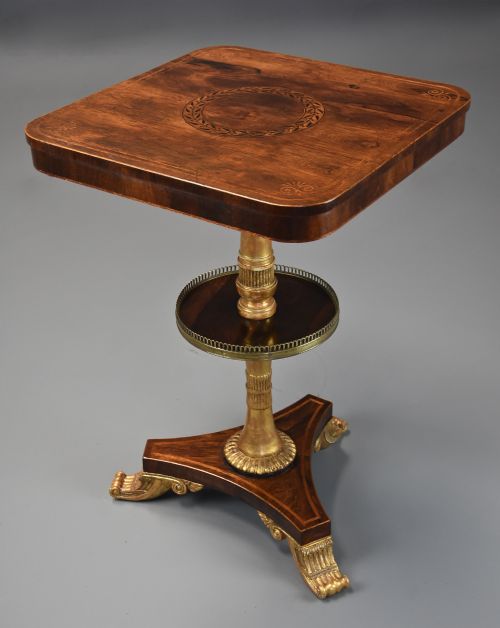
The selection on this page relies heavily on carved timber, gesso, and gold leaf applications, frequently reflecting Italian Florentine workmanship or French influence. Alongside dedicated lamp bases, the inventory includes occasional tables and side tables that incorporate gilt wood and marble tops, showing how lighting and furniture often shared the same decorative vocabulary.
Materials and Construction
Carvers shaped pine, mahogany, and other timbers before applying layers of gesso to create a smooth, responsive surface for fine detail work. This plaster-like ground allowed artisans to crisp up edges and carve intricate motifs such as acanthus leaves, cherubs, and classical scrolls.
Gold leaf or silver leaf was then laid over a coloured bole, often accompanied by paint or polychrome finishes, before being burnished to achieve a metallic sheen. Brass components, marble tops, and fabric elements frequently completed the composition, grounding the carved wooden structures.
Watch for carved wooden dolphins serving as sculptural table supports, bringing unexpected marine wildlife into nineteenth-century interiors.
Assessing Quality and Execution
The distinction between ordinary and exceptional pieces lies in the depth and sharpness of the hand carving beneath the gilding. Crisp undercuts and fluid lines demonstrate superior craftsmanship compared to soft, mechanically pressed ornamentation.
The integrity of the original surface finish dictates the character of the piece, with genuine age showing through natural wear to the gold leaf and underlying gesso. Pieces retaining their original polychrome or parcel gilt schemes demonstrate greater historical continuity than later repainted surfaces.
The Gilded Wood Lamps Glossary
- Giltwood
- Wood that has been coated with gold leaf or gold powder. This finish provides a reflective, luminous surface prized in classical European furniture and lighting.
- Gesso
- A plaster mixture applied to wood surfaces as a base for gilding and paint. It fills the grain and allows artisans to carve intricate relief details before applying gold leaf.
- Parcel Gilt
- A finish where only specific parts of an object are gilded, leaving other areas exposed as painted or natural wood. This technique highlights particular carved details and architectural elements.
- Polychrome
- The practice of decorating surfaces in multiple colours. It appears frequently on Venetian and Italian figures and lamp standards from the nineteenth century.
Gilded Wood Lamps: Frequently Asked Questions
How do I date a gilded wood lamp?
Dating relies on examining the timber species, the composition of the gesso layer, and the style of the carving. Hand-cut joinery and period-specific decorative motifs provide the primary clues for determining age.
Secondary indicators include the wiring methods, the type of lampholder used in later adaptations, and the natural wear patterns on the gold leaf.
Are these lamps converted from older candlesticks?
Some tall table lamps and smaller standards originate from earlier candlesticks or architectural fragments that were later adapted for electrical wiring. These conversions often retain high-quality hand-carved detailing from the eighteenth or nineteenth centuries.
Inspecting the base and the path of the cord reveals whether the piece was originally built as a lamp or altered at a later date.
How should I clean a gilded wood lamp?
Dusting gently with a soft, dry ostrich feather brush prevents the buildup of particulate matter without disturbing fragile gold leaf. Avoid liquid cleaners, polishes, and abrasive cloths entirely.
Professional conservation is recommended for any deeper cleaning or stabilization of flaking gesso to preserve the historical surface.
What styles are most common in these pieces?
Italian Florentine, French Rococo, and Neoclassical Revival dominate the aesthetic vocabulary of these lamps. These styles often feature scrolled acanthus leaves, carved urns, fluted columns, and dolphin motifs.
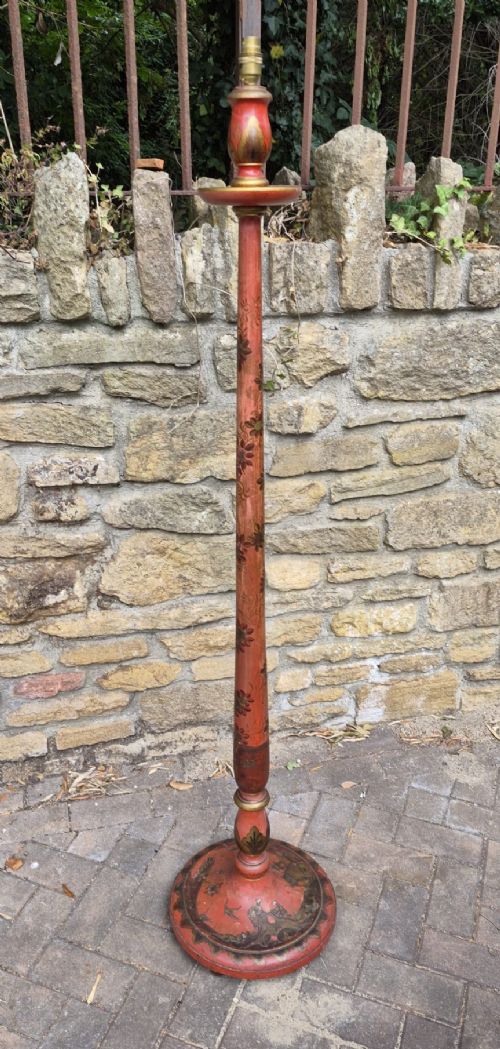
Edwardian Chinoiserie examples introduce painted decoration and exotic motifs distinct from the heavily carved Italian and French giltwood pieces.
Can these lamps support heavy shades?
Floor lamps and substantial standard lamps generally possess the structural weight and sturdy wooden bases required to balance larger fabric shades. Table lamps vary according to their footprint and the density of the carved wood.
Ensuring the shade proportion matches the base diameter prevents tipping and maintains the visual balance of the piece.