


Gold Leaf Candlesticks
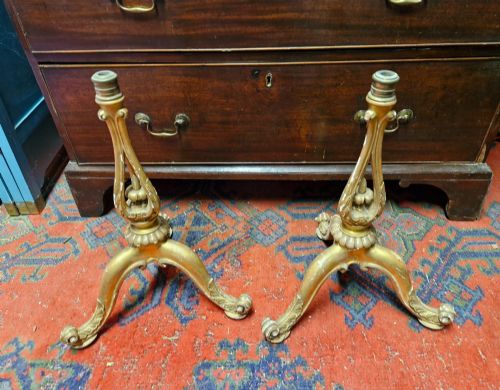
These gold leaf candlesticks bring centuries of Continental and English craftsmanship into your room, offering the warm, reflective glow of gilded timber and metal.
Gold Leaf Candlesticks
When you search for gold leaf candlesticks, you encounter pieces that span the eighteenth, nineteenth, and early twentieth centuries, encompassing Georgian, Edwardian, and various Baroque and Rococo revivals. The most common forms on this page include carved giltwood altar candlesticks, tall lamp bases converted from earlier standards, and multi-branched candelabras.
Origins stretch across Italy, Spain, France, and England, demonstrating how local workshops interpreted classical and baroque styles. You find items ranging from diminutive single candle holders to towering church pieces adapted for domestic illumination.
How they were made
The primary construction relies on carved wood and gesso, which provide a stable base for the application of delicate gold leaf and polychrome paint. Artisans shaped timber into columns, tripod bases, and figural supports before applying the preparatory gesso layers.
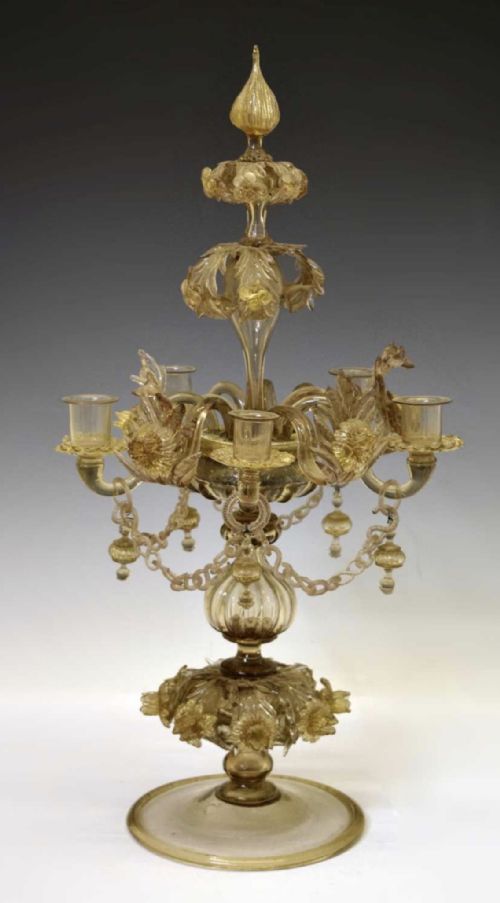
Other examples utilise cast metal, ormolu, and Murano glass, particularly in the later nineteenth-century French and Venetian pieces. Silvered mecca finishes also appear, combining metallic powders with transparent varnishes to imitate richer gilding on wood.
Listings feature 18th-century Spanish and Italian altar candlesticks alongside 19th-century French ormolu and Venetian glass.
What varies in quality
The sophistication of the initial wood carving distinguishes standard production from finer workshop output, particularly in the rendering of acanthus leaves, fluting, and figural details. Crisp lines in the gesso beneath the gilding preserve the sharpness of the original carver's hand.
The integrity of the surface finish matters greatly, as the depth and warmth of the gold leaf or giltwood patination accumulate character over centuries. Pieces retaining their original structural proportions and untouched decorative schemes command closer attention.
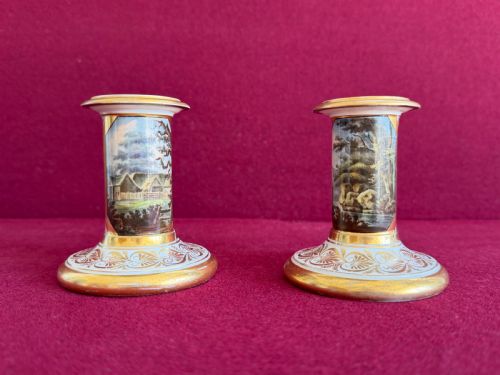
Barr Flight and Barr
The Gold Leaf Candlesticks Glossary
- Giltwood
- Timber that has been decorated with a very thin layer of gold leaf over a prepared gesso ground. This technique creates a rich, metallic surface while keeping the core structure relatively lightweight.
- Gesso
- A plaster mixture applied to wood surfaces as a smooth base for gilding and painting. It allows carvers to achieve sharp, intricate details before the gold leaf is laid down.
- Candelabra
- A branched candlestick designed to hold multiple candles simultaneously. These pieces often feature central standards with arms spreading outward.
- Mecca
- A traditional translucent golden varnish applied over silver leaf or tin to simulate the appearance of gold. It creates a warm, slightly amber glow on altar-type candlesticks.
- Ormolu
- Finely chased and gilt bronze used primarily in nineteenth-century French decorative arts. The technique involves applying a mercury-gold amalgam to a bronze base.
Gold Leaf Candlesticks: Frequently Asked Questions
Are these wired for modern electricity?
Many pieces listed have been adapted over time to function as table lamps or lamp bases, incorporating electrical fittings alongside their original candle-holding structures. Conversions range from simple cord routing to professional rewiring that preserves the antique timber.
Buyers often choose whether to retain the lamp conversion or restore the object to its original candlestick configuration. Checking the base and stem will reveal how the wiring was integrated into the historic structure.
How do I date a giltwood candlestick?
Dating relies on identifying the underlying style, such as Spanish Baroque, French Rococo, or Regency, combined with the characteristics of the wood and gesso. Eighteenth-century pieces frequently exhibit deeper, hand-carved relief work and denser timber cores.
Later nineteenth-century examples often adopt revival aesthetics or incorporate alternative materials like Murano glass and cast brass. Examining the wear patterns on the gilding also offers clues to the age of the piece.
Where were altar candlesticks used?
Altar candlesticks originated in churches and chapels, where tall, imposing standards illuminated sacred spaces during services. Their grand scale made them natural candidates for later conversion into domestic floor and table lamps.
These pieces typically feature sturdy tripod bases or heavy turned columns designed to remain stable on wide surfaces. Their ecclesiastical origins often impart a heavier, more architectural presence than domestic candlesticks.
What is the difference between giltwood and ormolu?
Giltwood consists of gold leaf applied over a carved wooden substrate, resulting in a warm, organic texture where the grain or gesso layer occasionally telegraphs through. It defines much of the Italian and Spanish Baroque furniture and lighting.
Ormolu, by contrast, involves gilding cast bronze through a mercury process, producing the crisper, shinier metallic surfaces typical of nineteenth-century French pieces. Each material dictates a distinct visual weight and manufacturing tradition.