


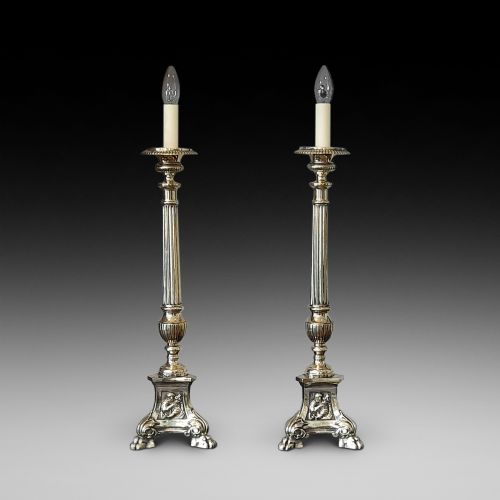


Antique Pricket Lamps
Antique pricket lamps bring vertical presence and rich illumination, combining centuries-old altar fittings with domestic lighting.
Antique Pricket Lamps
Antique pricket lamps comprise tall candlesticks and altar standards that have been converted into functional domestic lighting. The items found here span the eighteenth, nineteenth, and early twentieth centuries, drawing on Italian Baroque, Gothic Revival, and Art Deco traditions.
The conversion process adapts historical altar sticks and torchieres for modern wiring while retaining their original form. These pieces function equally well as solitary table lamps or paired standards flanking a room.
How they were made
Construction relies on traditional artisan techniques utilising carved wood, gesso, and cast brass. Artisans shaped timber into elaborate standard lamps and candlesticks before applying layers of gesso and gold leaf for rich giltwood finishes.
Metal components involve cast brass, wrought iron, and ormolu, often paired with glass or opaline elements in later twentieth-century iterations. Structural joins and turned shafts reflect the period techniques of European workshops.
Every lamp retains its original central pricket spike, quietly reminding you that a giant wax candle once sat right where the lightbulb now glows.
What varies in quality
Quality rests in the crispness of the original carving, the depth of the gilding, and the integrity of the conversion work. Finer examples retain their original structural proportions without heavy replacement timber.
The sophistication of the decorative style - ranging from restrained English Baroque to ornate Florentine and Rococo carving - determines the visual impact of the piece. Superior items exhibit balanced turning, substantial weight, and well-preserved surface finishes.
The Antique Pricket Lamps Glossary
- Pricket
- A sharp metal spike on a candlestick designed to secure a large candle. In lamp conversions, this spike is typically retained amidst the upper electrical fittings.
- Torchere
- A tall decorative stand or candlestick designed to hold a light source. These pieces frequently form matched pairs in eighteenth and nineteenth-century interiors.
- Giltwood
- Wood that has been coated with a thin layer of gold leaf. This finish appears frequently on Italian and English Baroque lamp standards.
- Ormolu
- Finely chased and gilt bronze used for decorative mounts and fittings. It provides a bright metallic contrast on nineteenth-century altar candlesticks.
- Opaline glass
- A pale, translucent glass popular in nineteenth and twentieth-century lighting design. It softens the light emitted by the converted lamp.
Antique Pricket Lamps: Frequently Asked Questions
What is an antique pricket lamp?
An antique pricket lamp is a converted altar candlestick or torchere fitted for electrical use. These pieces retain the central spike that once held a large wax candle.
They bring historical height and architectural form into domestic interiors as table or floor lamps.
How do I choose the right size?
Consider the placement and the surrounding furniture scale before selecting a table lamp or standard lamp. Taller torcheres and floor candle holders require adequate clearance and substantial rooms.
Smaller table versions suit sideboards and desks where vertical accent lighting is needed.
How do I care for giltwood bases?
Giltwood surfaces require gentle dusting with a soft, dry cloth to protect the delicate gold leaf layer. Avoid liquid cleaners, harsh chemicals, and direct sunlight.
Maintaining stable indoor humidity prevents the underlying gesso and wood from cracking.
Are these lamps safely wired?
Conversions adapt historical candle holders for modern electrical standards while preserving the antique body. Buyers should have wiring inspected by a qualified electrician to match local safety requirements.
Most setups accommodate standard bulbs suited to the scale of the shade and base.