




Antique Pricket Stands
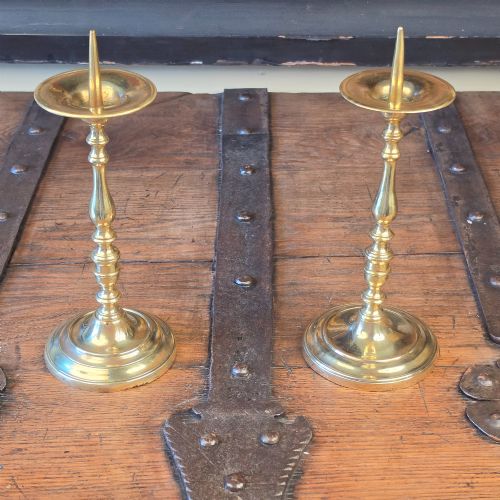
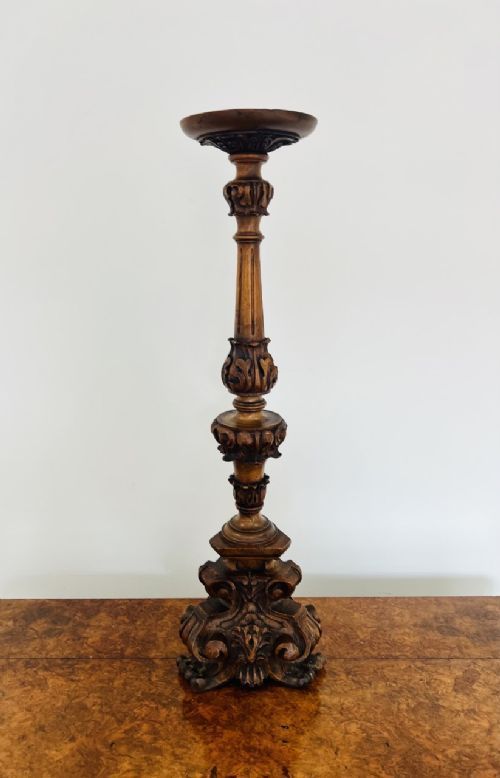
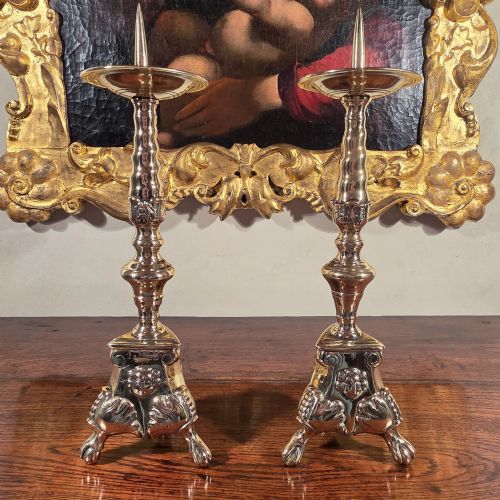
These antique pricket stands are spike-topped altar and church candle holders designed to impale wax candles, offering functional illumination with centuries of ecclesiastical character.
Antique Pricket Stands
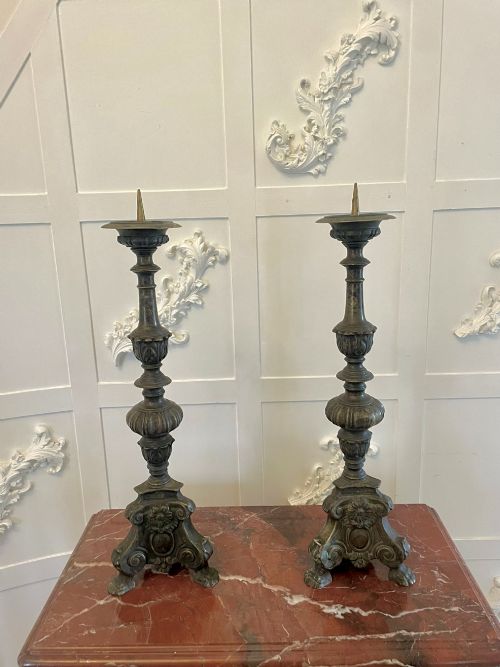
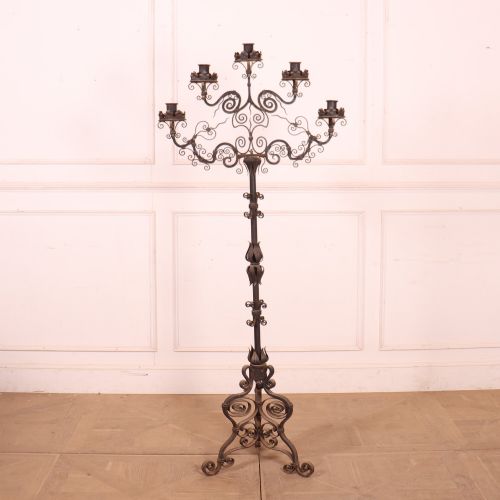
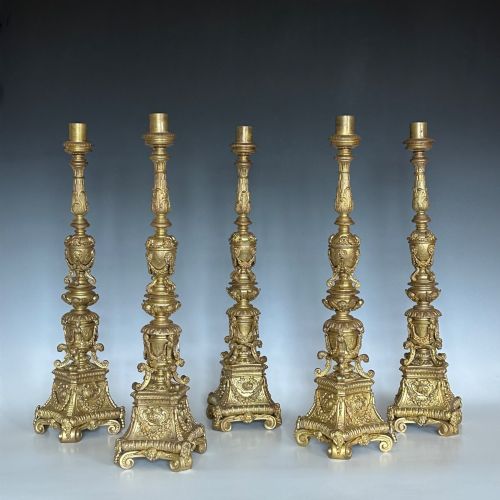
Antique pricket stands encompass altar sticks, floor candelabras, and tall torcheres designed with a central spike rather than a socket to hold heavy candles. The selection draws heavily from nineteenth-century revivals alongside genuine eighteenth-century Italian and Flemish church metalwork.
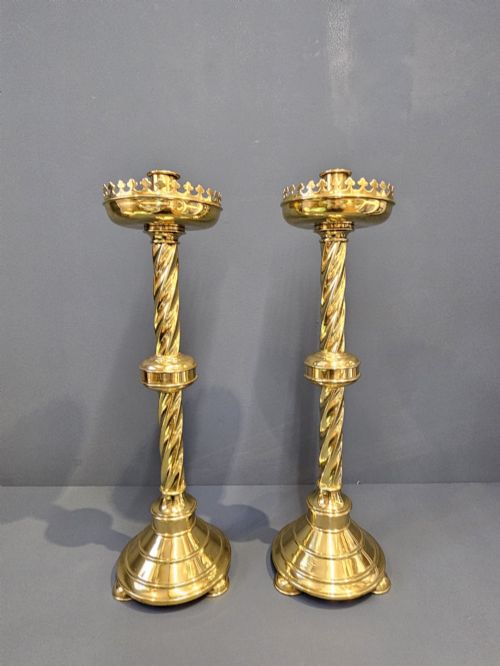
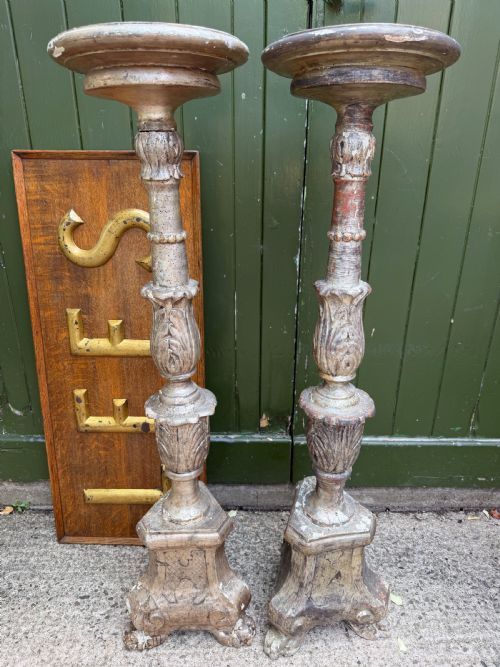
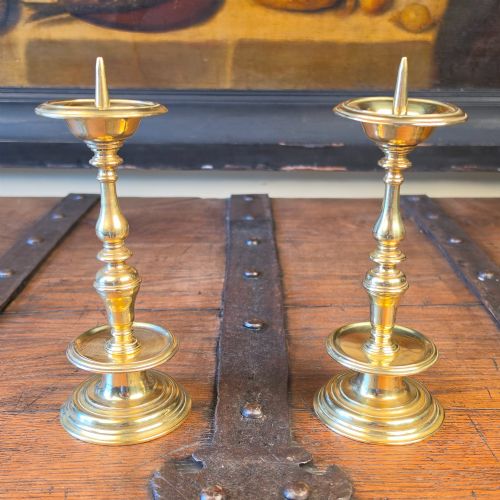
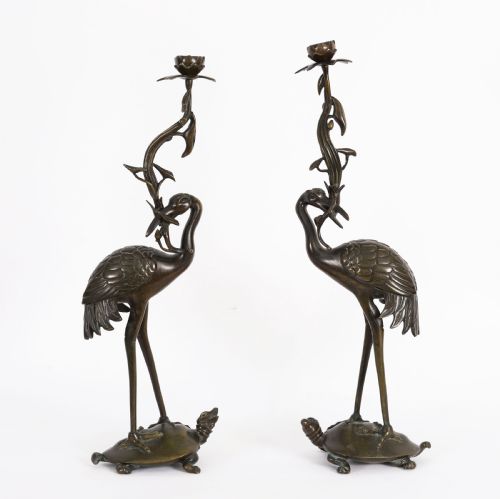
Forms range from compact table candle holders to imposing floor-standing church candle stands intended for ecclesiastical or grand domestic settings. Buyers frequently encounter matched pairs in brass, bronze, and carved wood reflecting Gothic Revival and Baroque designs.
Origins span across English, French, Italian, and Dutch workshops, with Amsterdam School and regional European pieces appearing regularly. These objects bridge the gap between utilitarian church equipment and decorative art.
How they were made
Metal examples utilise cast and turned brass, heavy bronze, and forged wrought iron, often finished with patination or applied silver leaf. Artisans shaped molten alloys into detailed drip pans and shafts before mounting the characteristic iron pricket spike.
Wooden variants rely on carved pinewood, walnut, and treen, frequently enhanced with gesso, polychrome paint, and giltwood layers. Craftsmen shaped these organic materials into architectural torcheres and altar sticks before applying decorative surface treatments.
Design influences include Gothic Revival, Baroque, Amsterdam School, and Italian Neoclassical styles applied to altar stands and torcheres.
What varies in quality
Quality rests upon the crispness of the casting in metal pieces and the depth of hand-carving in wooden examples. Heavy gauge brass and dense carved walnut distinguish substantial altar pieces from lighter decorative items.
Original surface finishes, such as period gilding, patinated bronze, and authentic silver leaf, dictate the visual integrity of a piece. Retaining untouched historical surfaces elevates an object above heavily restored or later-varnished equivalents.
The Antique Pricket Stands Glossary
- Pricket
- A sharp metal spike projecting upwards from the centre of a drip pan to secure the base of a candle. This form predates standard socket candlesticks.
- Torchere
- A tall decorative stand or candlestick designed to support a light source at a raised height. These pieces often feature slender carved wooden columns.
- Giltwood
- Timber that has been coated with a thin layer of gold leaf or powder over a preparation of gesso. It provides a luminous surface on church furnishings.
Antique Pricket Stands: Frequently Asked Questions
What is a pricket stand?
A pricket stand is a candle holder featuring a vertical metal spike that pierces the base of a candle to hold it securely in place.
These pieces originate largely from church and chapel environments, where large wax candles provided essential light for altars and ceremonies.
How do I date an antique pricket stand?
Dating relies on examining the manufacturing techniques, material composition, and stylistic markers such as Gothic Revival or Baroque motifs.
Heavily patinated brass, hand-forged iron, and genuine giltwood over carved pine typically point towards eighteenth and nineteenth-century craftsmanship.
Where should I place a floor torchere?
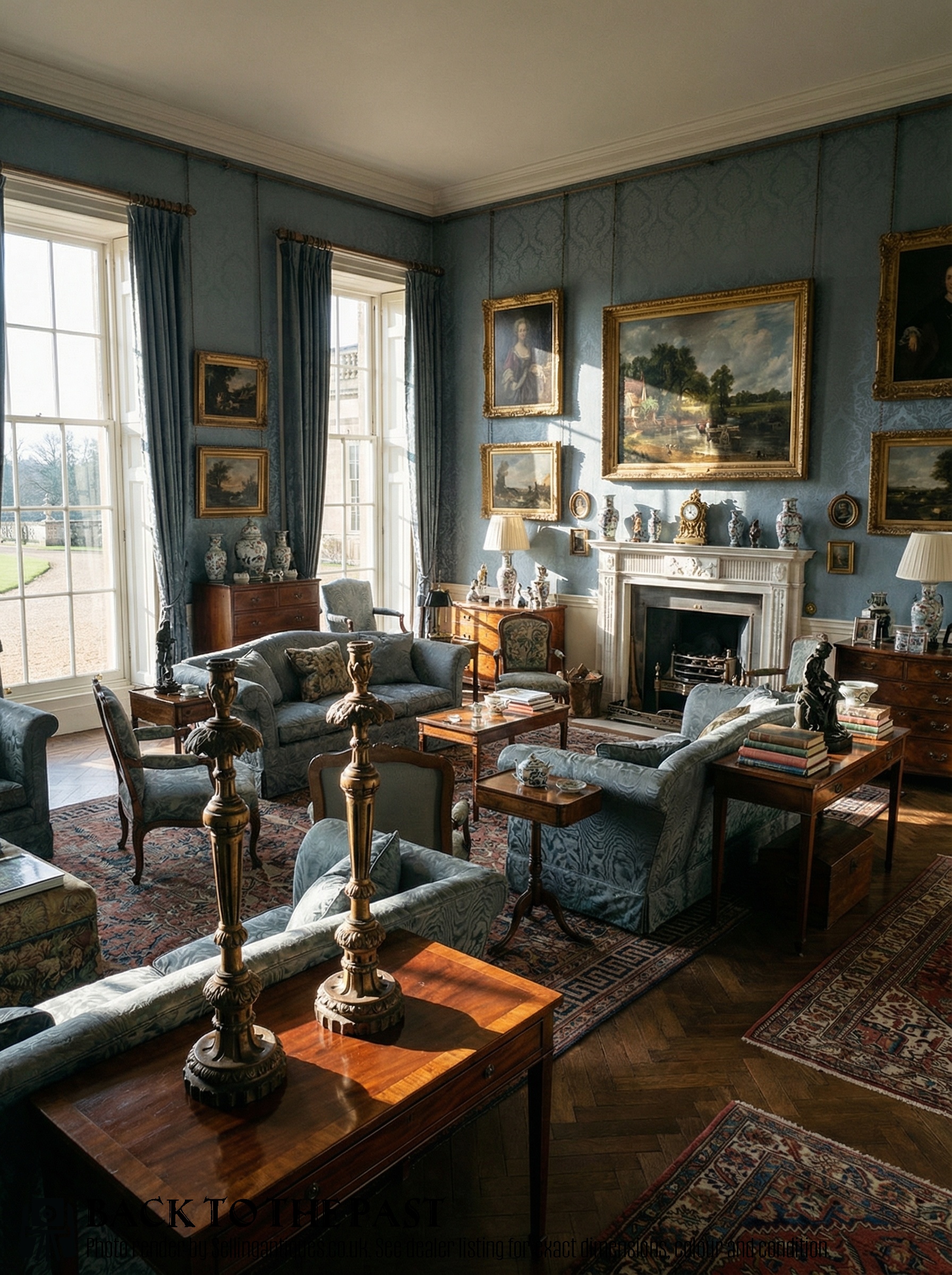
Floor torcheres work effectively in corners or flanking larger pieces of furniture where their height can add vertical balance to a room.
They function well as sculptural accent pieces rather than primary reading lights, preserving their historical character.
Are these candle holders stable?
Most antique pricket stands are built with heavy weighted bases, wide drip pans, or substantial tripod feet designed to support tall candles safely.
Heavier bronze and cast brass versions offer high stability, while taller wooden torcheres benefit from placement in low-traffic areas.