


Antique Altar Candlesticks
Antique altar candlesticks bring centuries of ritual and theatrical design straight into a room, offering serious sculptural presence.
Identifying antique altar candlesticks
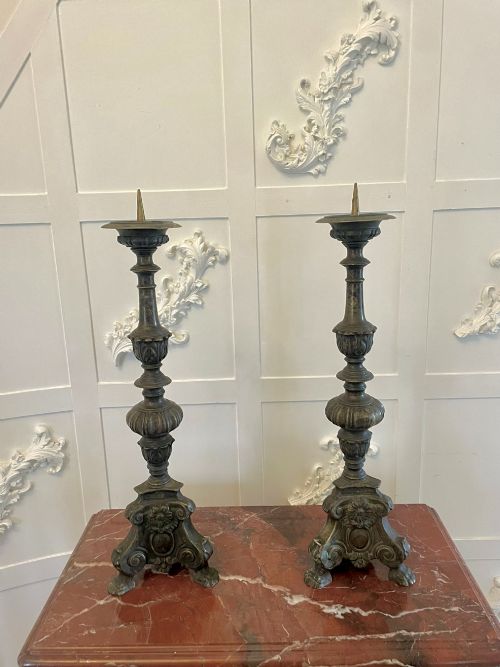
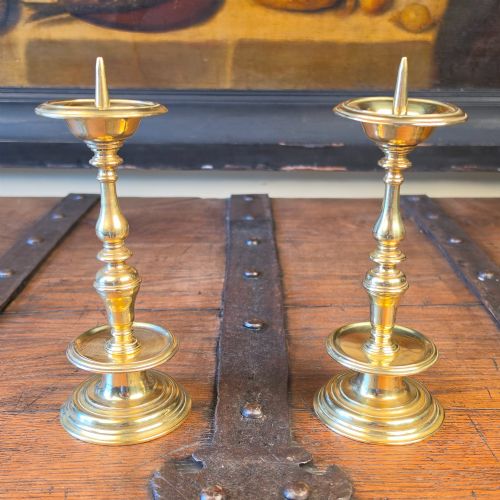
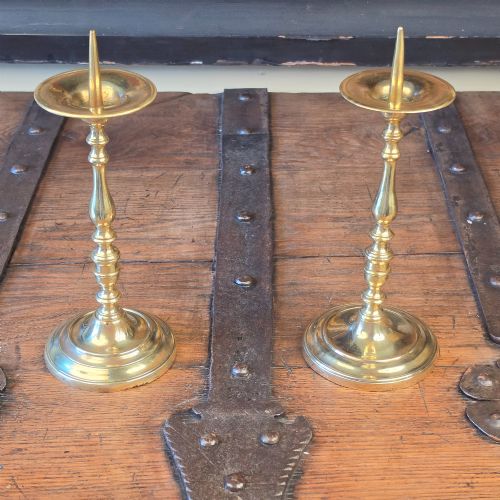
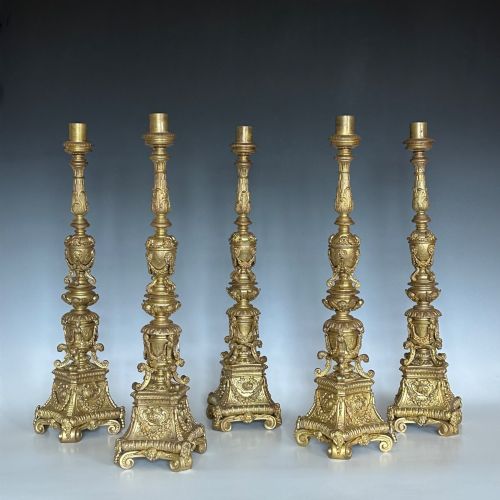
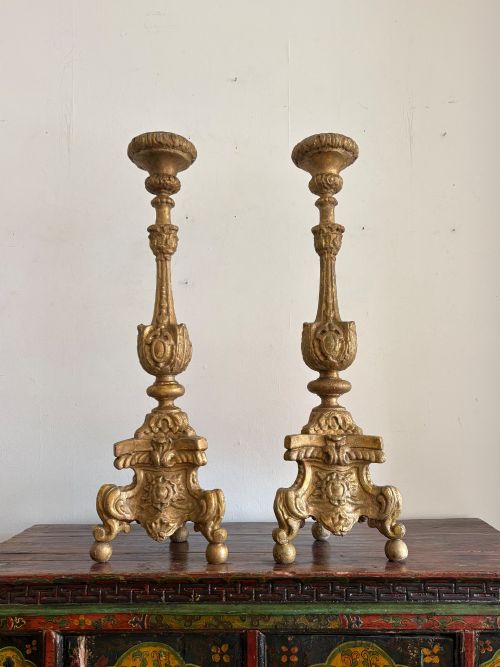
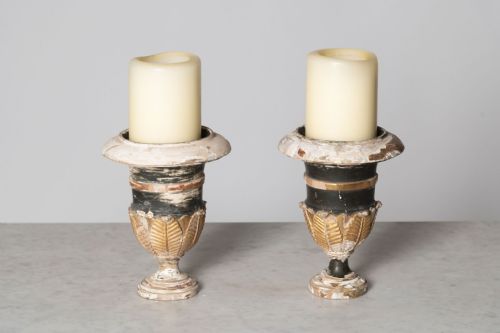
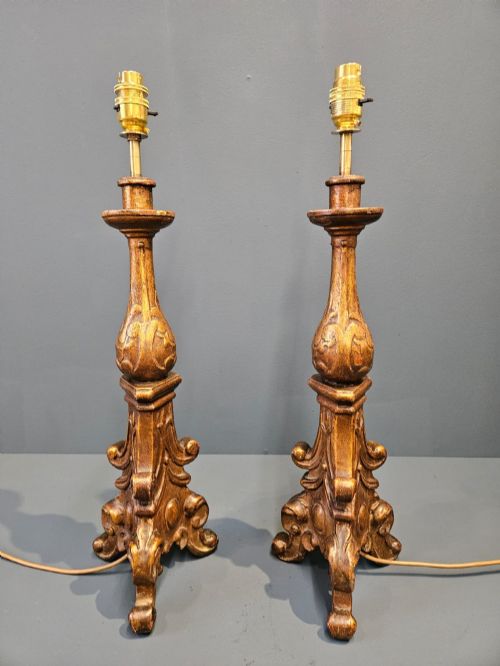
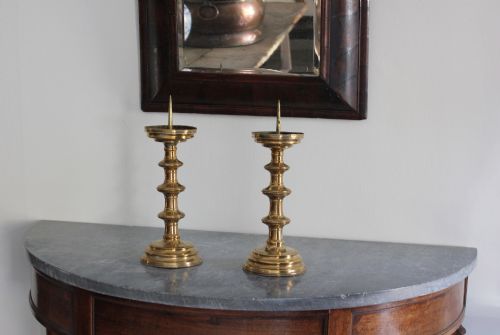
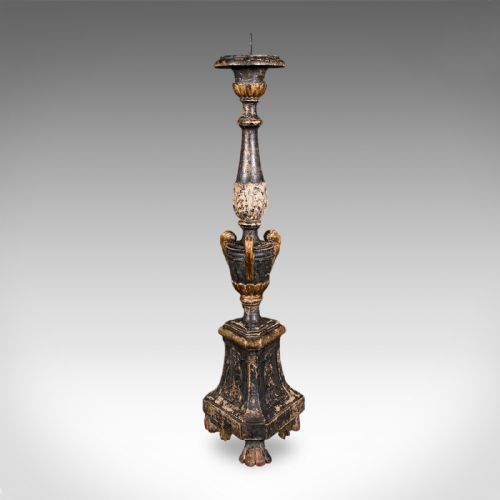
When you search for antique altar candlesticks, you encounter objects originally designed for ecclesiastical use, ranging from domestic scale to towering church furnishings. The examples appearing on this page span the seventeenth, eighteenth, and nineteenth centuries, taking the form of traditional candlesticks, pricket sticks, and large torcheres or candle stands.
The styles recorded in the inventory lean heavily towards the Baroque and Italian Baroque, alongside nineteenth-century Victorian interpretations. These pieces often arrive in pairs, showing substantial height and architectural silhouettes that served to command attention on sacred tables.
Origins represented in the evidence point to Italian and French workshops, utilising forms built for high-impact visual display. Whether functioning as pricket sticks with a spike for large wax blocks or standard candle-holders, their ecclesiastical heritage defines their robust proportions.
Materials and construction methods
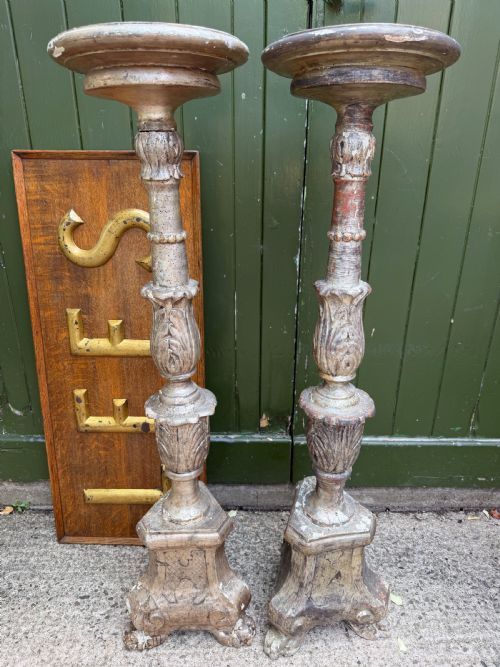
Construction relies on durable hardwoods and metals, with pieces fashioned from carved wood, giltwood, iron, and brass. Wooden supports frequently receive layered preparation using gesso before being finished with silver leaf or gold leaf, creating a reflective surface suited to candlelight.
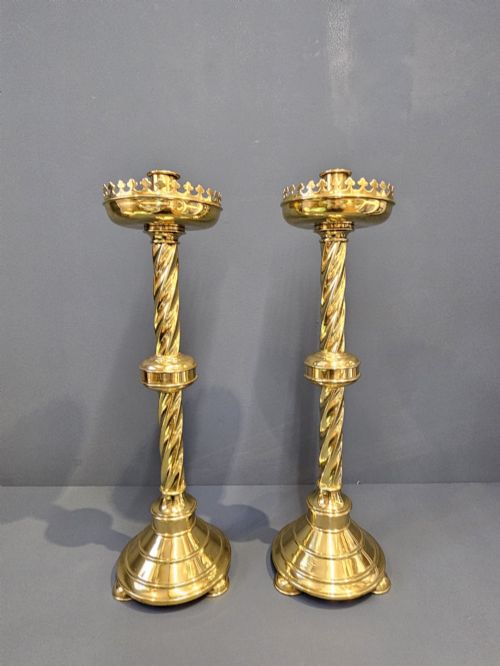
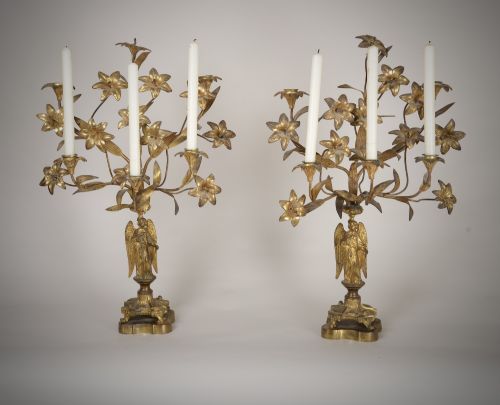
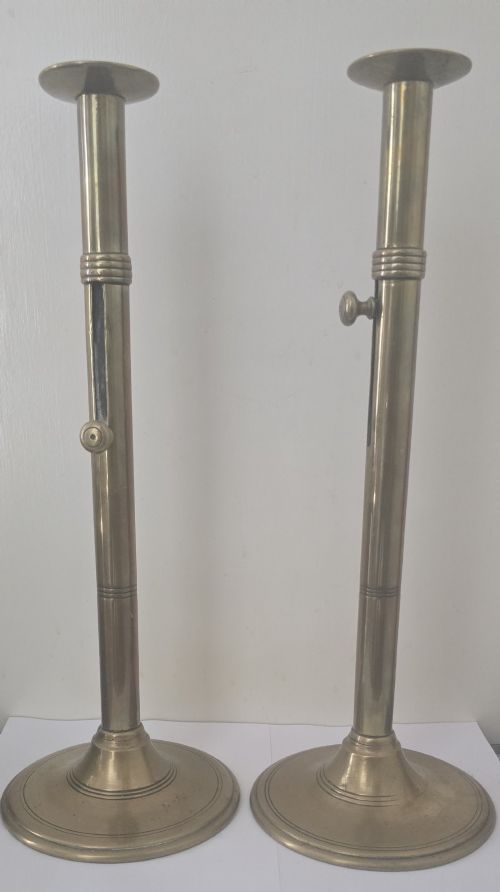
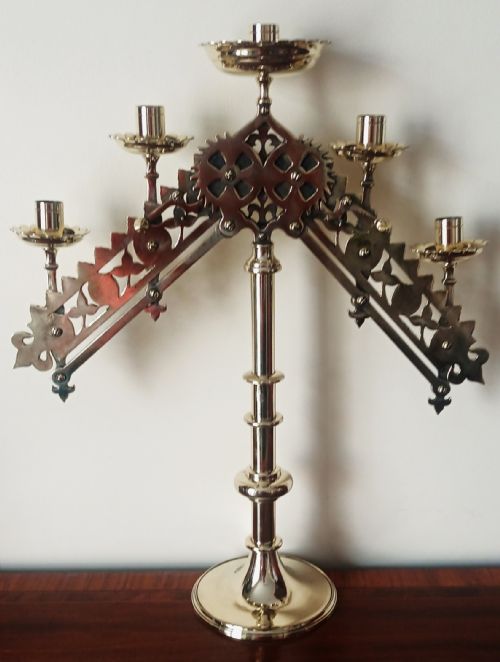
Metals are cast or forged, seen in substantial Victorian brass creations and iron frameworks. Carving is executed by hand, particularly evident in figurative elements such as carved angel candlesticks and intricate torchere stems.
Retail Price Guide 2026
Typical UK retail prices for altar candlesticks, calculated from the Sellingantiques database of over a million retail prices indexed since 2003. This retail price guide relies exclusively on Sellingantiques data; no external sources or auction records are used, so the figures do not describe the wider market.
Listings span three distinct centuries, incorporating seventeenth-century carved figures, eighteenth-century Italian torcheres, and Victorian brass ware.
Judging quality in ecclesiastical lighting
Quality rests in the crispness of the hand-carving and the depth of the foundational gesso beneath the silver leaf. Superior examples display confident, naturalistic forms in figures and foliage rather than rigid or flat execution.
The integrity of the original surface finishes, whether patinated brass, iron, or aged metallic leaf, determines the visual weight of the piece. Substantial scale and balanced proportions separate impressive architectural stands from simpler domestic items.
The Antique Altar Candlesticks Glossary
- Pricket stick
- A candlestick featuring a sharp metal spike at the top designed to impale a large candle, rather than a socket. This form is particularly common in older ecclesiastical pieces.
- Torchere
- A tall decorative stand or candlestick designed to hold a light source high above the floor. The evidence includes Italian carved examples of these large stands.
- Gesso
- A plaster-like mixture applied to wood as a smooth base for painting or gilding. It allows for crisp decorative moulding before silver leaf is laid down.
- Baroque
- A flamboyant artistic style originating in Italy, characterised by dramatic movement and rich detail. Many items in this category draw directly from this theatrical aesthetic.
Frequently Asked Questions
How were antique altar candlesticks used?
These items stood upon altars or within sanctuaries to hold candles during religious services and ceremonies. Their elevated height ensured the light carried across large sacred spaces.
Over time, many transitioned from houses of worship into secular decorative contexts, where they retain their striking vertical presence.
Are these candlesticks safe for daily use?
Most antique altar candlesticks are heavy and stable, but their historical nature means care is required with open flames. Many collectors prefer to display them unlit or utilise modern LED candles to protect fragile historic surfaces.
Their substantial weight, particularly in floor-standing torcheres and large brass pieces, prevents accidental tipping when placed securely on furniture.
How do I tell an 18th century stick from a 19th century one?
Seventeenth and eighteenth-century examples frequently employ carved wood with gesso and silver leaf, often featuring baroque scrollwork or figures like carved angels. These tend to show hand-wrought construction methods.
Nineteenth-century Victorian pieces in the record lean towards cast brass, offering a different metallic weight and finish compared to earlier organic materials.
What is the difference between a candlestick and a torchere?
Candlesticks are typically proportioned to sit on tables, altars, or sideboards. Torcheres are much larger stands built to function at floor level or on substantial bases.
The inventory includes both table-height pricket sticks and tall floor-standing torcheres designed for maximum visual impact.