


Brown Wooden Candle Holders
These brown wooden candle holders bring warmth and texture into a room, taking forms from the eighteenth and nineteenth centuries.
Brown Wooden Candle Holders
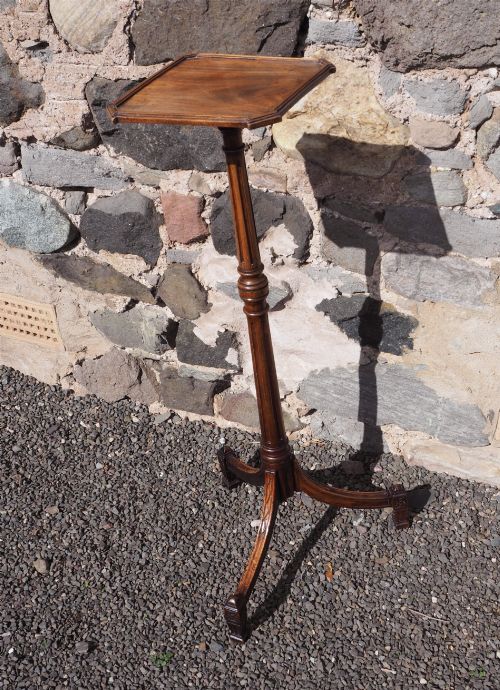
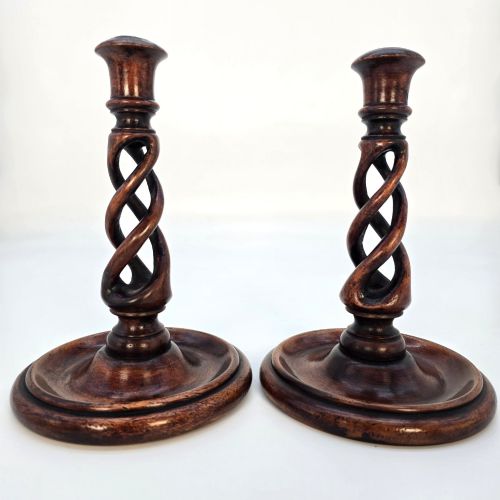
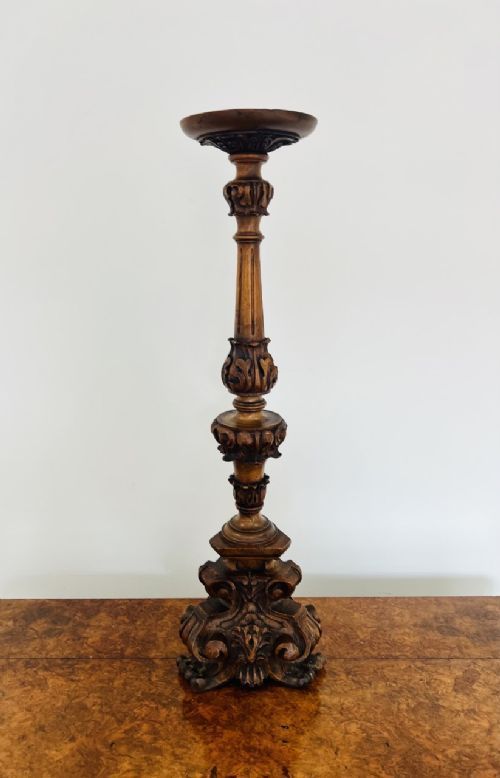
Brown wooden candle holders encompass practical lighting pieces and decorative stands produced across several historical periods, including Georgian, Victorian, and Edwardian eras. Buyers searching for brown wooden candle holders will find items ranging from turned table candlesticks and travel pieces to larger floor-standing torcheres.
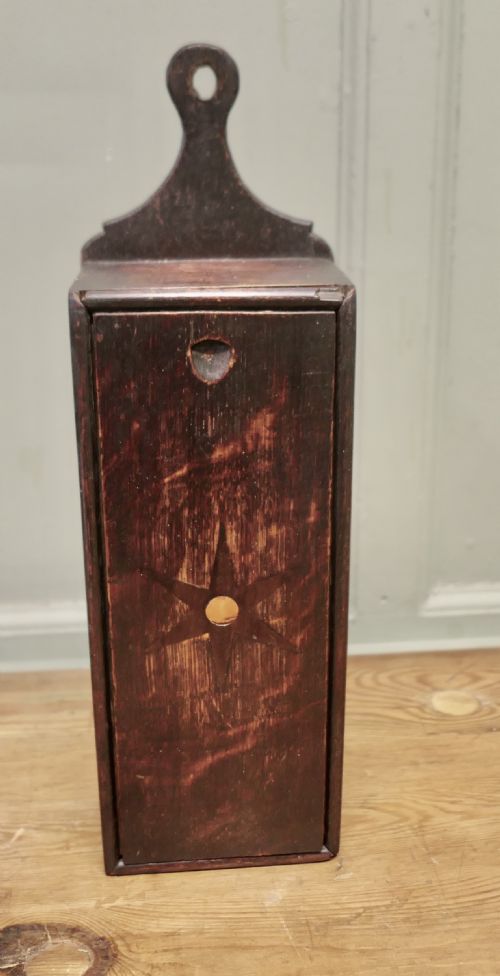
The selection includes specific forms such as wall-hanging candle boxes, chamber sticks, rushlight holders, and figural candle holders carved from various timbers. These objects demonstrate the diverse ways makers adapted wood for domestic illumination and display over the centuries.
How they were made
Makers utilised woods such as walnut, mahogany, oak, fruitwood, and olive wood, frequently incorporating brass fittings for socket inserts or structural support. Turning on a lathe created spiral and open twist stems, while other pieces received detailed hand-carving to form figures or architectural motifs.
Construction techniques varied from simple pegged joints in utilitarian wall boxes to complex multi-part turnings on formal candlesticks and torcheres. Individual pieces reflect the specific workshop traditions of English, continental, and Asian makers.
Brighton buns unscrew to hide a candle inside, serving as pocket-sized companions for travellers navigating dim Georgian corridors.
What varies in quality
Quality rests on the crispness of the carving, the precision of the wood-turning, and the choice of timber figure. Pieces with well-defined details and balanced proportions demonstrate superior craftsmanship compared to simpler utilitarian items.
The integrity of the timber and the retention of original brass components or surface finishes distinguish finer examples. Patina and the natural ageing of the wood also contribute significantly to the visual appeal of each piece.
The Brown Wooden Candle Holders Glossary
- Torchere
- A tall decorative stand designed to support a light or plant. These freestanding pieces often feature carved or turned columns.
- Chamber stick
- A short candlestick fitted with a pan to catch dripping wax and a handle for carrying from room to room. They often incorporate brass accents.
- Rushlight holder
- An iron clip mechanism mounted in a wooden base designed to grip a dried rush dipped in fat for cheap illumination. These represent early domestic lighting.
- Brighton bun
- A compact, portable travelling candlestick formed from two wooden halves that screw together to enclose the candle. They use woods like olive wood.
- Treen
- Small handmade wooden household objects valued for their utilitarian charm and tactile qualities. The term covers items like turned boxes and small stands.
Brown Wooden Candle Holders: Frequently Asked Questions
How do I clean wooden candle holders?
Dust gently with a soft dry cloth to preserve the surface finish and natural patina built up over decades.
Avoid using water, harsh detergents, or modern furniture polishes, which can damage aged timber and softer historic waxes.
What woods were commonly used?
Makers utilised dense hardwoods like walnut, mahogany, and oak for durability and rich colour.
Softer fruitwoods and olive wood also appeared, particularly for turned twist stems and specialised travel items.
How do I tell Georgian from Victorian pieces?
Georgian items typically display restrained proportions and simpler classical turning derived from eighteenth-century design principles.
Victorian and later pieces often introduce heavier proportions or revival styles such as Gothic Revival and Baroque Revival.