
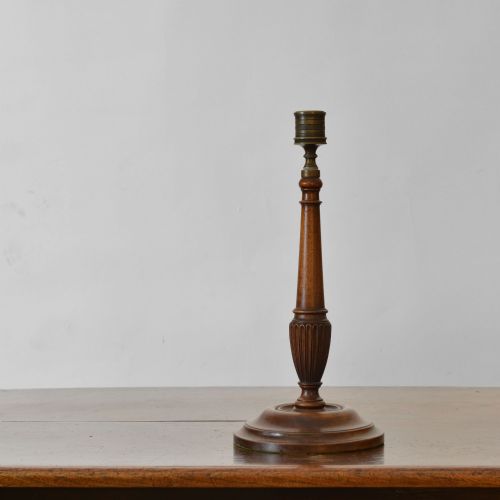
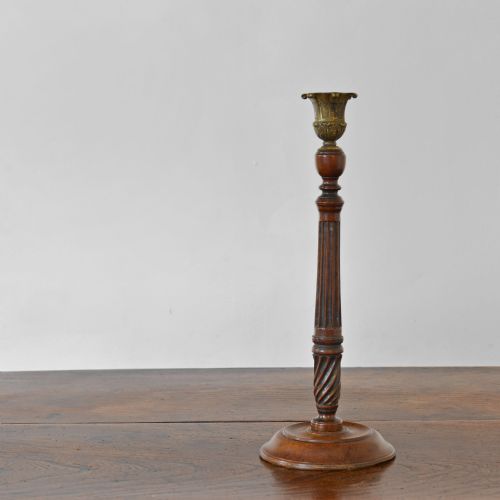
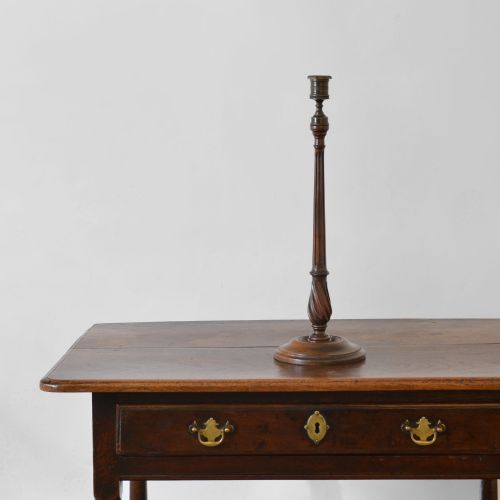


Turned Mahogany Candlesticks
Turned mahogany candlesticks are classic timber lighting pieces that bring warm grain and architectural form to any room.
Turned Mahogany Candlesticks
When you search for turned mahogany candlesticks, you encounter items shaped on a lathe from dense tropical timber, often paired with brass sockets or bobeches. These objects span several eras, from the eighteenth century through the Victorian and Edwardian periods.
You are most likely to meet pairs dating from the Georgian period or the nineteenth century, alongside later Edwardian and 1920s examples that occasionally serve as converted table lamps. The forms range from plain turned columns to sophisticated Adam style or George III style profiles.
The material palette recorded in these pieces relies heavily on rich mahogany supported by brass elements, showing how makers combined timber and metal to protect the wood from candle heat. Collectors prize these items for the way dark polished grain catches ambient light.
How they were made
The primary construction method relies on a lathe to shape solid mahogany timber into baluster, fluted or columnar shafts. Craftsmen turned the wood to achieve precise symmetry before polishing the surface to highlight the natural grain.
Makers frequently integrated brass sconces, nozzles or weighted bases into the mahogany structure. This combination provided stability and a secure metal receptacle for the candle flame, ensuring both utility and durability.
Several pairs clearly spent decades dodging enthusiastic candle snuffers, earning a few honest bumps that only prove they worked for their living.
What varies in quality
The distinction between ordinary and superior pieces rests on the crispness of the lathe turning and the selection of the mahogany timber. Finer examples display sharp mouldings, elegant proportions and well-figured wood grain that has aged to a deep patina.
The integration of brass components also dictates the standing of a piece, as heavier cast brass sconces and properly weighted bases denote better workshop standards. The survival of a matching pair rather than a single stick elevates the desirability among collectors.
The Turned Mahogany Candlesticks Glossary
- Mahogany
- A durable, reddish-brown tropical hardwood prized for its rich grain and stability in furniture and decorative objects. It takes a high polish and forms the primary body of these pieces.
- Fluted
- A decorative technique featuring parallel vertical grooves carved or turned into the shaft of the candlestick. This classical detail adds vertical emphasis and visual texture.
- Baluster
- A moulded shaft characterised by a swelling lower portion tapering toward the top. It provides a robust and balanced silhouette common in traditional turned woodwork.
- Bobeche
- A collar or pan fitted below the candle nozzle to catch melting wax. It protects the polished mahogany surface from drips.
Turned Mahogany Candlesticks: Frequently Asked Questions
What periods do these pieces span?
The inventory encompasses items from the eighteenth century through the Georgian and Victorian eras, extending into the Edwardian period and the nineteen-twenties.
Most examples reflect traditional English styling, including specific revivals such as the Adam style and George III style.
Were these items used for lighting?
Yes, these objects functioned primarily as domestic lighting before the advent of electricity, holding wax candles on tables and mantelpieces.
Some later examples from the twentieth century were manufactured or subsequently adapted as table lamps.
How do I care for mahogany candlesticks?
Keep polished timber away from direct heat sources and strong sunlight to prevent the wood from drying out or fading over time.
Apply a gentle application of appropriate wax polish occasionally to maintain the lustre of the grain.
Why do some candlesticks include brass?
Brass sconces and fittings were incorporated to safely contain the flame and hot wax away from the flammable mahogany timber.
This metal addition also added necessary weight to the base for improved stability.