
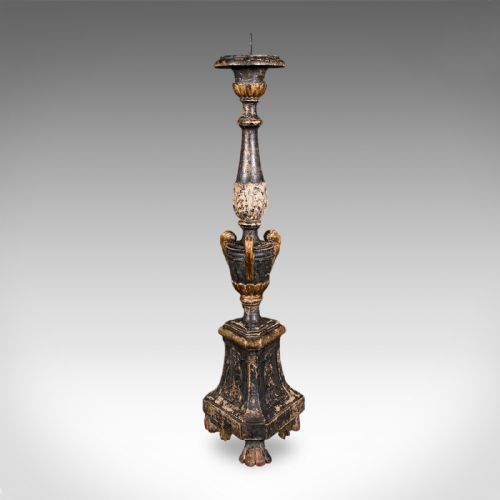


Georgian Wooden Candlestick
A georgian wooden candlestick brings tactile warmth to a room, offering rich timber grains and traditional forms that collectors prize.
Georgian Wooden Candlestick
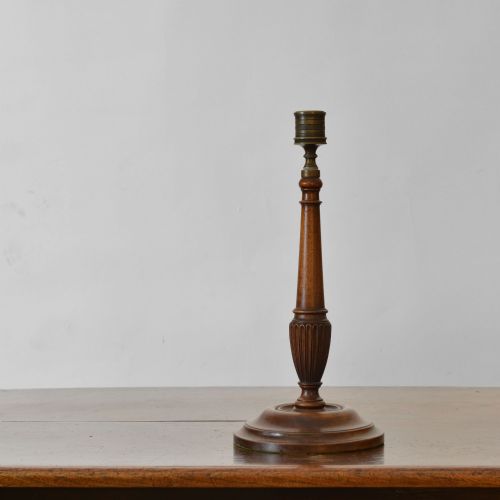
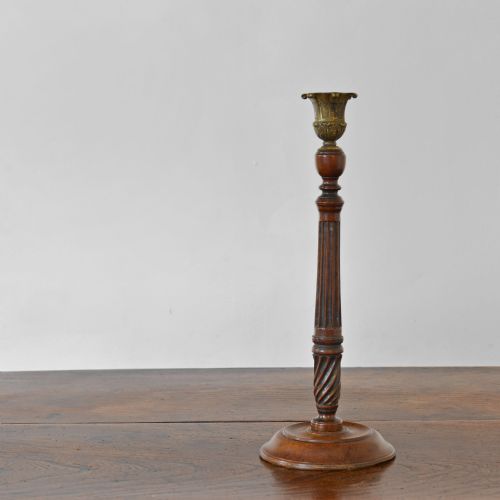
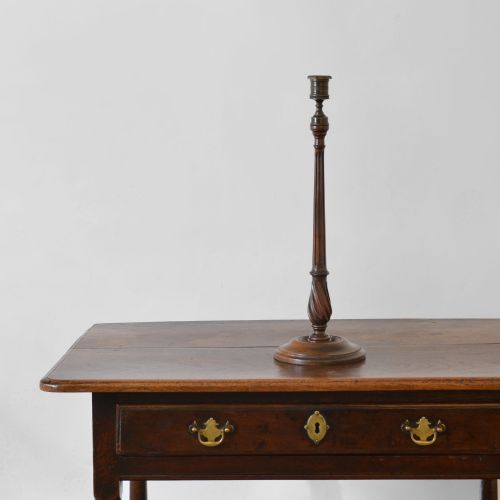
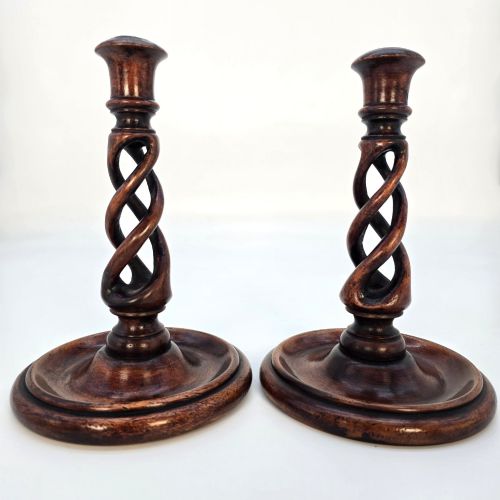
When you search for a georgian wooden candlestick, you encounter turned and carved lighting pieces spanning the eighteenth and nineteenth centuries. These items appear in mahogany, fruitwood, olive wood, and ebonised timber, frequently accompanied by brass or gilt details.
The selections available here showcase various forms, from single mahogany stems to pairs of fruitwood open twists. Alongside standard table lighting, the inventory includes travelling variants and related treen items from diverse periods.
While many examples align with Georgian and Regency eras, items from Victorian and Edwardian periods also appear. This mix reflects how traditional forms persisted long after the Georgian period ended.
How they were made
Woodturners shaped these objects on lathes, utilising dense hardwoods such as mahogany and lignum vitae to achieve slender stems and stable bases. Fruitwood and olive wood also provided smooth surfaces suited to intricate turning.
Many examples incorporate brass sconces to hold candles safely away from the timber. Giltwood, gesso, and gold leaf additions bring decorative contrast to the warm wood grains.
Listings on this site show mahogany, fruitwood, and olive wood candlesticks spanning the Georgian, Regency, and Victorian periods.
What varies in quality
The refinement of the turning dictates much of the character, separating simple utility objects from pieces with crisply defined profiles. Twist stems and carved details demand high skill from the maker.
Material choice also defines the tier of the piece, with dense exotic timbers and matched pairs commanding greater visual presence than common utility woods.
The Georgian Wooden Candlestick Glossary
- Treen
- Small handmade wooden objects for domestic use. This term covers turned items like small candlesticks and travelling pieces.
- Sconce
- The metal socket fitted to the top of a candlestick. Brass sconces protect the wooden body from melting wax and heat.
- Fruitwood
- Timber from fruit-bearing trees such as apple or pear. It offers a tight grain that holds fine turning detail well.
- Lignum vitae
- A dense and heavy natural wood. Makers utilised this exceptionally hard material for durable turned items.
- Pricket
- A sharp metal spike upon which a candle is impaled. This mounting method belongs to older ecclesiastical and domestic lighting traditions.
Georgian Wooden Candlestick: Frequently Asked Questions
What is a Brighton bun?
A Brighton bun is a compact travelling candlestick that unscrews into two halves for packing. Travellers during the Georgian and later periods used these portable items on journeys.
They screw together safely to protect the candle chamber inside during transit. The turned wooden halves resemble small rounded loaves.
How do I date a wooden candlestick?
Dating relies upon timber choice, turning style, and the presence of metal fittings like brass sconces. Mahogany and fruitwood suggest eighteenth or nineteenth-century origins.
Comparing the profile with known Georgian and Regency furniture forms helps confirm the period. Later Victorian interpretations often mimic these earlier styles closely.
Are these candlesticks safe to use?
Most wooden candlesticks accommodate standard taper candles, particularly those fitted with protective metal sconces. Care remains necessary to prevent candles burning down near the timber.
Many collectors prefer using drip protectors or LED candles for display safety. Original brass inserts help shield the wood from direct flame heat.
What woods were commonly used?
Mahogany stands out as a primary material due to its strength and rich reddish-brown tone. Fruitwood, olive wood, and lignum vitae also appear frequently in turned pieces.
Ebonised wood and giltwood finishes provide darker or more decorative surfaces. Each timber reacts differently to the lathe, creating distinct surface textures.