




Antique Candle Pillar
These antique candle pillar designs bring period height and proportion to a room, offering genuine architectural presence through turned wood, gleaming brass and silver.
Antique Candle Pillar
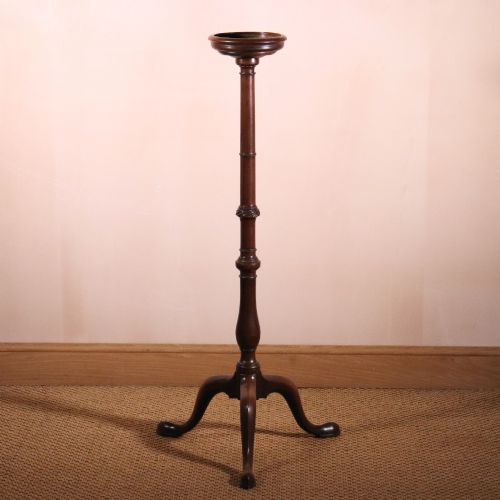
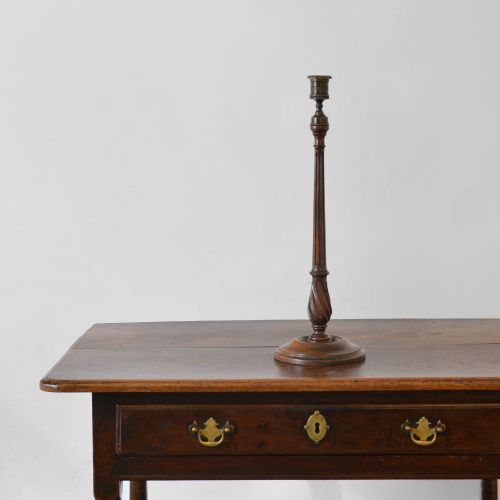
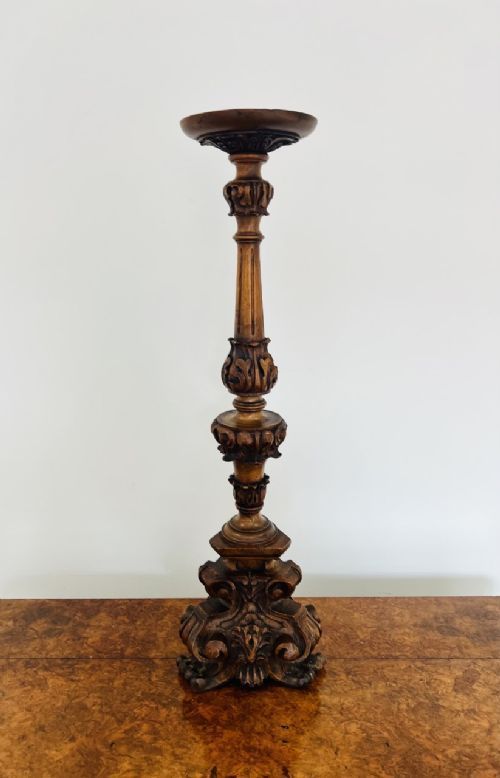
An antique candle pillar encompasses tall wooden torcheres, altar candlesticks and columnar stands designed to elevate a single light source. They appear across the Georgian, Victorian and Edwardian periods in forms ranging from tripod bases to heavy metal columns.
The most common versions met on this page are turned mahogany candlesticks and substantial brass church or domestic pairs. These pieces combine practical illumination with decorative vertical emphasis.
Originating from English workshops and continental makers alike, these stands utilise hardwoods, silver plate and bronze. Their varied heights reflect their original placement on floors, tables or mantelpieces.
How they were made
Makers shaped structural timber such as mahogany, oak and walnut on lathes or carved them by hand into slender columns and tripod supports. Brass, bronze and silver plate were cast and polished to create durable metal shafts and removable sconces.
Surface decoration relies on turned mouldings, painted details and silvered finishes applied to carved wooden cores. Metal elements frequently incorporate weighted bases to maintain stability for tall candle arrangements.
Antique Candle Pillar Retail Price Guide 2026
Typical asking prices for candle pillar among the pieces listed under this phrase on Sellingantiques today, from the lower quarter to the upper quarter. They describe what is for sale here now, not the wider market.
Styles represented include Georgian, Victorian, Neoclassical, Gothic Revival, George II and Baroque Revival.
What varies in quality
Proportion and material density dictate the distinction between standard production and finer examples. Heavier gauge metals and dense, well-figured hardwoods provide structural integrity and a sharper definition to turned details.
Refinements such as removable drip sconces, cast bronze mounts and intricate hand-carving indicate a higher grade of execution. Original surfaces and balanced heights elevate the presence of both wooden torcheres and metal columns.
The Antique Candle Pillar Glossary
- Torchere
- A tall stand designed to support a light fixture or candle, often featuring a slender pillar and tripod base.
- Sconce
- The removable metal pan or socket fitted to the top of a candlestick to catch melting wax.
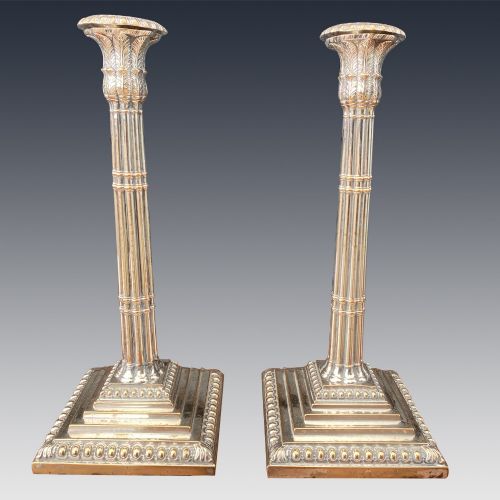
- Old Sheffield Plate
- An early fused metal technique sandwiching a layer of silver between copper sheets, common in Georgian production.
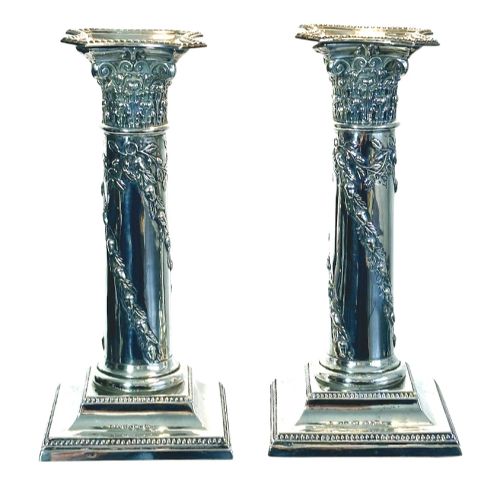
- Corinthian column
- A classical architectural order featuring an ornate capital decorated with acanthus leaves, frequently adapted for brass candlesticks.
Antique Candle Pillar: Frequently Asked Questions
What is an antique candle pillar?
An antique candle pillar is a raised stand, candlestick or torchere designed to hold a candle above furniture or floor level. These pieces serve as both functional lighting and architectural accents.
They appear in materials including brass, mahogany, silver plate and carved wood across Georgian and Victorian periods.
How were torcheres used historically?
Historical torcheres stood in corners or beside seating to illuminate dark rooms before electric lighting became widespread. Their elevated position maximised the reach of a single candle flame.
Over time, many transitioned from purely utilitarian objects to decorative display stands for rooms.
How do I date a brass candlestick?
Dating brass candlesticks relies on examining casting methods, base construction, and stylistic influences such as Neoclassical or Gothic Revival. Modular construction and heavy weight often point towards nineteenth-century production.
Component parts like removable sconces and threaded joins also help determine the era of manufacture.
Can I use real candles on antique pillars?
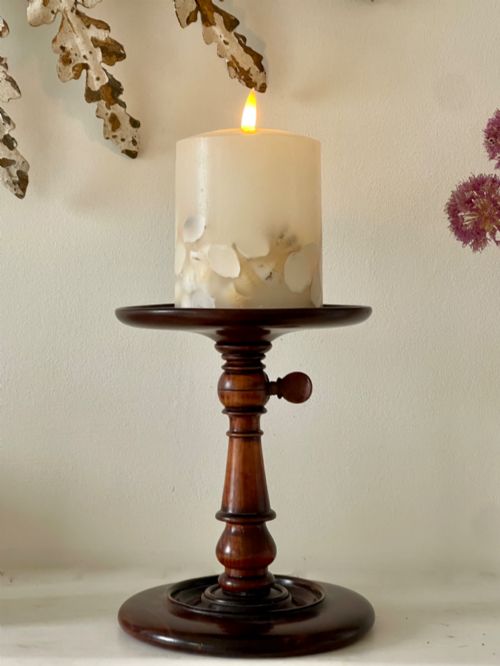
Using real candles is entirely possible provided the pillar remains stable and the socket fits the candle securely. Drip pans and removable sconces protect the surrounding wood or metal from melting wax.
Care should be taken with older silver plated and wooden surfaces to avoid heat or wax damage.