

Tall Wooden Torchere
A tall wooden torchere elevates a lamp, plant, or bust above the floor, bringing height and sculptural form to a corner.
Tall Wooden Torchere
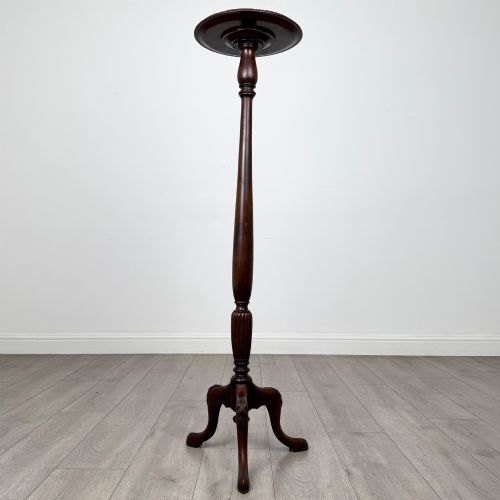
A tall wooden torchere serves as an elevated display piece, historically holding candles or lights and today supporting plants, bronze figures, or decorative vessels. When exploring this selection, buyers encounter tall slender stands rooted in centuries of craftsmanship, ranging from compact pedestals to commanding floor-standing columns.
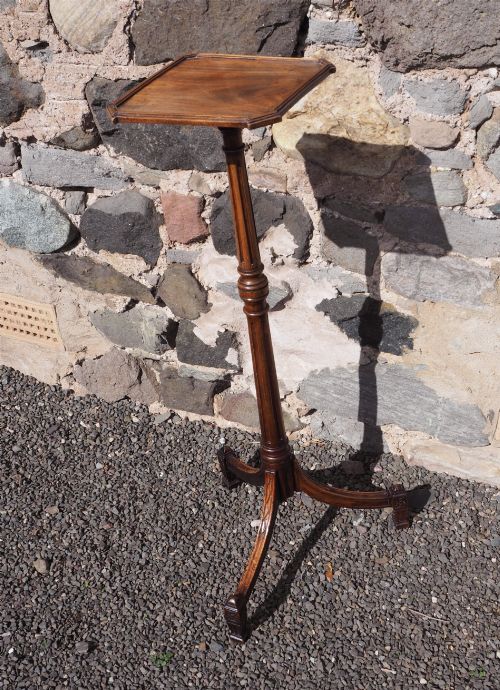
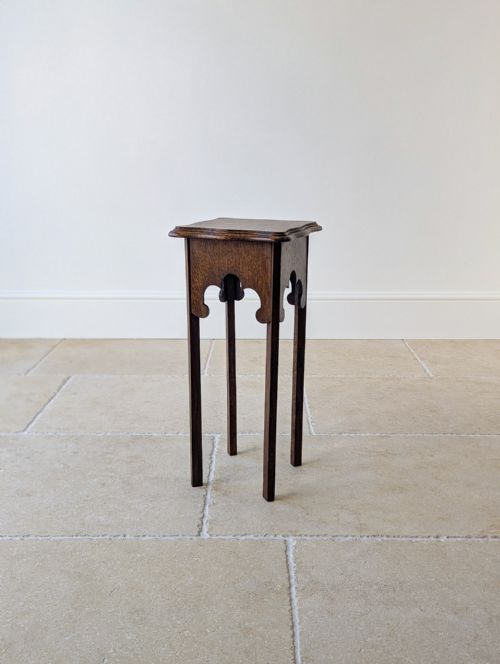
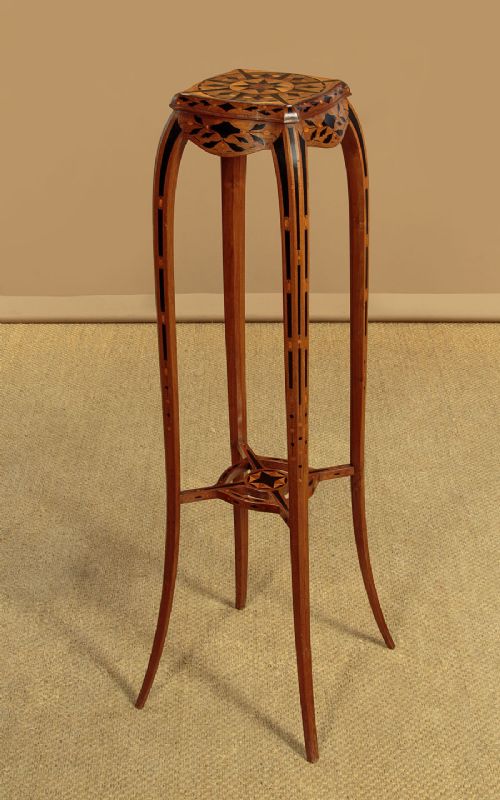
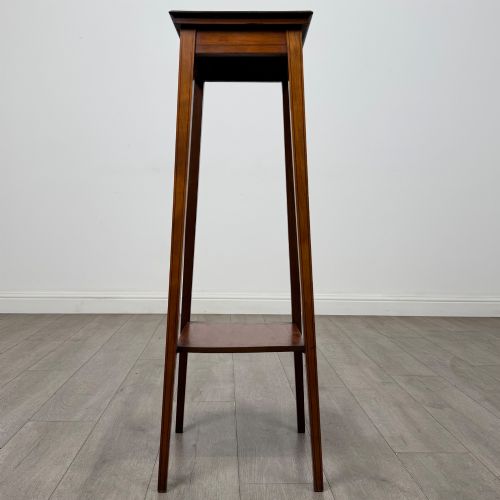
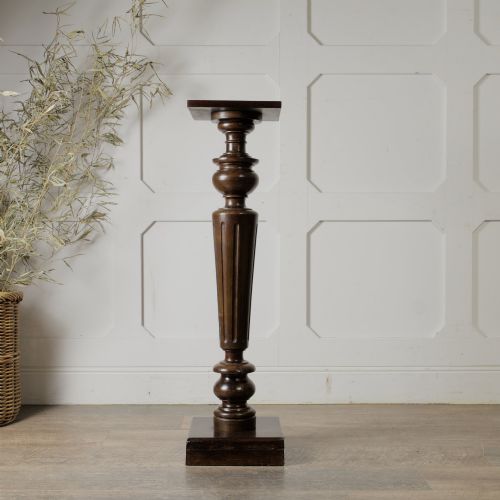
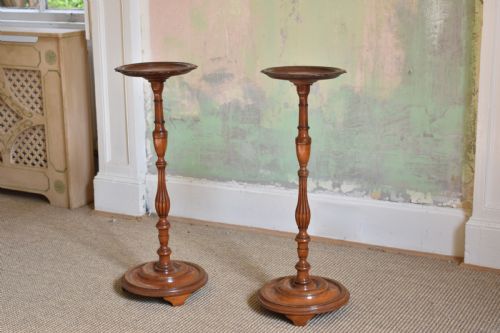
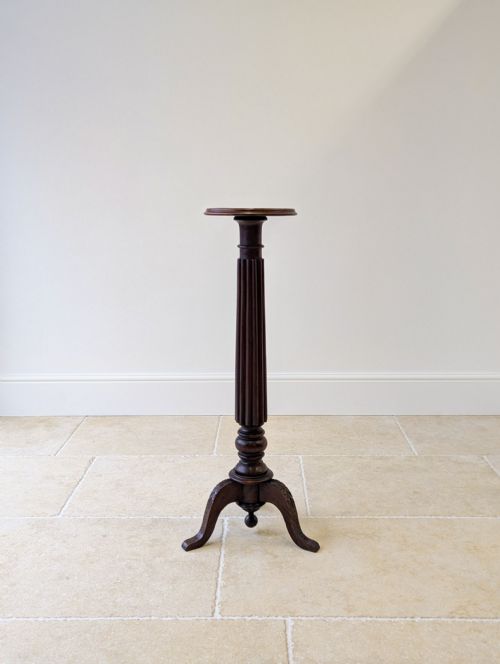
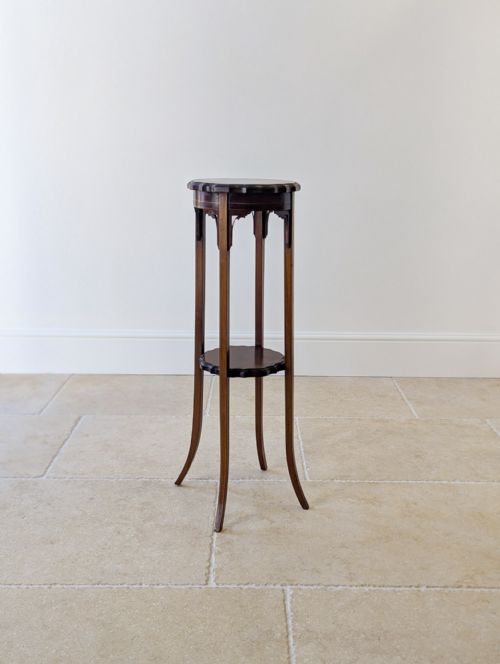
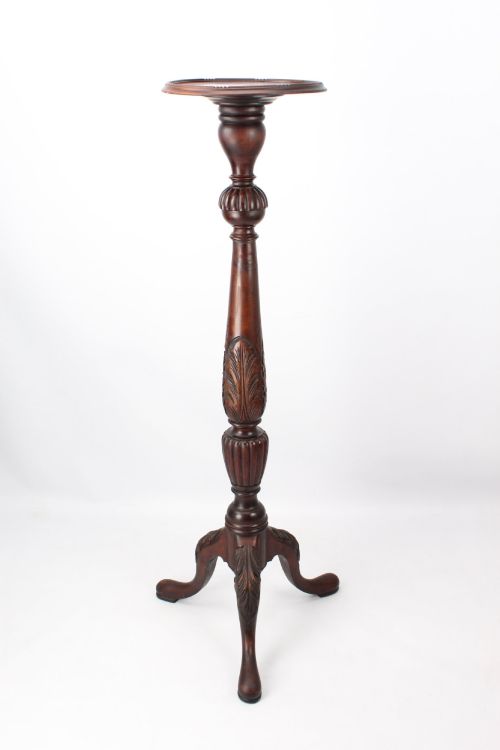
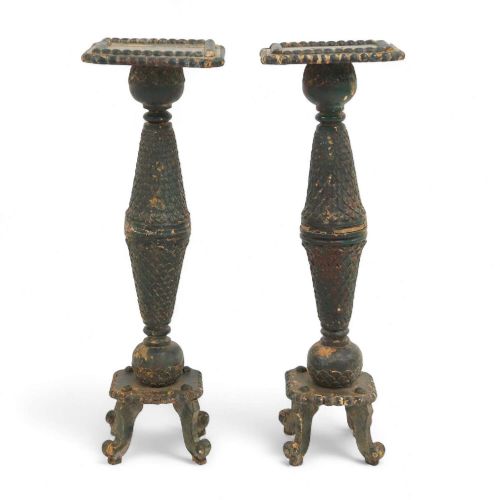
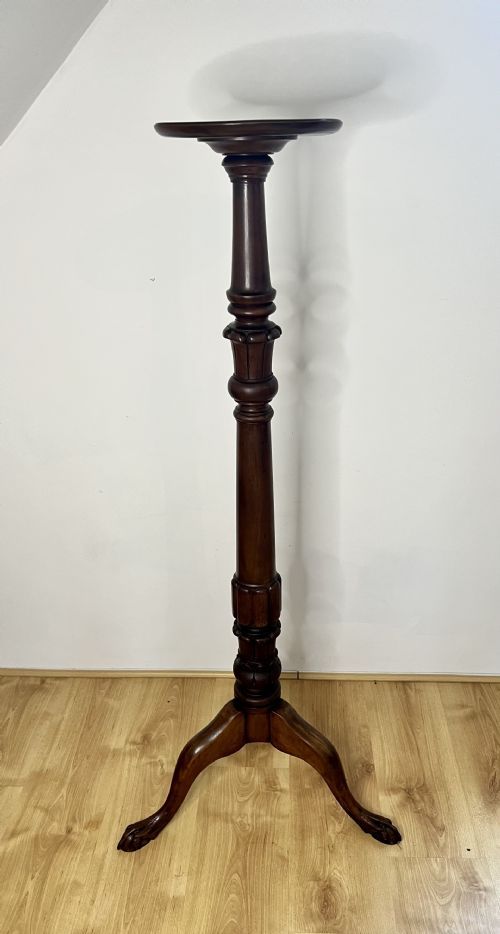
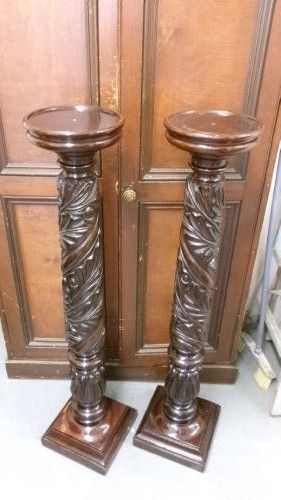
The pieces appearing on this page span several distinct eras, with Victorian and Edwardian examples appearing frequently alongside earlier Georgian and eighteenth-century designs. Formats vary from tripod-based candle stands and fluted mahogany columns to inlaid satinwood plant stands and sturdy oak pedestals.
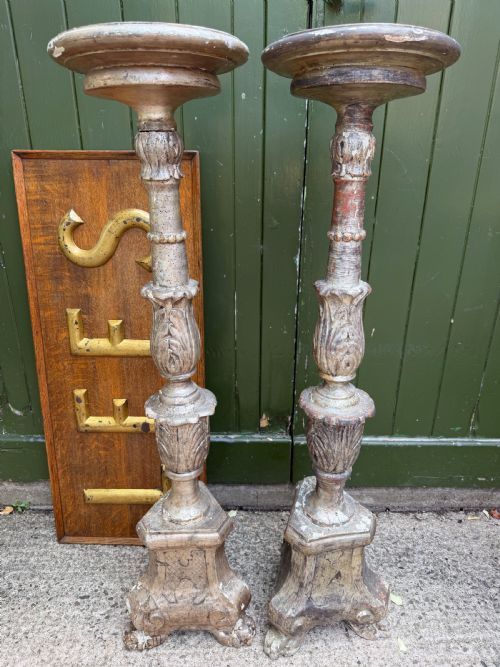
Origins stretch across British workshops as well as continental centres, including Dutch walnut pieces, Italian carved pinewood columns, and French-inspired creations. These stands function equally well in traditional reception rooms and contemporary interiors as vertical accents for displays.
How they were made
Cabinetmakers constructed these stands predominantly from dense timbers such as mahogany, walnut, and satinwood, occasionally utilising oak, yew, or pine beneath decorative finishes. Turning lathes shaped slender shafts and columns, while specialised joinery secured circular or multi-sided tabletops to stable tripod or weighted bases.
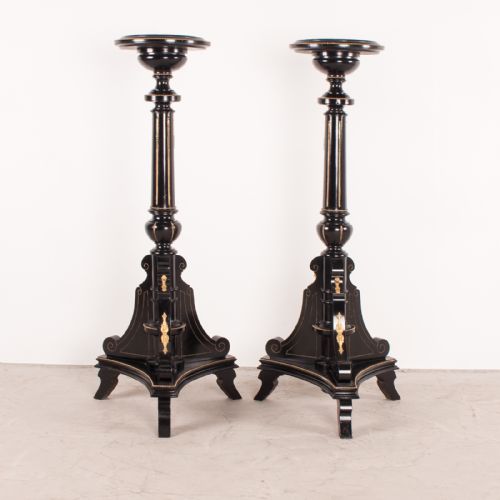
Surface ornamentation involved varied techniques including delicate floral marquetry, satinwood inlay, ebonisation, and gilding, alongside carved details such as acanthus leaves and reeded stems. Certain examples retain original painted finishes or applied gesso, demonstrating the diverse decorative treatments favoured by period makers.
The listings on this page include mahogany, walnut, satinwood, and ebonised timber, spanning the eighteenth, nineteenth, and early twentieth centuries.
What varies in quality
Quality rests upon the crispness of hand-carved details, the precision of inlaid wood, and the selection of figured timber veneers. Superior examples display balanced proportions where the weight of the base securely supports the height of the shaft without wobble.
Subtlety in turning and integrity of construction separate standard production items from master-carved or bespoke commissions. The retention of original surface treatments and finishes also influences the standing of an individual piece.
Shoolbred
The Tall Wooden Torchere Glossary
- Torchere
- A tall stand designed to support a light, candle, plant, or decorative object. Originally intended for illumination, the term now encompasses various slender pedestals.
- Plinth
- A heavy base or lower block supporting a column, bust, or statue. It provides essential stability for tall vertical furniture.
- Marquetry
- Decorative veneer work forming pictorial or geometric patterns using various coloured woods. Craftsmen applied this technique to tabletop surfaces and stems.
- Tripod base
- A three-legged support structure commonly found on candlestands and torchere bases to ensure stability on uneven floors.
- Jardiniere
- An ornamental pot or stand for holding plants or flowers. These often share similar proportions and forms with standard torchere stands.
Tall Wooden Torchere: Frequently Asked Questions
What is a tall wooden torchere used for?
These tall stands function primarily as elevated platforms for display. They hold potted plants, bronze sculptures, urns, or table lamps, adding vertical interest to empty room corners.
Historically, they supported candles to illuminate dark spaces. Today, their narrow footprint makes them practical for adding accent height without occupying valuable floor space.
How do I tell an 18th-century torchere apart from a Victorian one?
Eighteenth-century examples often exhibit restrained classical proportions, dense Cuban mahogany, and hand-carved details associated with Georgian cabinetmaking. They frequently show greater age in the patina of the timber.
Victorian pieces tend to be heavier in construction, utilising elaborate carvings, ebonised finishes, or distinctive tripod bases. Edwardian stands commonly feature lighter satinwood finishes and delicate inlay work.
Are these stands stable enough for heavy plants?
Most torchere stands feature weighted or wide-spreading bases, such as three-legged tripod designs, intended to maintain balance despite the height. However, stability varies depending on the width of the base and the weight distribution of the piece.
When placing heavy ceramic planters or large busts, checking the proportion of the top plate to the base ensures secure placement.
Where should I place a torchere in my room?
These slender stands excel in corners, beside fireplaces, or framing doorways where low furniture leaves walls empty. Their height draws the eye upward, making ceilings appear taller.
Placing one near a light source highlights the grain of the wood and any carved or inlaid decorative details.