


18th Century Wooden Candlestick
An 18th century wooden candlestick brings tactile warmth to a room through centuries of grain, turning simple illumination into an architectural focal point.
18th Century Wooden Candlestick
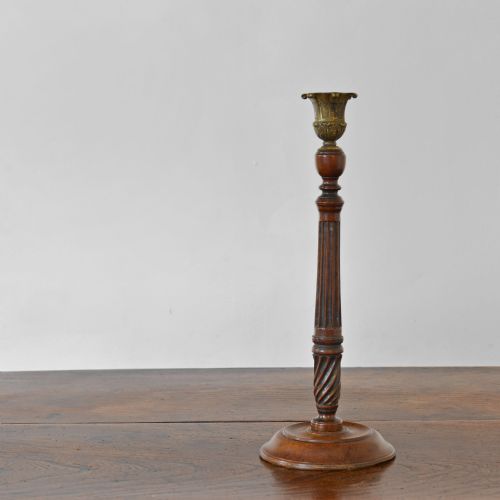
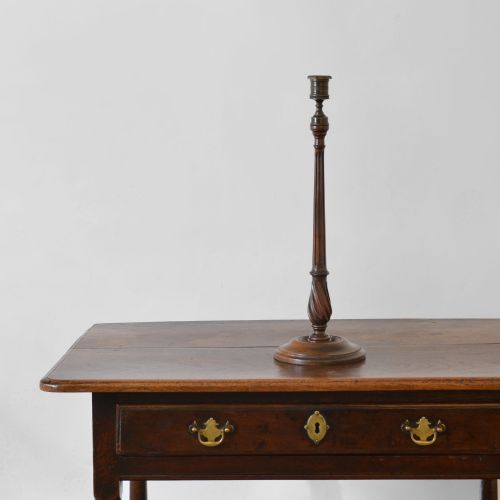
An 18th century wooden candlestick is a functional lighting antique that spans domestic mahogany shafts and elaborate church altar pieces. These items appear in various forms, ranging from simple domestic turned timber to grand continental altar fixtures.
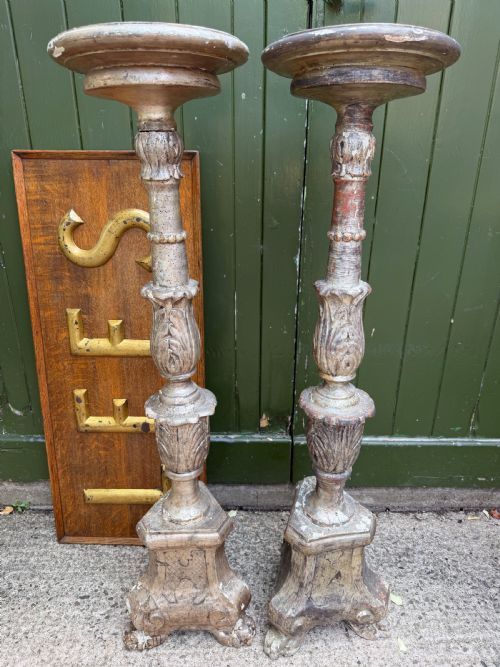
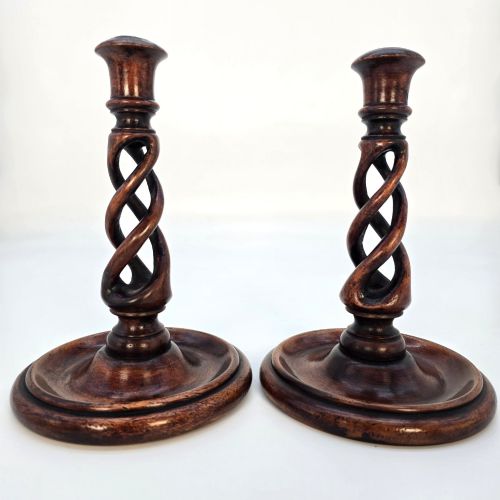
The objects catalogued here include tall torcheres, open twist fruitwood stems, and carved figures holding light. Italian workshops contribute heavily to the selection through giltwood, silvered surfaces, and baroque or rococo ornamentation.
Domestic pieces typically rely on dense timbers like mahogany, whereas continental examples often employ carved wood finished with gesso, silver leaf, or gold leaf. Buyers frequently encounter pairs designed for mantelpieces or larger floor-standing torcheres.
Materials and Construction
Makers utilised native and exotic timbers, selecting mahogany for stability and fruitwood for fine turning. Wood was often carved by hand, shaped on a lathe, or built up with gesso layers before receiving gilding.
Surface treatments define many continental pieces, employing silver leaf, giltwood, and mecca lacquer to simulate rich metalwork. Brass elements occasionally appear as sockets or nozzles to protect the timber from burning wax.
Listings feature diverse materials including mahogany, fruitwood, giltwood, gesso, brass, and silver leaf across domestic and church forms.
Markers of Quality
The crispness of hand-carving separates master pieces from routine workshop production. Deeply undercut acanthus leaves and fluid drapery demonstrate superior artisan skill compared to soft, shallow detailing.
Original surface finishes dictate the desirability of a piece. Retained traces of early gilding, silver leaf, or untouched fruitwood patina hold greater appeal than unsympathetic later overpainting.
The 18th Century Wooden Candlestick Glossary
- Torchere
- A tall stand designed to support a candle or light fitting. These decorative pillars often feature substantial carved wooden shafts and tripod bases.
- Giltwood
- Timber coated with gold leaf or gold paint over a prepared gesso ground. This technique creates a luminous surface common on Italian baroque pieces.
- Mecca
- A warm transparent lacquer applied over silver leaf to imitate the rich tone of gold. It was widely used on Italian altar-type candlesticks.
- Pricket
- A sharp metal spike on a candlestick designed to impale a candle rather than drop it into a socket. Such fixtures often date to ecclesiastical contexts.
18th Century Wooden Candlestick: Frequently Asked Questions
How were wooden candlesticks used safely?
These items held wax candles to illuminate rooms before electric lighting existed. Metal sockets or prickets were frequently fitted to prevent the flame from reaching the combustible wood.
Larger floor torcheres stood in halls or beside furniture, while smaller mahogany and fruitwood versions sat on tables and desks.
Can I use these with modern candles?
Most antique wooden candlesticks accommodate standard taper candles, though original apertures can vary. Dripping wax should be managed carefully to protect ancient timber surfaces and historical finishes.
Some pieces have been adapted into lamps over time, shifting their function from wax holders to electrical fittings.
How do I spot an 18th century piece?
Examine the timber shrinkage, tool marks left by hand chisels, and the composition of underlying gesso layers. Eighteenth-century turning patterns and authentic wear around the base offer strong chronological clues.
Continental pieces often display regional baroque or rococo woodcarving styles distinct from later reproductions.
Where should I place a torchere?
Torcheres suit corners or empty wall spaces where their height adds vertical interest to an interior. They function effectively as sculptural elements even when unlit.
Keep wooden items away from direct heat sources and strong sunlight to preserve the original gilding and timber integrity.