


Vintage Wood Candlestick Holder
These vintage wood candlestick holder examples bring warmth to a room through turned oak, mahogany, and carved details spanning multiple centuries.
Vintage Wood Candlestick Holder
A vintage wood candlestick holder search brings together turned and carved supports designed to hold taper candles, chamber sticks, and pricket lights. You encounter pieces spanning from the seventeenth century through the Georgian, Victorian, and Edwardian eras up to the nineteen-twenties.
Makers and workshops utilised various hardwoods including walnut, lignum vitae, teak, and gessoed surfaces to achieve both robust daily lighting tools and decorative ornaments. Table lamp conversions also appear alongside traditional candle holders.
Materials and construction
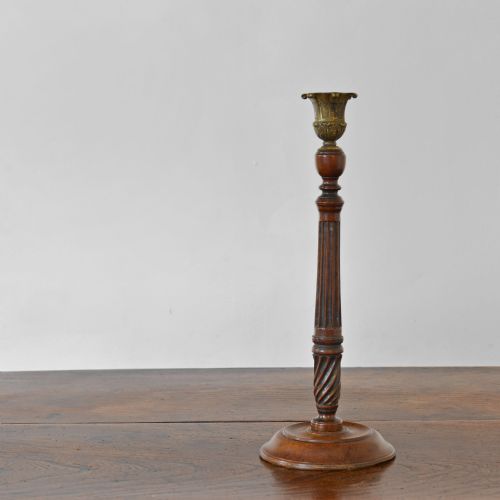
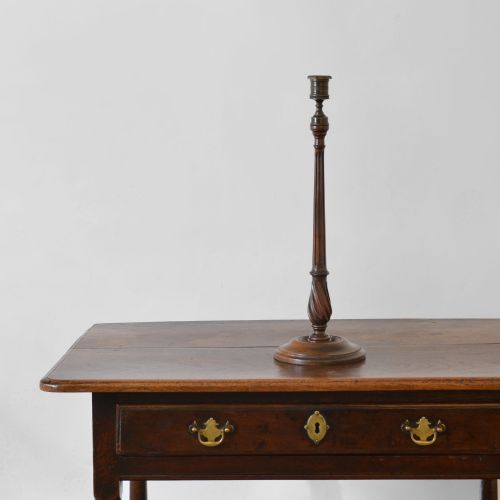
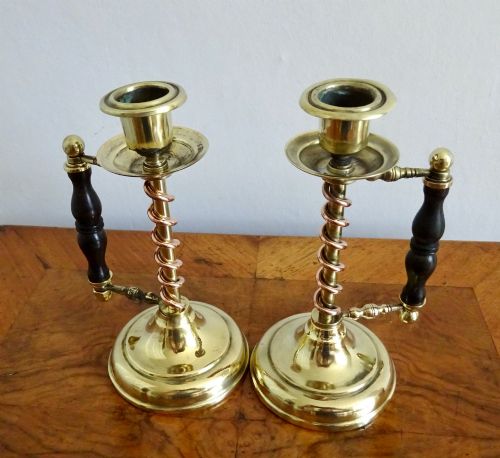
Turned timber forms dominate the construction, utilising lathes to shape mahogany, oak, walnut, and exotic dense woods like lignum vitae into spiral, bobbin, or classical column profiles. Many examples incorporate brass components, fitted socket cups, and weighted bases to ensure stability.
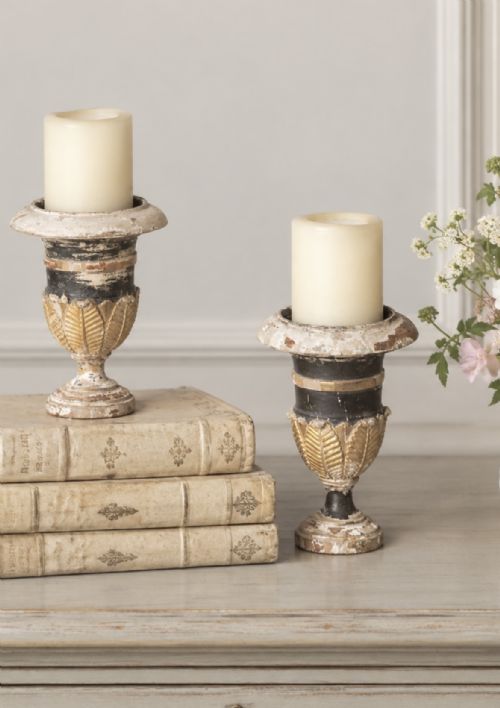
Carved pieces rely on hand-chiselled detailing, seen in folk art figures, giltwood embellishments, and gesso finishes. Joinery typically involves secure turned tenons and threaded or pegged assemblies joining the wooden shafts to their bases.
One pair preserves a royal connection via teak turned from the timber of HMS Renown.
Quality variations
The distinction between ordinary and superior pieces rests on the crispness of the turning and the depth of the hand-carving. Crisp barley twists, well-defined bobbin turnings, and finely rendered figural work separate accomplished workshop output from plain utility items.
Material selection also dictates quality, with dense hardwoods, substantial proportions, and original integrated brass metalwork elevating a piece. The survival of original giltwood surfaces or untouched treen patination marks the better examples in any group.
The Vintage Wood Candlestick Holder Glossary
- Treen
- Small handmade wooden domestic objects produced through turning or carving. These items often develop a rich handling patina over generations of use.
- Barley twist
- A spiral turning technique resembling a twisted rope. This decorative profile became particularly popular on oak and walnut candlesticks during the Edwardian period.
- Chamber stick
- A low candlestick fitted with a wide drip pan and a loop handle. People carried these portable lights through bedrooms and corridors before electric lighting.
- Pricket
- A sharp metal spike projecting upward from a socket to impale a large candle. This medieval form persists in ecclesiastical and decorative Italian candle holders.
- Bobbin turned
- A series of rounded wooden spheres or discs shaped on a lathe along the shaft. The resulting silhouette resembles a string of beads or textile bobbins.
Vintage Wood Candlestick Holder: Frequently Asked Questions
How do I date an old wooden candlestick?
Dating relies on observing timber choices, turning profiles, and associated metalwork like brass sockets. Georgian and nineteenth-century pieces often feature heavier proportions and dense hardwoods like mahogany or lignum vitae.
Later Edwardian and nineteen-twenties examples frequently showcase lighter oak construction with machine-milled barley twist shafts. Comparing the wear patterns around the base and socket helps confirm the age of the piece.
What is treen?
Treen encompasses small functional wooden objects created by turners and woodworkers for domestic use. Candlesticks, bowls, and small boxes fall into this category.
These items were shaped on lathes or carved by hand from various native and exotic woods. Collectors value treen for its tactile quality and the deep lustre developed through handling.
How should I clean wood and brass?
Dust wooden surfaces gently with a dry, soft cloth to preserve the historic patina and wax finish. Avoid liquid cleaners or harsh polishes that strip age from the timber.
If the piece includes brass sockets, clean the metal carefully while masking the surrounding wood. Preventing moisture contact protects both the grain and any gesso or gilt layers.