
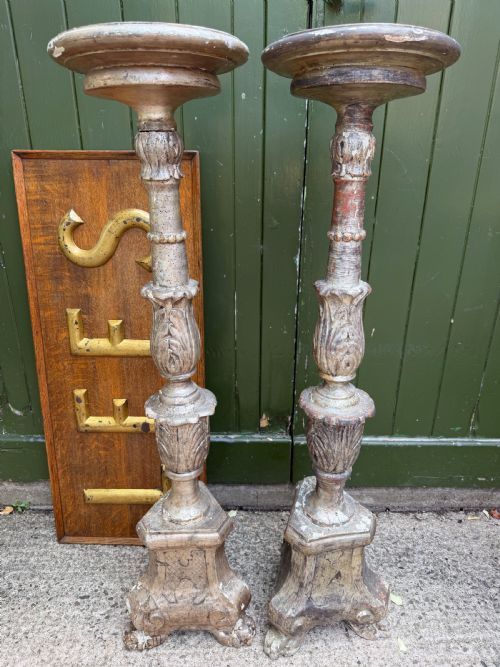
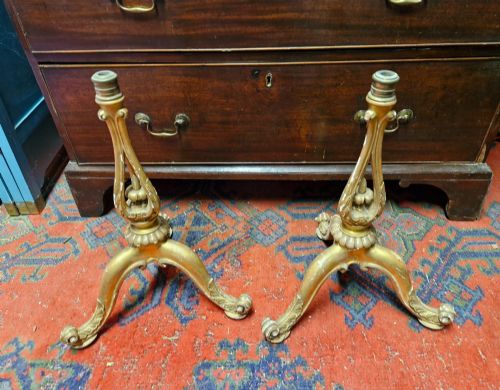
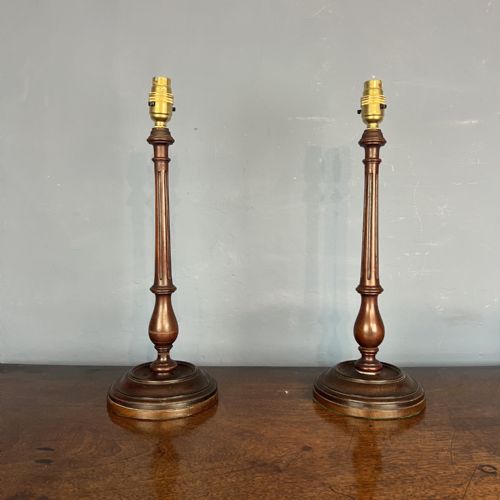
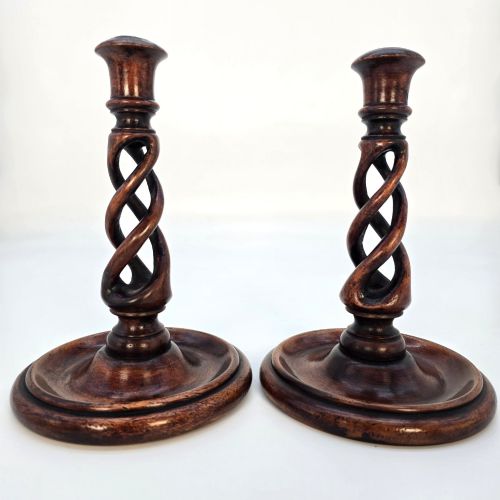
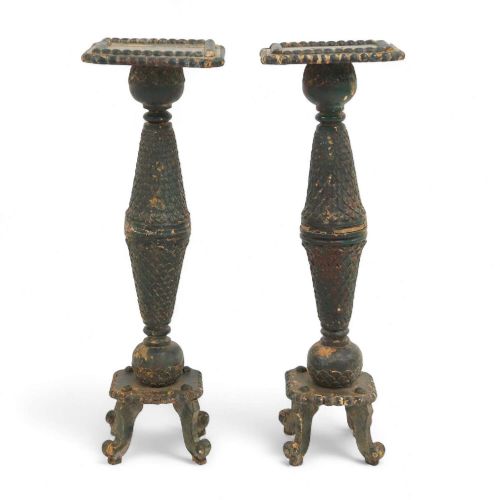
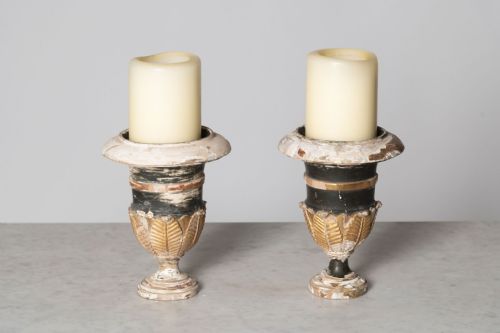
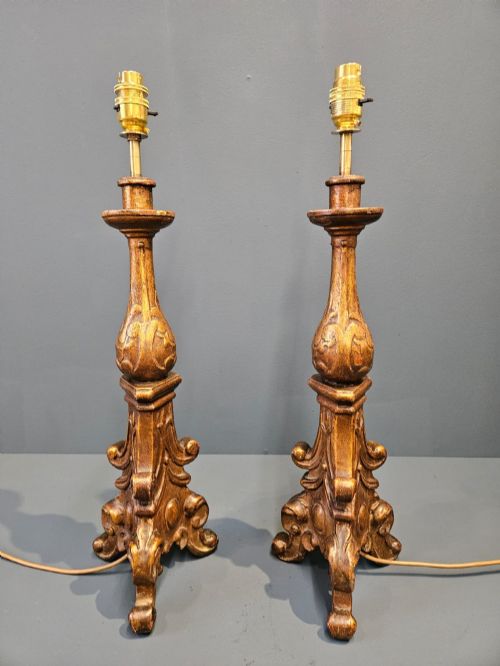
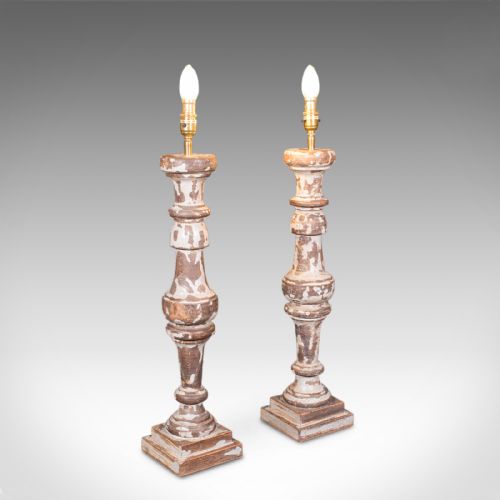


Pair Wooden Candlesticks
These pair wooden candlesticks bring warm, tactile timber to a room, offering the classic forms collectors seek for traditional mantelpieces and dining tables.
What pair wooden candlesticks are
When you search for pair wooden candlesticks, you find domestic lighting accessories turned from dense hardwoods such as mahogany, oak, lignum vitae and walnut. These dual items date across the nineteenth century, the Victorian era and around nineteen hundred, reflecting historic interior fashions.
The pieces on offer span several distinct design movements, including Adam style, George III style, and traditional barley twist turnings. Collectors frequently encounter smaller treen examples alongside larger, more imposing specimens fitted with contrasting metal sconces.
How they were made
Turners shaped seasoned timber on a lathe, creating smooth tapering columns, reeded stems and spiralling barley twist profiles. Craftsmen selected dense, heavy woods that provided sufficient structural stability to support tall tapers safely.
Many examples incorporate cast brass sconces, nozzles or drip pans secured to the wooden tops to protect the combustible material from direct flame. Some surfaces received layers of gesso and gilding over the base timber, while others relied on the natural grain of polished mahogany or oak.
Retail Price Guide 2026
Typical UK retail prices for pair wooden candlesticks, calculated from the Sellingantiques database of over a million retail prices indexed since 2003. This retail price guide relies exclusively on Sellingantiques data; no external sources or auction records are used, so the figures do not describe the wider market.
Current listings feature mahogany, oak, and lignum vitae alongside brass components.
What varies in quality
Quality rests in the precision of the lathe turning, the crispness of any applied carving, and the selection of the timber itself. Dense, heavily figured mahogany or tightly grained lignum vitae command greater appreciation than softer, plainer woods.
The integrity of the pair is paramount, where matching heights, identical grain patterns, and original brass fittings elevate an example above mismatched or later assembled sets.
The Pair Wooden Candlesticks Glossary
- Treen
- Small handmade wooden domestic objects and utensils. This term covers functional items turned or carved from dense hardwoods.
- Sconce
- The metal socket or pan fitted to the top of a candlestick to hold the candle and catch melting wax. Brass is the most common metal found on wooden examples.
- Pricket
- A sharp metal spike set in the drip pan to impale a candle, rather than a socket that surrounds the base. These are frequently seen on altar or ecclesiastical lighting.
- Barley Twist
- A helical or spiral turning resembling a twisted rope. This decorative column style gained immense popularity during the nineteenth and early twentieth centuries.
Frequently Asked Questions
How do I date pair wooden candlesticks?
Dating relies on timber choice, turning style, and the construction methods visible at the base and socket. Stylistic cues such as Adam or George III revival details also point towards specific nineteenth-century eras.
Examining wear patterns around the base and the oxidation of any brass components helps confirm the age of the piece.
What woods were commonly used for these candlesticks?
Turners utilised dense hardwoods that resisted splitting and accepted fine lathe work. Mahogany, oak, and heavily figured lignum vitae appear frequently across surviving examples.
Some pieces combine multiple materials, pairing dark turned timber with polished brass nozzles and sconces for contrast.
How should I clean and maintain wooden candlesticks?
Dust the turned surfaces regularly with a soft, dry cloth to prevent grime accumulation in the carved recesses or barley twist grooves. Avoid liquid polishes and water, which can damage historic polished finishes.
Occasional applications of microcrystalline wax help nourish the timber and preserve the natural sheen of the grain.