


Turned Wood Candlesticks
Turned wood candlesticks bring warmth to a room through centuries of dense timber and careful lathe work.
Turned Wood Candlesticks
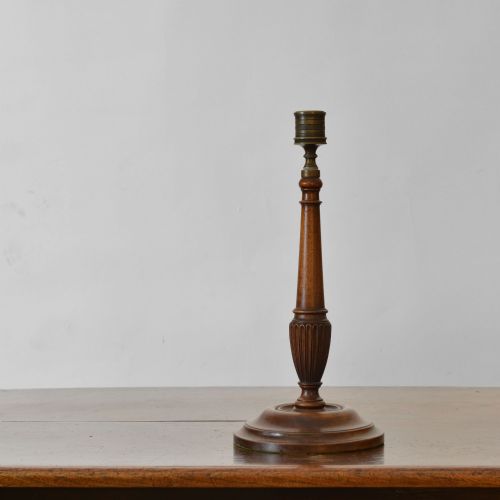
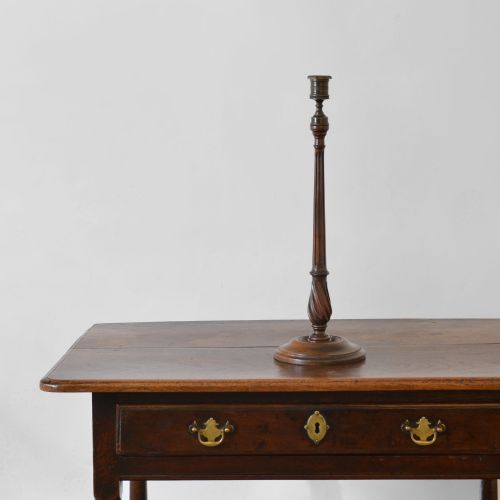
Turned wood candlesticks are functional items shaped on a lathe, ranging from compact treen taper sticks to tall floor torcheres. When searching for turned wood candlesticks, buyers encounter forms spanning the eighteenth, nineteenth, and early twentieth centuries.
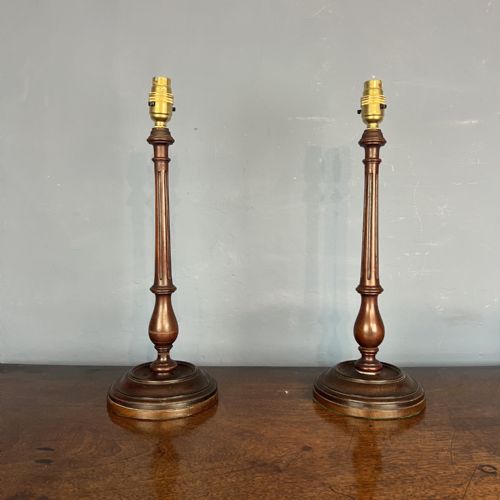
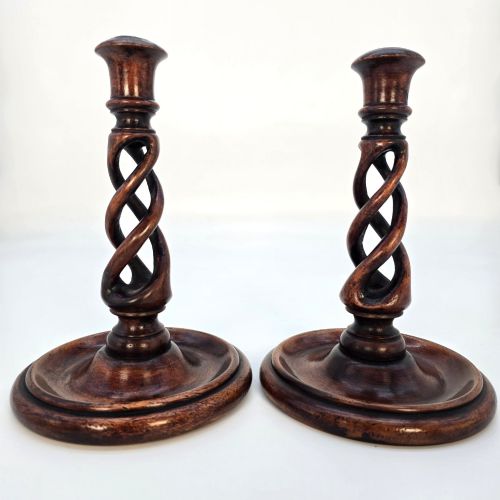
The selection here leans heavily towards pairs, including Georgian mahogany examples, Victorian lignum vitae pieces, and oak barley twist designs from the Edwardian era. Alongside standard candlesticks, the evidence includes related lighting adaptations such as table lamps, chamber sticks, and travelling Brighton buns.
Origins vary from English workshops to continental European makers, encompassing styles from Italian Baroque Revival to folk art. Mahogany, oak, walnut, and fruitwood dominate the forms, frequently paired with brass nozzles or sconces.
Materials and Turning
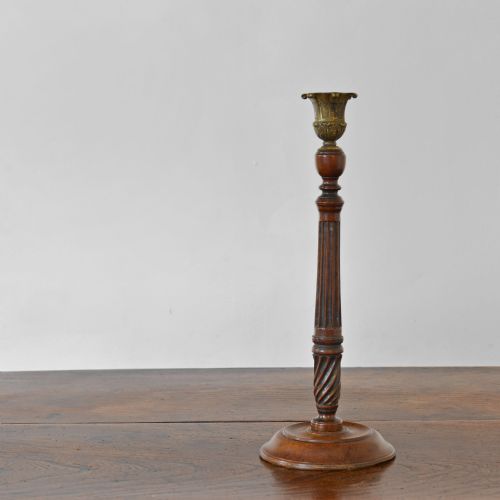
Craftsmen utilised dense hardwoods like lignum vitae, mahogany, walnut, and fruitwood to ensure stability on the lathe. Open twists, spiral carvers, and bobbin turned profiles required precise hand chiselling alongside mechanical rotation.
Many pieces incorporate brass drip pans or sockets fixed to timber stems, while others rely entirely on turned wood construction. Surface finishes range from polished natural grain and painted pine to handpainted Kashmiri decoration.
A pair of teak candlesticks on this page originated from the timbers of the Royal yacht HMS Renown.
Quality and Proportion
Superior turned wood candlesticks display crisp, deeply carved profiles on the lathe without splintering or grain tearing in dense timbers like lignum vitae. Proportions remain balanced between the weighted base, the turned shaft, and the metal or wood top.
The choice of material elevates certain examples, particularly dense exotic hardwoods or well-matched pairs with uniform grain patterns. Superior execution shows in the crispness of spiral barleys and open twists rather than soft, rounded lathe work.
The Turned Wood Candlesticks Glossary
- Treen
- Small handmade wooden objects for domestic use. This category covers treen taper sticks and turned holders from various centuries.
- Brighton bun
- A small pocket or travelling candlestick that unscrews into two halves resembling a bun. These olive wood pieces were designed for portable use.
- Barley twist
- A spiral turning resembling a twisted barley stalk. This decorative form appears frequently on oak and mahogany shafts.
- Lignum vitae
- An extremely dense and heavy wood native to the Americas. Makers utilised this durable timber for solid, weighty nineteenth century pieces.
- Torchere
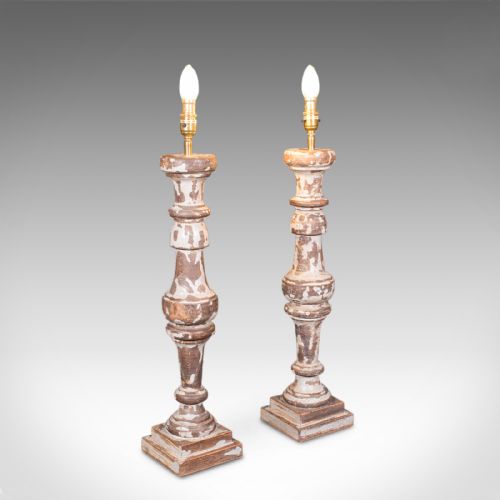
- A tall stand or candlestick designed to hold a light source high above the floor. These carved pinewood and timber pieces create strong vertical accents.
Turned Wood Candlesticks: Frequently Asked Questions
How do I date turned wood candlesticks?
Dating relies on timber choice, turning style, and construction details such as the presence of brass socket inserts. Georgian and eighteenth century pieces often feature simpler column or vase profiles in mahogany or fruitwood.
Later Victorian and Edwardian examples frequently introduce heavier oak barley twists or dense lignum vitae. Comparing the turning profile to dated architectural styles helps narrow the period further.
Were these candlesticks converted to electricity?
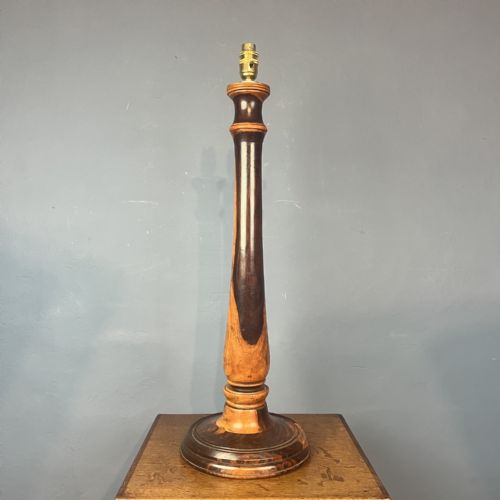
Many items originating as candlesticks or torcheres have been adapted into table lamps over time. Some listings retain their original candle sockets, while others were built or altered to house electrical fittings.
Buyers should examine the base and stem for wiring holes or channels. Such conversions reflect the changing domestic utility of these turned wooden objects.
What is a Brighton bun?
A Brighton bun is a compact travelling candlestick made of turned wood that unscrews into two hemispherical sections. The candle and snuffer pack safely inside the hollowed interior during transport.
These portable items were popular for journeys in the nineteenth and early twentieth centuries. Olive wood was a favoured material for their construction.
How should I clean antique wood candlesticks?
Maintenance requires gentle dusting with a dry, soft cloth to protect the aged patina of the timber. Harsh commercial polishes and water should be avoided, as they can damage exposed grain and painted surfaces.
Wax polishing can be applied sparingly to feed hardwoods like mahogany and walnut. Preserving the original surface texture maintains the historical character of the piece.