

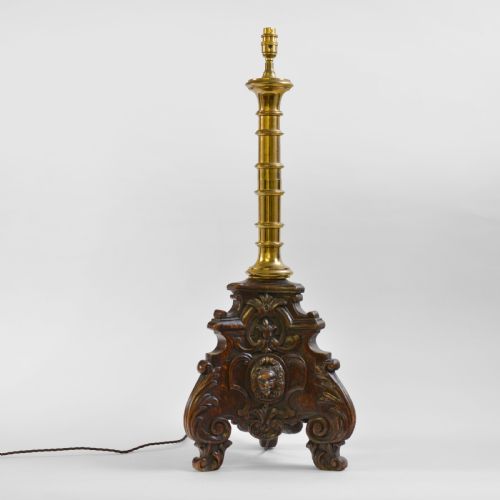


Dark Oak Candlesticks
Dark oak candlesticks bring rich timber grain and period character to a table, combining utility with robust historic style.
Dark Oak Candlesticks
When you search for dark oak candlesticks, you are looking at turned and carved timber holders designed to support candles or adapted as lamps. The examples on this page span several eras, from seventeenth-century carved pieces and nineteenth-century hand-carved items to early twentieth-century interpretations.
You will most frequently meet pairs featuring open barley twist stems, often topped with brass sockets, alongside folk-art carved wood designs and George III style interpretations from around nineteen hundred. These objects range from standard table heights up to taller fourteen-inch versions, utilising hardwood and timber with deep patination.
How they were made
Makers shaped these pieces from oak and hardwood using traditional turning techniques on a lathe, producing the characteristic open barley twist columns seen across numerous examples. Hand-carving created intricate details such as figurative folk-art forms and decorative borders, while other workshops incorporated brass drip pans and top sockets into the timber bodies.
The materials rely on the dense grain of dark oak and timber, which took deep colour and polish over decades of handling. Brass components were securely fitted to the top of the wooden shafts to catch melting wax, combining two durable materials in a single household object.
One particularly charming folk-art pair is carved in the likeness of poachers carrying their game.
What varies in quality
Quality in these items rests upon the depth of the carving and the precision of the timber turning, distinguishing crisply executed barley twists from plain, heavy-handed production. The richness of the oak grain and the depth of the natural patination acquired through age elevate certain examples above standard decorative pieces.
Proportion and balance also set superior items apart, particularly in matched pairs where the symmetry of the turned columns remains harmonious. The integration of brass fittings and the preservation of original hand-carved details determine the distinction between ordinary utility items and finer display pieces.
The Dark Oak Candlesticks Glossary
- Barley twist
- A spiral column turned into wood, resembling a twisted rope or stalk of barley. This decorative technique appears frequently in seventeenth-century revival and early twentieth-century items.
- Folk art
- Objects created by self-taught or traditional artisans, often featuring charming figurative carvings rather than formal academic styles. These pieces include hand-carved wooden figures and unique regional designs.
- George III style
- A revival aesthetic reflecting the furniture designs of the late eighteenth century, marked by classical proportions and solid construction. Pieces in this style were often reproduced around nineteen hundred.
- Patina
- The deep sheen and surface colour developed by timber over years of exposure to light, air, and handling. A rich patina indicates genuine age and use.
- Flemish Baroque
- An ornate continental style characterised by dynamic carved scrolls and dramatic relief work. It influenced seventeenth-century European woodwork and later revival pieces.
Dark Oak Candlesticks: Frequently Asked Questions
How do I date dark oak candlesticks?
Dating relies on the style of the turning, the tooling marks left by the maker, and the depth of the timber patination. Seventeenth-century examples display heavy, hand-carved details, whereas early twentieth-century pieces often feature precise open barley twists.
Examining the base and any fitted brass components also helps distinguish genuine older items from later revival pieces made around nineteen hundred or nineteen twenty.
Were these always used for candles?
Most of these pieces were originally manufactured to hold wax candles for household lighting before the widespread adoption of electricity. Some examples have subsequently been adapted to hold electrical fittings for table lamps while retaining their wooden stems.
Check the top socket for traces of old wax or brass drip pans, which indicate original lighting use.
How do I care for dark oak timber?
Keep wooden candlesticks away from direct heat sources and strong sunlight to prevent the oak from drying out or splitting. An occasional application of a suitable natural wax maintains the lustre of the timber.
Avoid using harsh liquid cleaners on the wood or the brass components, as gentle dusting preserves the historic surface.
What defines folk art candlesticks?
Folk art candlesticks are distinguished by quirky, hand-carved motifs created by independent makers rather than commercial factories. They often feature figurative elements, such as human or animal forms carved directly into the wood.
These individual designs make each piece a distinct sculptural object reflecting traditional vernacular craftsmanship.
Are barley twist stems always paired?
While many barley twist pieces survive as matched pairs for mantelpieces or dining tables, individual examples also occur. Pairs are particularly sought after for symmetry in interior display.
Construction details, timber grain, and height help determine if two separate candlesticks belong together as a matched set.