



Church Candle Holders
Church candle holders bring structural height, solemn materials and historical gravity to secular interiors.
Church Candle Holders
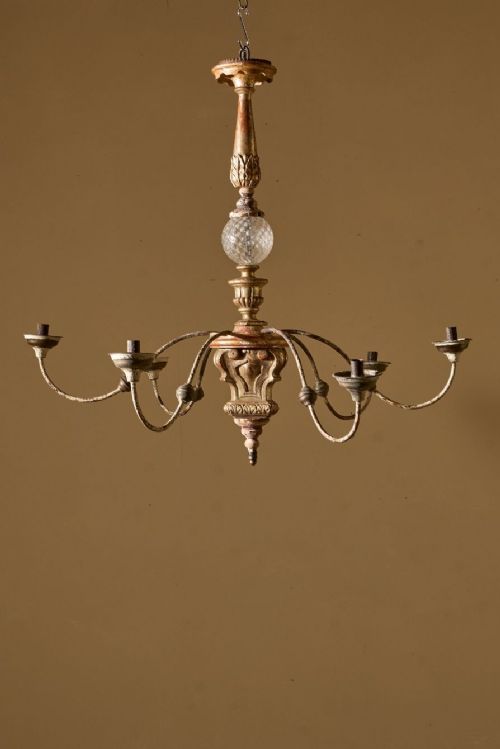
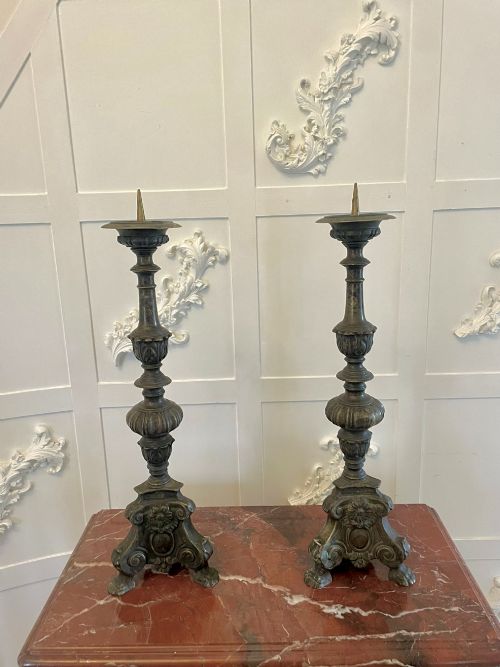
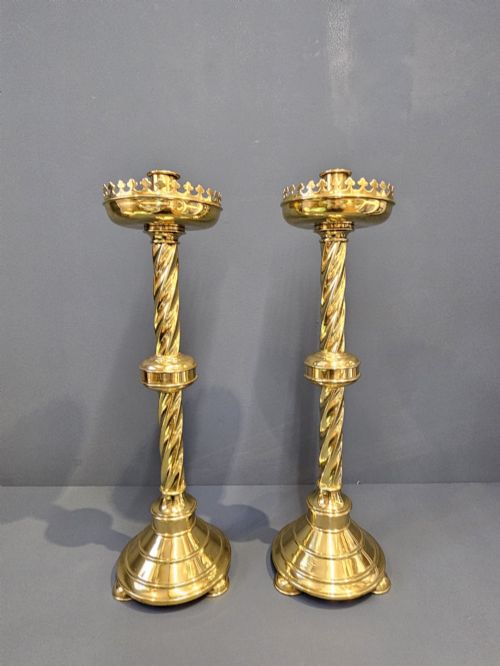
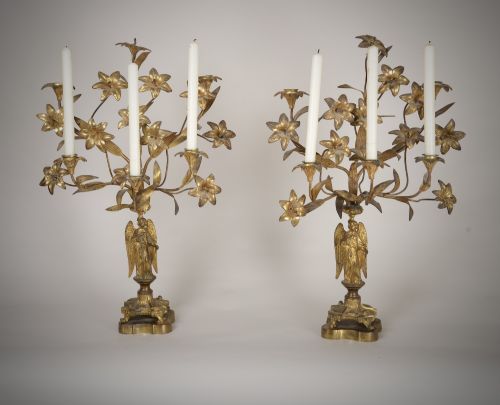
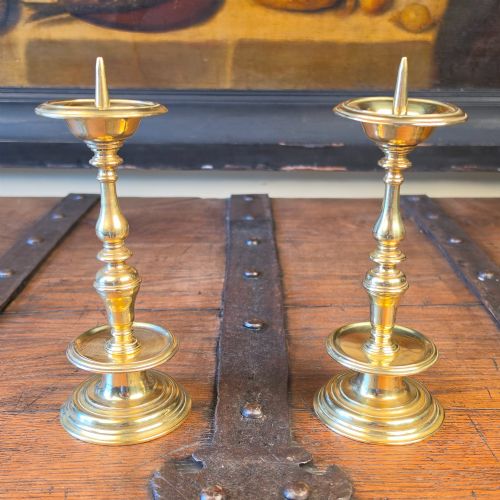
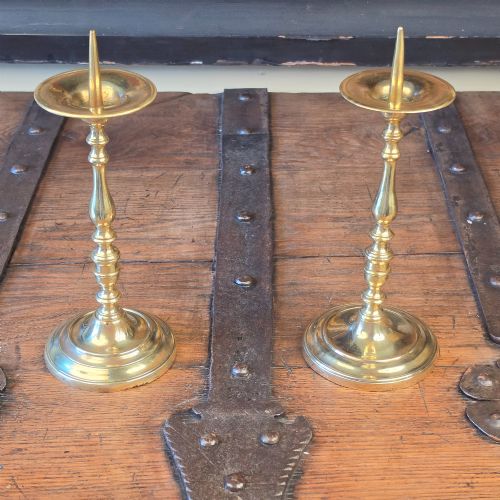
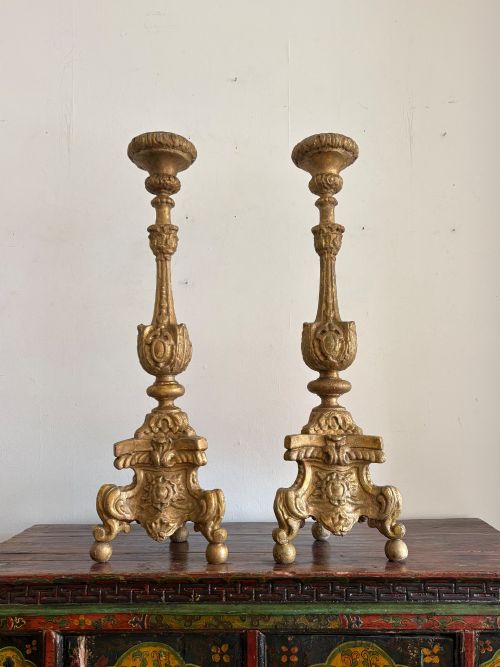
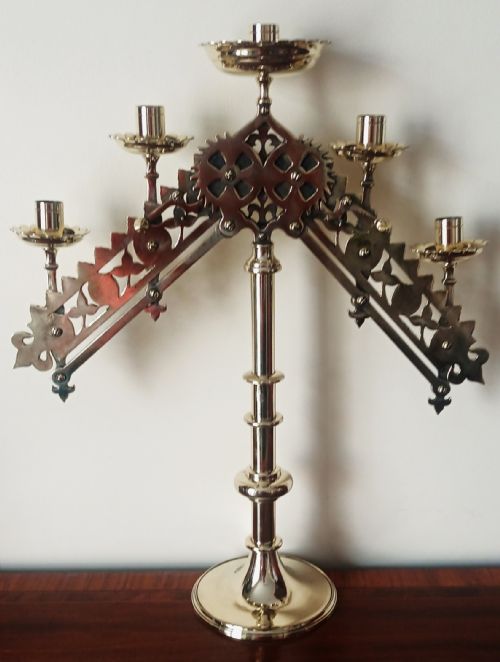
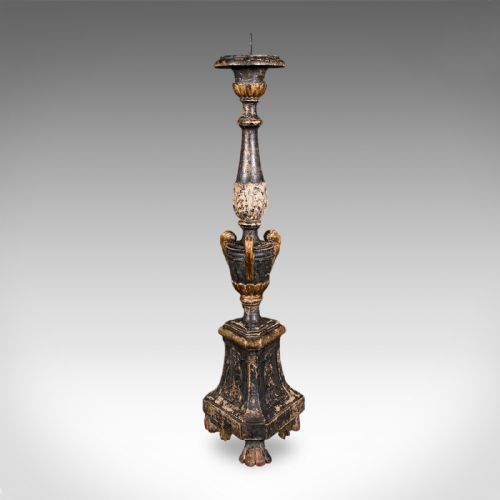
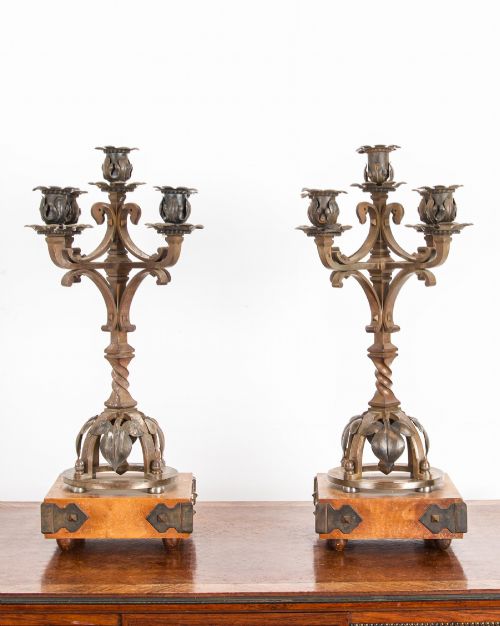
Church candle holders encompass ecclesiastical lighting forms built for altars, floors and sanctuaries, spanning candlesticks, prickets, candelabra and floor-standing torchères. When searching for church candle holders, buyers encounter monumental metal and carved wood objects originating from the eighteenth, nineteenth and early twentieth centuries. Brass and bronze pieces dominate the selections, alongside substantial wrought iron and giltwood altar items.
The material range extends from heavy cast brass and bronze to carved wood, gesso, giltwood and wrought iron, reflecting centuries of liturgical craft. Forms vary from modest table candlesticks to towering floor-standing models and multi-branch chandeliers designed for large sacred spaces. Styles lean heavily into Gothic Revival, Baroque and Victorian interpretations, with occasional Amsterdam School departures.
How they were made
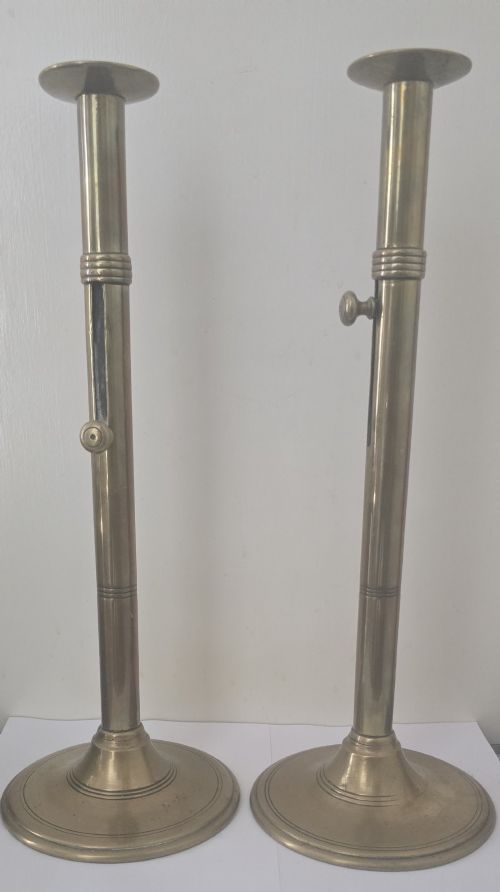
Foundry-cast brass and bronze form the backbone of these pieces, often worked with turning lathes, chasing tools and applied surface finishes. Many brass examples incorporate heavy bases and structural columns, sometimes with articulated arms or side ejectors for practical candle management.
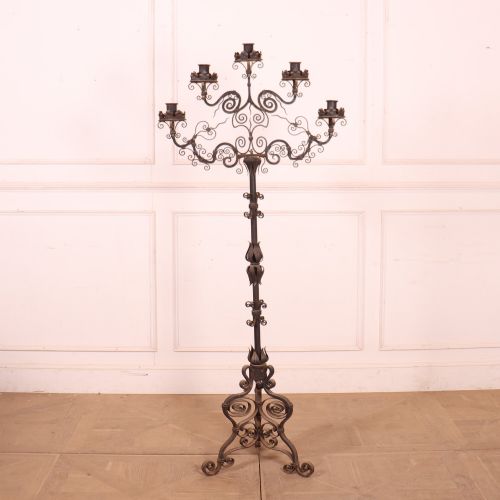
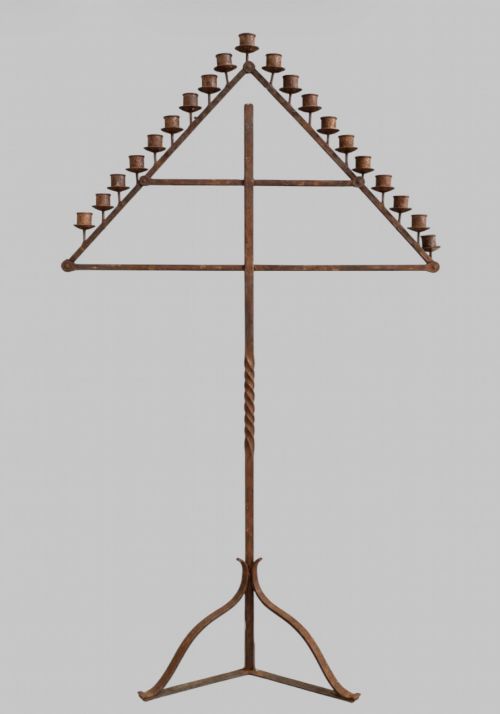
Wooden alternatives rely on hand-carved pine, gesso application and giltwood treatments, frequently enhanced with polychrome paint or silver leaf. Wrought iron versions depend on blacksmithing techniques, shaping heated metal into multi-candle floor standards and architectural statement pieces.
Some tall floor standards required dedicated acolytes to reach the top and manage the altar flames during long services.
What varies in quality
Substance and scale separate standard ecclesiastical hardware from exceptional examples, with heavier castings and monumental heights commanding greater presence. The depth and crispness of hand-carving on wooden altar pieces or the intricate detail in Gothic Revival metalwork dictate the standard of execution.
Preservation of original surface treatments - such as untouched patinated brass, genuine gilding, or authentic polychrome paint - matters more than aggressive modern cleaning. The integrity of assembly, from balanced weighted bases to secure pricket spikes, distinguishes superior workshop production.
The Church Candle Holders Glossary
- Pricket
- A sharp metal spike atop a candlestick designed to skewer the base of a large candle. This traditional altar format predates socket-type candle holders.
- Torchère
- A tall ornamental stand or candlestick designed to support a light source. These floor-standing pieces often feature carved wooden or wrought iron shafts.
- Giltwood
- Wood that has been coated with thin gold leaf or gold paint over a prepared gesso ground. This technique creates a luminous, reflective surface on Baroque and altar pieces.
- Amsterdam School
- An early twentieth-century architectural and design movement known for expressive brickwork, organic forms and robust metalcraft. Pieces from this tradition display distinct sculptural silhouettes.
Church Candle Holders: Frequently Asked Questions
How do I use church candle holders at home?
These tall pieces suit placement on large dining tables, sideboards or directly on the floor as architectural statements. Their height and vertical pull draw the eye upward in high-ceilinged rooms.
Pair them with thick pillar candles or traditional wax dips to maintain the proportional balance intended by their makers.
How do I date antique brass church candle holders?
Dating relies on stylistic markers such as Victorian Gothic Revival motifs, Georgian column proportions, or early twentieth-century Amsterdam School geometry. Manufacturing clues like casting seams, hand-turned thread work and base weight also help establish the era.
Earlier eighteenth-century pieces often show more hand-finished irregularities compared to mass-produced late-nineteenth-century ecclesiastical metalware.
Are wooden church candle holders fragile?
Carved wooden and giltwood items require stable indoor environments away from excessive humidity or direct heat sources that cause wood to split. The gesso and leaf layers on altar pieces remain delicate and benefit from gentle dusting rather than liquid cleaning.
Heavier pinewood torchères and architectural standards possess strong structural integrity despite their decorative surface coatings.