




French Altar Candlesticks
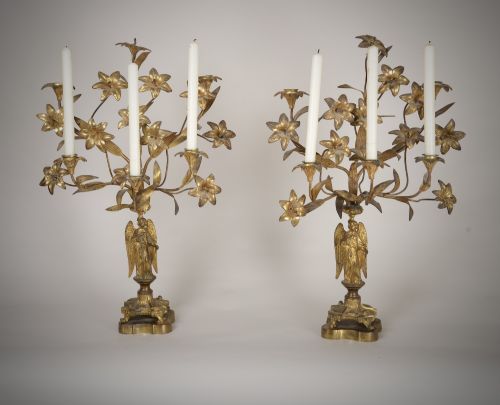
These french altar candlesticks bring quiet architectural solemnity to a room, standing as heavy brass or gilded timber fixtures built for ritual use.
French Altar Candlesticks
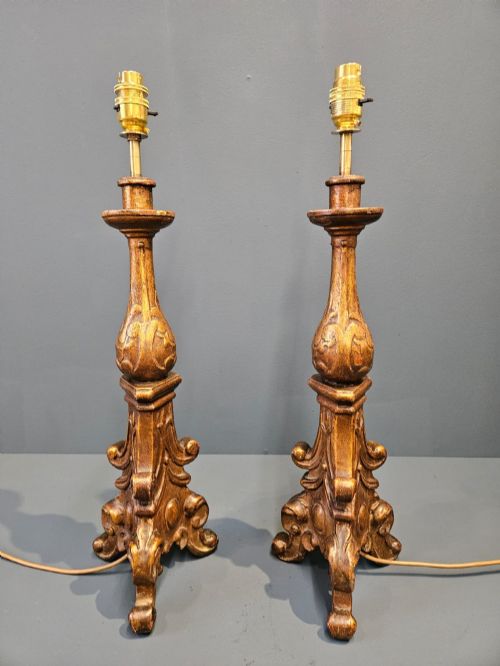
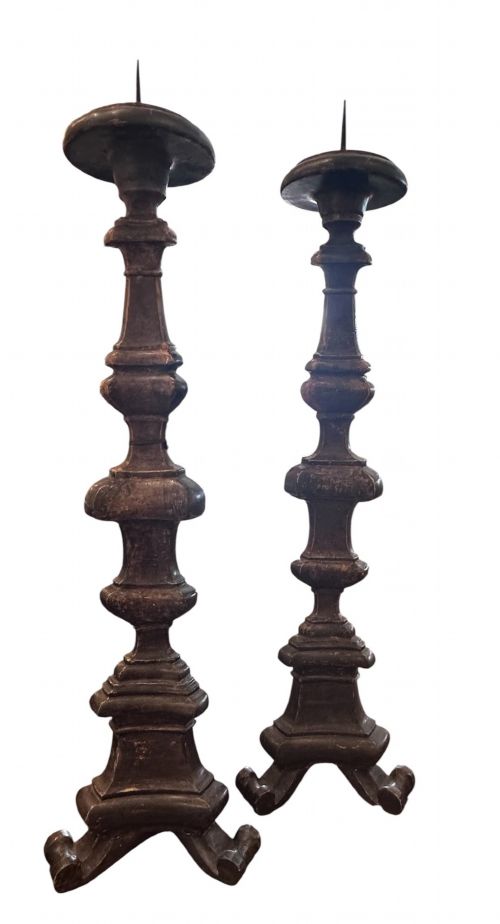
When you search for french altar candlesticks, you encounter devotional lighting salvaged from ecclesiastical settings, spanning the nineteenth century alongside select earlier examples. These pieces typically take the form of tall single sticks, prickets with spike mounts, or heavier pairs designed for table lamps and structural illumination.
You meet a variety of regional interpretations on this page, shifting from Gothic revival brass to carved wooden giltwood columns. The selection ranges through French ecclesiastical and continental styles, offering substantial height and vertical presence suited to domestic mantelpieces and sideboards.
How they were made
Makers shaped these objects using turned timber, cast brass, and wrought iron, frequently applying gesso beneath layers of gold or silver leaf. Carved oak and other woods provide the structural core for wooden candlesticks, while bronze and brass offer robust metal framing.
Surface decoration relies heavily on hand gilding and silver plating, creating reflective finishes that caught candle glow in dim chapels. Artisans combined joinery and metalcasting to produce sturdy ecclesiastical wares meant to support heavy wax candles and pricket spikes.
Listings incorporate nineteenth-century brass, iron, and carved wood, reflecting both French ecclesiastical workshops and Victorian Gothic revival aesthetics.
What varies in quality
The distinction between ordinary and exceptional examples rests in the depth of hand carving and the integrity of the original gilt surface. Finer items display crisply defined architectural mouldings and sculptural turning that reflect careful hand labour rather than mass production.
Material substance and weight separate the sturdier survivals from lighter alternatives, particularly in the casting of brass and the density of carved timber. Preserved gilding and honest patination across the wood or metal further distinguish pieces that retain their original character.
The French Altar Candlesticks Glossary
- Pricket
- A sharp metal spike on top of a candlestick designed to secure a candle with a central hole. This form is common in church settings.
- Giltwood
- Timber that has been coated with a thin layer of gold leaf or gold paint. It provides a bright reflective surface on carved ecclesiastical furnishings.
- Treen
- Small handmade wooden domestic objects and decorative items. These pieces show traditional turning and woodworking skills from past centuries.
- Gesso
- A plaster mixture applied to wood surfaces as a base for gilding or painting. It allows craftsmen to carve fine details before applying leaf.
- Candelabra
- A branched candlestick holding multiple candles on separate arms. They offer greater illumination and scale than single sticks.
French Altar Candlesticks: Frequently Asked Questions
How do I wire an altar candlestick for electricity?
Many of these pieces arrive already converted into table lamps, retaining their original timber or metal columns while accommodating modern electrical fittings.
For unconverted sticks, a professional can run cord discreetly through the centre or use external brass tubing to preserve the antique structure.
How should I clean antique giltwood?
Dust giltwood surfaces gently with a soft, dry brush to prevent any damage to the delicate gold leaf layer.
Avoid using water, chemical sprays, or abrasive cloths, as moisture and friction will strip the historic finish away from the gesso.
Where do french altar candlesticks fit best in a home?
Their tall vertical proportions make them well suited for flanking a fireplace, standing on a heavy sideboard, or anchoring a hallway console.
Pairs look particularly striking when used to create symmetrical height and formal balance in a traditional room setting.