
Antique Ceramic Tray
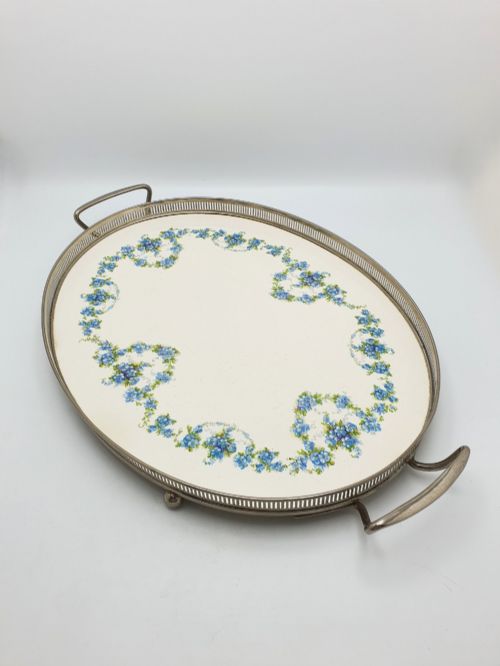
An antique ceramic tray brings the quiet weight of hand-painted porcelain and earthenware into daily service.
Antique Ceramic Tray
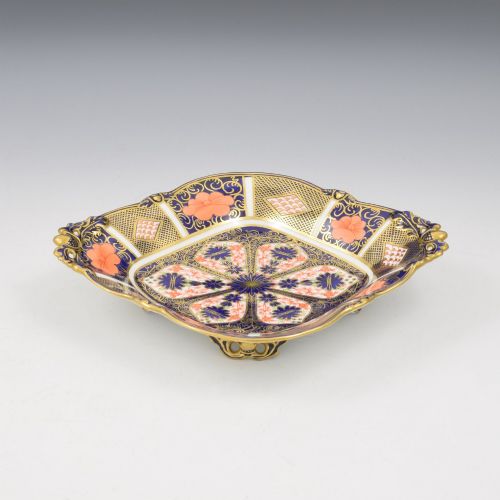
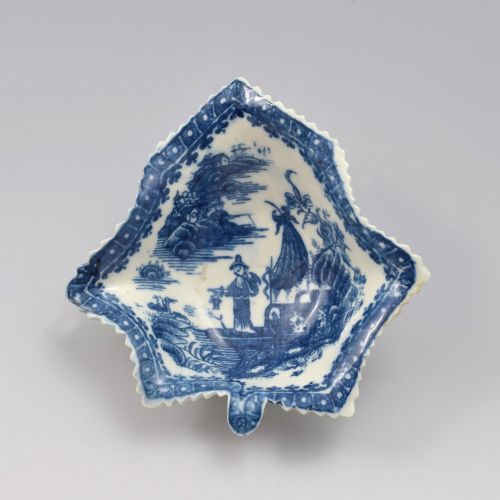
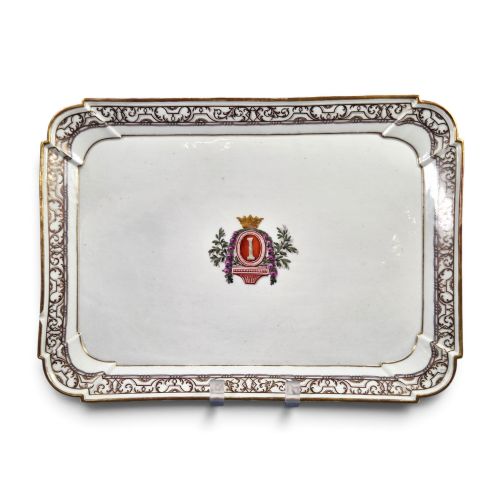
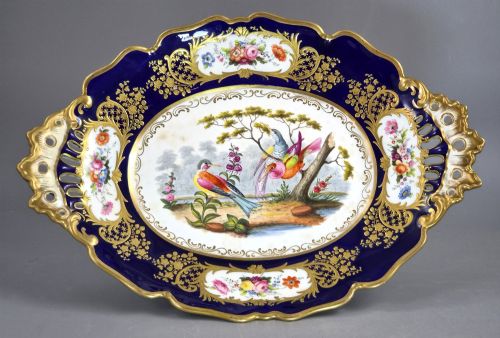
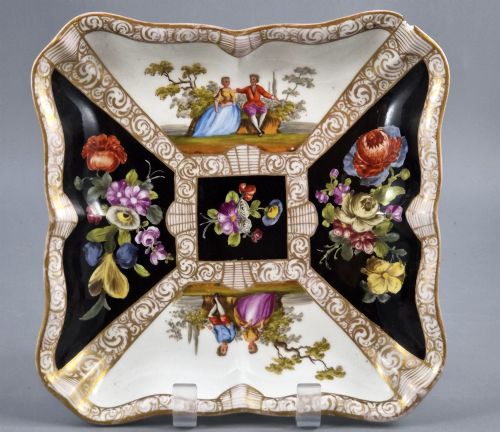
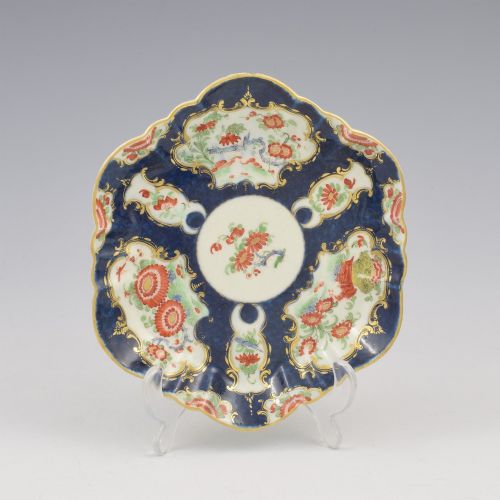
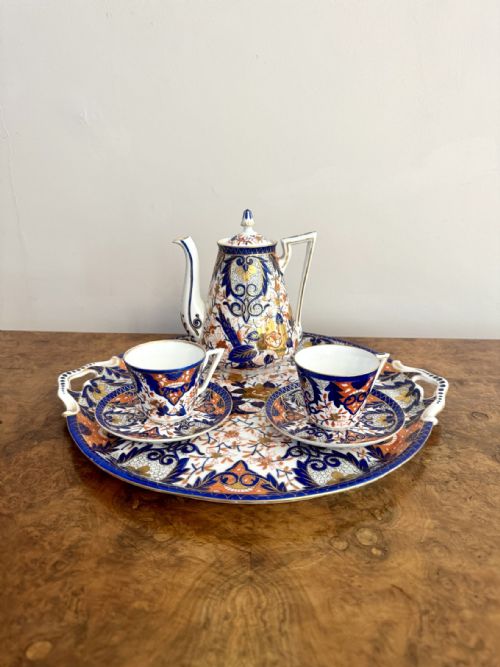
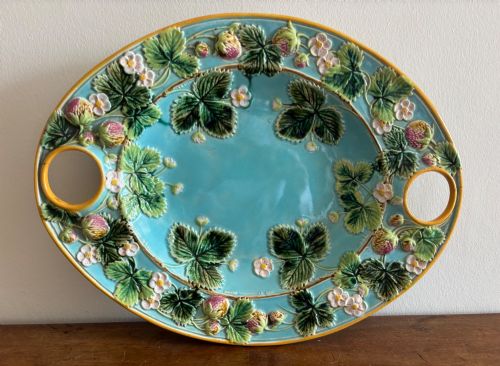
When you search for an antique ceramic tray, you encounter an array of serving dishes, decorative platters, and leaf-shaped pickle dishes spanning the eighteenth, nineteenth, and early twentieth centuries. The selection encompasses English factories like Worcester and Staffordshire alongside continental European porcelain and Asian export wares.
The domestic forms range from small pin trays and teapot stands to large meat platters and centrepieces. Many pieces survive from the Victorian and Georgian eras, reflecting formal dining habits that required specialised vessels for meat, fruit, and sweetmeats.
Materials and Techniques
Potters shaped these objects from soft-paste and hard-paste porcelain, earthenware, and faience, applying tin or lead glazes to seal the porous clay bodies. Cobalt blue underglaze painting and hand-painted polychrome enamels provided the primary means of surface decoration.
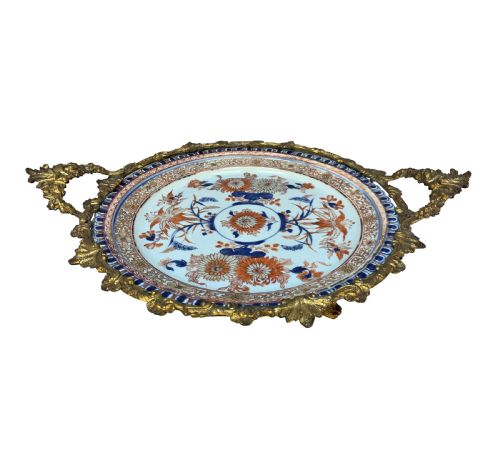
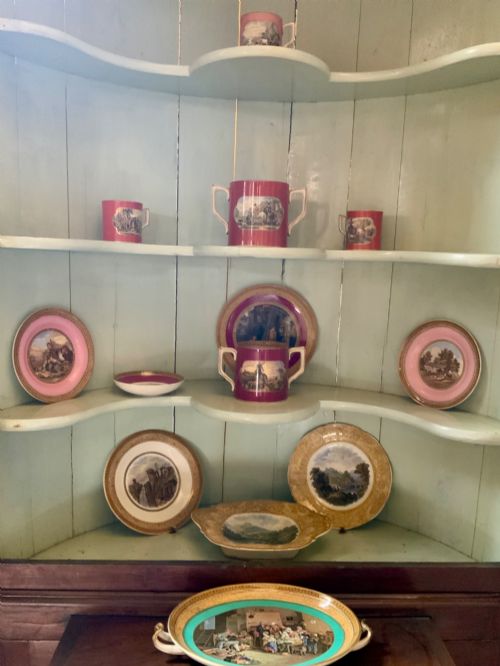
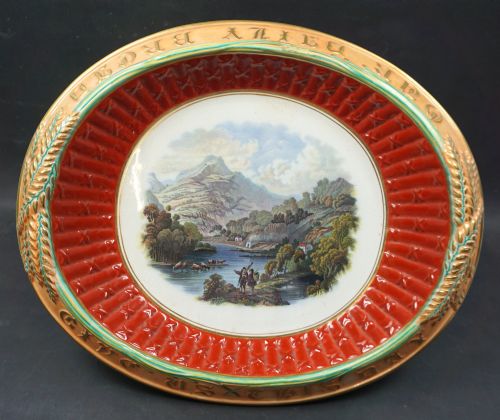
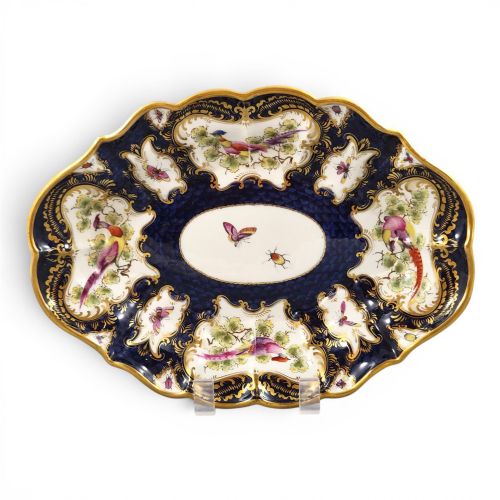
Many workshops utilised gold leaf, gilding, and ormolu mounts to elevate utilitarian serving pieces into objects of display. Transfer printing emerged alongside hand-brushwork, allowing complex pictorial scenes to be transferred onto the ceramic surface before firing.
The inventory includes diverse forms such as leaf-shaped pickle dishes, meat platters, tea sets, and ormolu-mounted centrepieces.
Distinctions in Quality
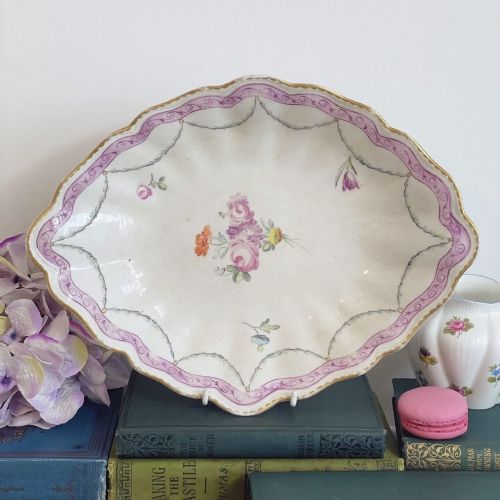
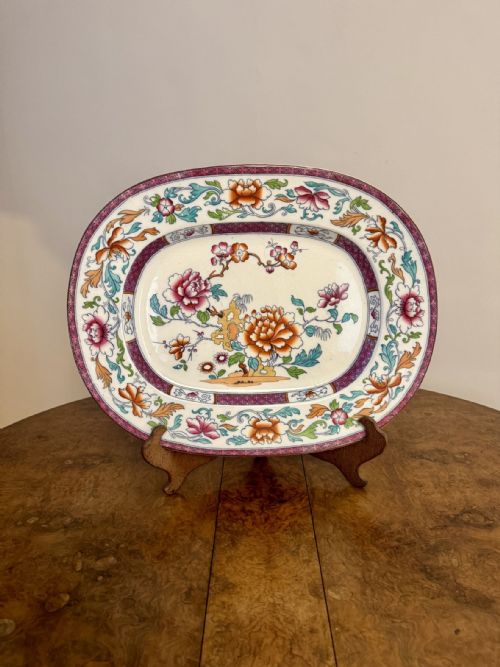
The distinction between standard domestic wares and superior cabinet pieces lies in the precision of the brushwork and the clarity of the glaze. Hand-painted polychrome flowers and detailed transfer scenes executed by named factories command greater attention than simple utilitarian platters.
The inclusion of precious metals, such as gilding or ormolu mounts, separates ordinary table service from high-status display items. Fine potting, balanced forms, and crisp factory marks indicate a higher standard of manufacture.
Caughley·Derby·Coalport·Meissen·Worcester·Staffordshire Prattware·Davenport·George Jones·Royal Doulton·Quimper·Copeland and Garrett·Joseph Gaspard Robert·Sevres·Minton·Carlton Ware·Paul Muller Selb
The Antique Ceramic Tray Glossary
- Polychrome
- Decoration utilising multiple colours, typically applied by hand in enamel pigments over the glaze. This technique allowed artists to render naturalistic flowers and complex figural scenes.
- Transfer printing
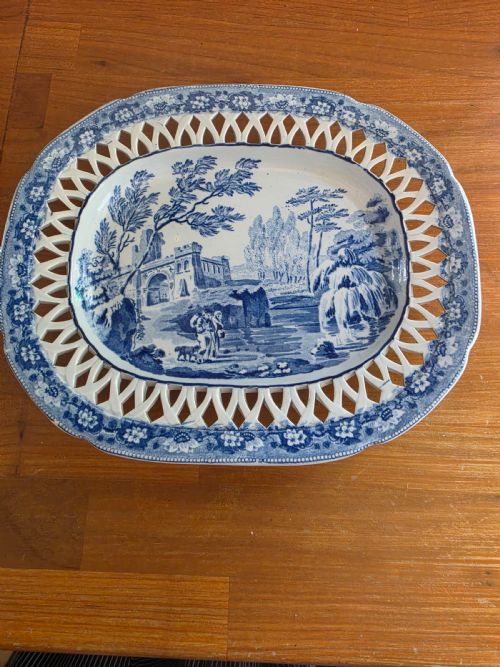
- A method of applying a design to pottery by engraving the pattern on a copper plate, printing it on tissue paper, and pressing it onto the ceramic body. It enabled the consistent reproduction of intricate landscapes and blue and white patterns.
- Faience
- Tin-glazed earthenware produced in France and other continental regions. The opaque white glaze provided a smooth ground for painted decoration.
- Paste
- The basic ceramic body composition used in pottery and porcelain manufacture. Soft-paste and hard-paste represent different clay and glass mixtures fired at varying temperatures.
- Ormolu
- Gilt bronze mounts applied to furniture, clocks, and porcelain vessels. This decorative metalwork added structural weight and visual richness to high-end European tablewares.
Antique Ceramic Tray: Frequently Asked Questions
How were antique ceramic trays used?
These vessels served various functions in historical dining and domestic routines, ranging from carrying tea services to presenting meat dishes at the table. Smaller pieces acted as pin trays or stands for teapots.
Larger platters accommodated joints of meat or displays of fruit during formal meals. Many forms transitioned from active dining service into decorative cabinet pieces.
How do I identify eighteenth-century porcelain?
Eighteenth-century porcelain often displays specific paste characteristics, such as the translucent bodies and blue scale borders associated with early Worcester production. Hand-painted motifs and underglaze blue marks offer further clues to date the piece.
Examine the foot ring and glaze pooling, as early manufacturing methods left distinctive tool marks and unglazed areas. Comparison with documented factory patterns helps confirm the period.
Can I use these trays for serving food?
While these items were originally made for culinary use, age and historic glazes require careful consideration before serving food. Many collectors prefer to use them strictly for display.
Hand washing is essential to preserve fragile enamels and delicate gilding. Modern dishwashers and microwaves will damage antique ceramic surfaces.
What is transfer printed pottery?
Transfer printing is a technique where a copperplate engraving is transferred via paper onto the clay or glaze surface. This process allowed potteries to produce detailed pictorial scenes efficiently.
Blue and white transfer wares became widespread during the Georgian and Victorian periods. The resulting patterns display a fine, stippled line quality under magnification.