





French Porcelain Platter
These french porcelain platter examples bring hand-painted narrative scenes and gilt bronze mounts directly to the table.
French Porcelain Platter
A french porcelain platter serves as both a functional tableware item and a decorative centrepiece, frequently encountered across eighteenth-century and nineteenth-century periods. These pieces include large chargers, oval dishes, and decorative trays shaped by historic European ceramic traditions.
The selections available here showcase distinct regional output from Paris, Marseille, Limoges, and Sèvres. Buyers frequently encounter ornate styles spanning French Rococo, Louis XVI Revival, and Japonisme aesthetics.
Materials and construction methods
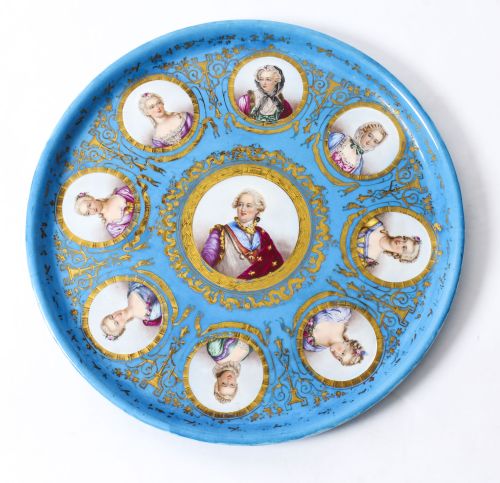
Makers utilised hard-paste porcelain as the primary ceramic body, shaped into chargers, plates, and serving dishes before undergoing high-temperature firing. Artisans then applied intricate hand-painted enamel scenes, delicate blue céleste grounds, and gold leaf detailing.
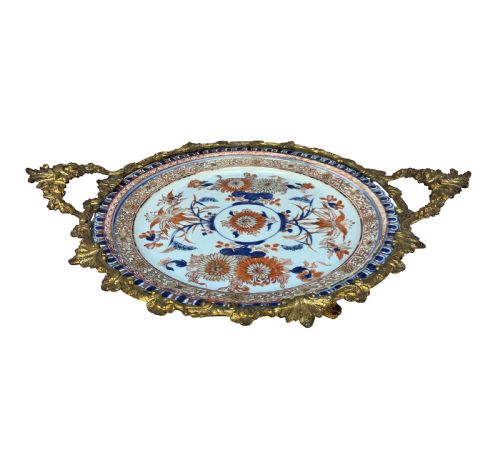
Many examples incorporate cast or chased ormolu and gilt bronze mounts fitted securely around the porcelain edges. These metal mounts require precise metalworking techniques to frame the ceramic trays and centrepieces.
French Porcelain Platter Retail Price Guide 2026
Typical asking prices for french porcelain platter among the pieces listed under this phrase on Sellingantiques today, from the lower quarter to the upper quarter. They describe what is for sale here now, not the wider market.
Materials across these listings include porcelain, enamel, gold leaf, gilt bronze, hard-paste porcelain, gilt, and ormolu.
Assessing craftsmanship and execution
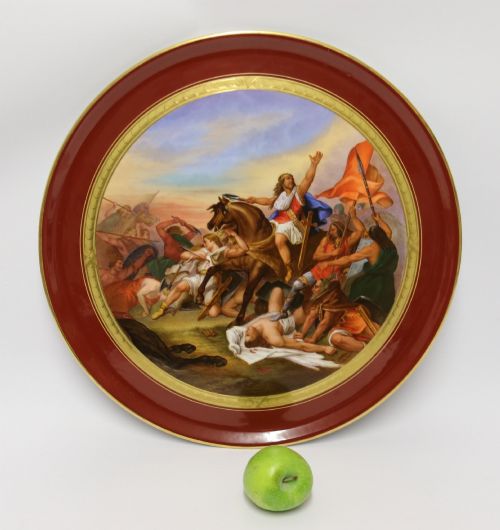
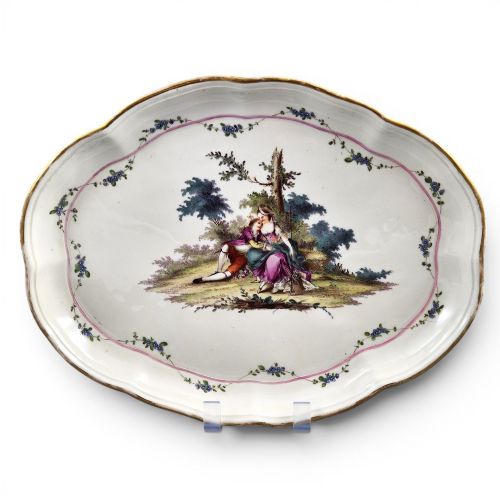
Quality separates standard production wares from pieces displaying exceptional hand-painted detail, such as finely rendered historical battle scenes and pastoral figures. The precision of the enamel work and the crispness of the gilt bronze mounts dictate the level of refinement.
The complexity of the ceramic form influences desirability, with heavily potted chargers and intricate ormolu-mounted trays representing the upper tier of execution. Maker attribution also plays a role when workshops employ distinct colour palettes and specialised decorative techniques.
Joseph Gaspard Robert·Pucher Deroche·Samson Paris·Louis Pierre Malpass
The French Porcelain Platter Glossary
- Hard-Paste Porcelain
- A dense, vitrified ceramic composed of kaolin and petuntse fired at high temperatures. It forms the durable white body characteristic of fine European tablewares.
- Ormolu
- Finely ground gold applied to a bronze base using a mercury amalgamation process. This technique imparts a rich, golden finish to decorative mounts.
- Charger
- A large decorative plate used historically beneath smaller dinner plates or displayed upright on a sideboard. These pieces often feature extensive narrative painting.
- Champlevé Enamel
- A technique where troughs are carved into a metal surface and filled with vitreous enamel paste before firing. The resulting coloured patterns decorate metal mounts.
- Bleu Céleste
- A bright turquoise blue glaze developed at the Sèvres factory during the eighteenth century. It provides a vibrant background colour for hand-painted vignettes.
French Porcelain Platter: Frequently Asked Questions
How were these platters used?
These platters functioned primarily as display pieces or serving dishes during formal dining occasions. Large chargers occupied the centre of the table or sideboards to showcase wealth and taste.
Over time, many transitioned into pure decorative objects, mounted on walls or displayed on stands in drawing rooms to highlight their painted artistry.
How do I clean a porcelain platter?
Dust these items gently with a soft, dry cloth to remove surface particles without disturbing the painted enamel. Avoid harsh chemical cleaners or abrasive sponges that might damage the delicate gilding.
Keep them away from modern dishwashers and prolonged direct sunlight to preserve the integrity of the gold leaf and ormolu mounts.
How can I tell periods apart?
Eighteenth-century examples often display softer forms and hand-mixed ceramic pastes associated with early factories like Marseille and Sèvres. Look for underglaze factory marks and specific painting styles to help determine the era.
Nineteenth-century revival pieces tend to feature brighter enamel colours, heavier ormolu mounts, and distinct stylistic nods to earlier Rococo or Neoclassical periods.
What is the difference between Paris and Sèvres?
Sèvres refers specifically to the renowned royal French porcelain manufactory known for high-grade pastes and specific colours like bleu céleste. Pieces carrying these marks usually represent official state or royal-adjacent production.
Paris porcelain encompasses output from various independent workshops and private studios operating within the city. These independent makers produced diverse decorative wares of comparable skill.