


Antique Ceramic Dog Statues
These antique ceramic dog statues span British earthenware pairs to Meissen porcelain, capturing canine character across centuries.
Antique Ceramic Dog Statues
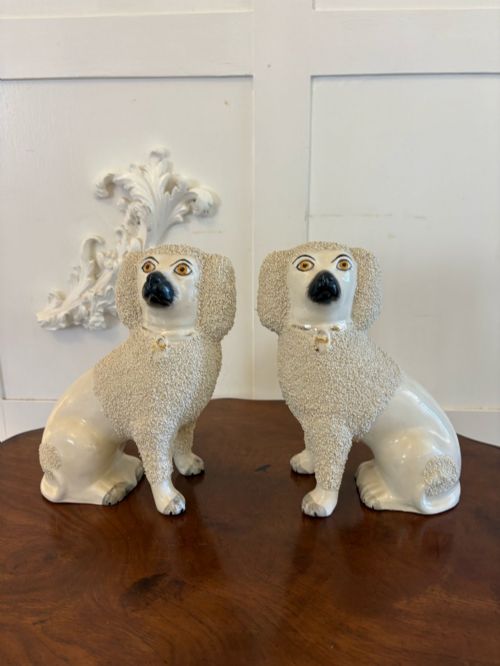
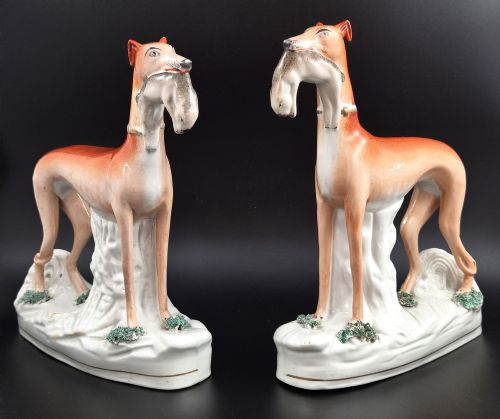
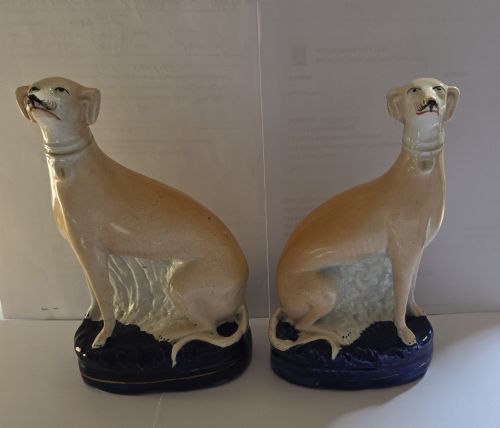
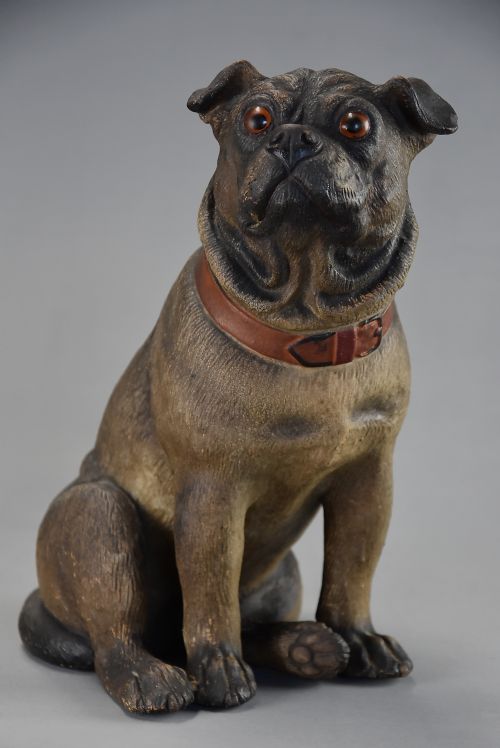
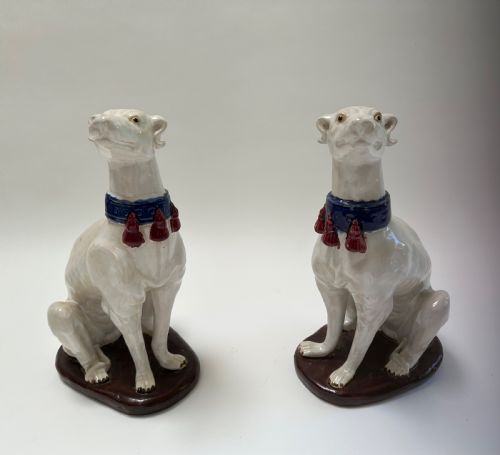
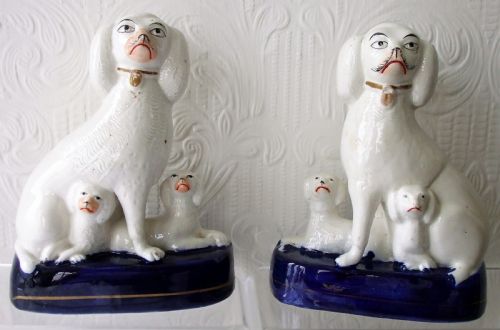
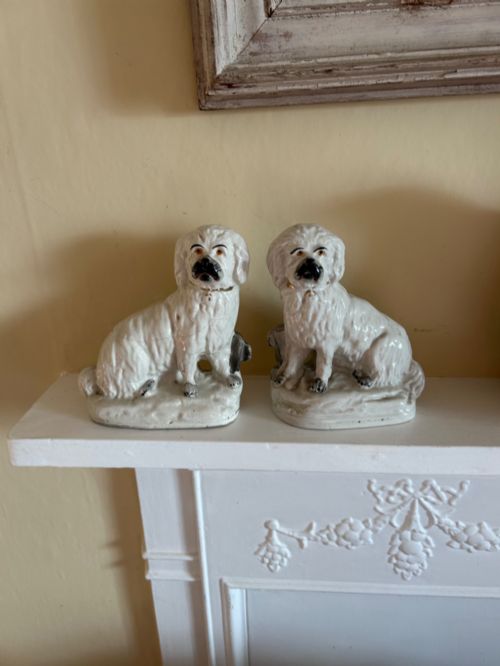
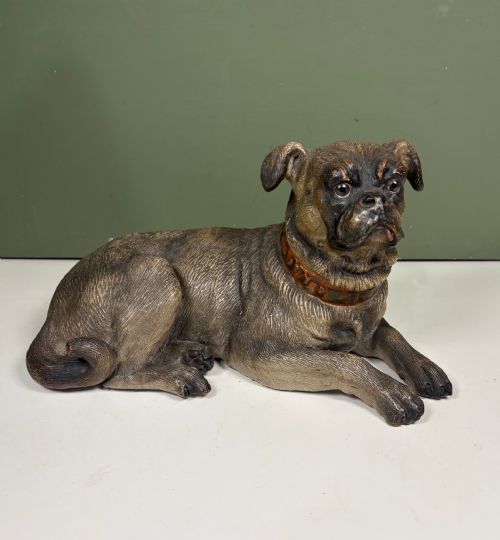
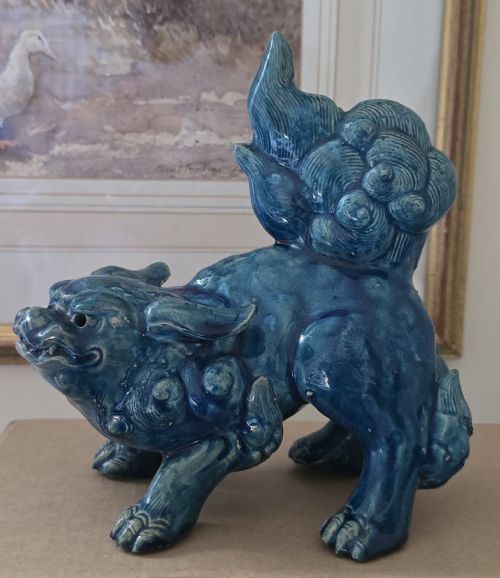
When you search for antique ceramic dog statues, you encounter everything from Staffordshire pottery spaniels and poodles to Meissen porcelain figures and Japanese Shishi guardians. The Staffordshire earthenware pairs intended for Victorian mantelpieces dominate the selection, often modelled as spaniels, greyhounds, poodles, or pugs.
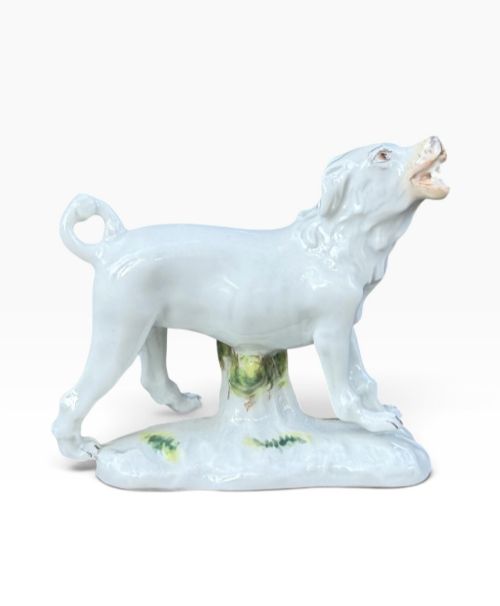
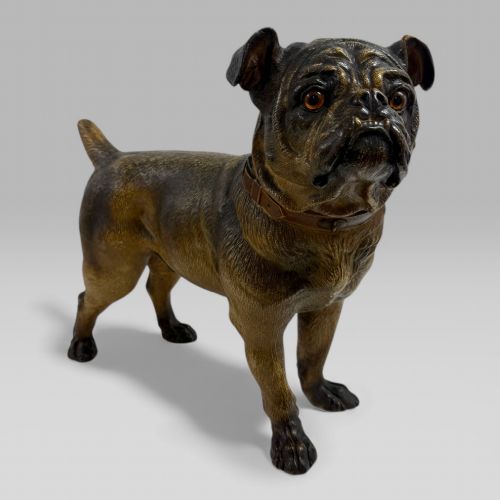
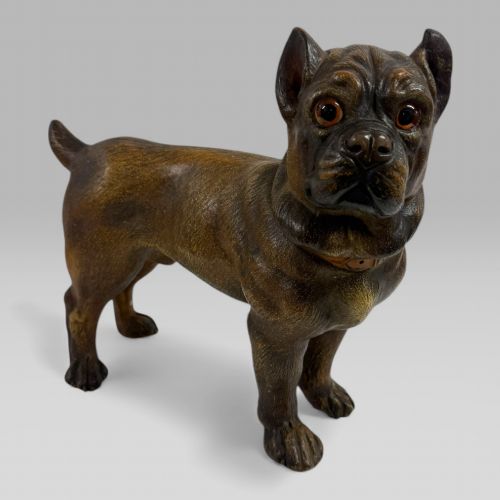
Beyond British earthenware, the category embraces European porcelain manufactories such as Meissen and Rosenthal, alongside Asian ceramic traditions including Japanese Kutani, Hirado, and Chinese Shiwan wares. These pieces range from miniature cabinet figures to life-size terracotta sculptures of pugs and hounds.
How they were made
The makers utilised earthenware, terracotta, and hard-paste porcelain, shaping the clay through press-moulding or slip-casting before applying glazes and enamel colours. Staffordshire figures frequently received hand-painted details over a white glaze, sometimes accented with gold leaf or metallic lustre.
Several pugs on offer wear expressions of permanent, soulful bewilderment.
What varies in quality
The sophistication of the glaze and the preservation of original enamel colours or gold leaf distinguish superior pieces. Matched pairs with uniform firing results and intact details command greater appreciation than mismatched or heavily restored specimens.
Meissen·Minton·Rosenthal·Wedgwood and Co
The Antique Ceramic Dog Statues Glossary
- Staffordshire
- A term for pottery produced in the Staffordshire region of England, widely known for mantle dogs and animal figures. These earthenware pieces were staples of Victorian domestic interiors.
- Shishi
- A Japanese term for guardian lion dogs, also known as Foo dogs or Buddhist lions in Chinese art. They appear in porcelain, pottery, and terracotta as protective temple or household figures.
- Parian
- A fine-grained, unglazed white biscuit porcelain resembling marble, developed in the nineteenth century. Copeland and other potteries utilised it for classical and animal sculptures.
- Earthenware
- Porous pottery fired at lower temperatures, commonly coated in an opaque or coloured glaze. It forms the body of the majority of nineteenth-century British animal figures.
- Enamel
- Vitreous paints applied over the fired glaze and fixed in a muffle kiln at a lower temperature. This technique allowed makers to add rich colours and facial details to porcelain and pottery.
Antique Ceramic Dog Statues: Frequently Asked Questions
Are Staffordshire dogs always sold in pairs?
Many Staffordshire dogs were manufactured as symmetrical pairs to sit at either end of a fireplace mantel. While you do find single figures surviving today, matched pairs remain the traditional form.
Collectors generally prize complete pairs that have stayed together over the centuries, though individual pieces still hold distinct decorative appeal.
What is a Foo dog?
Foo dogs are stylized guardian lions originating from Chinese art, often depicted seated with one paw resting on a brocade ball or a cub. They symbolised protection and prosperity in domestic and temple settings.
Over time, these guardian figures were adopted by Japanese and European ceramicists, resulting in diverse regional interpretations in porcelain and pottery.
How should I clean antique ceramic dogs?
Dust ceramic and porcelain figures gently with a soft, dry brush to prevent accumulation in crevices and around painted details. Avoid submerging antique earthenware in water, as old glaze cracks can absorb moisture.
If cleaning requires more attention, use a barely damp cloth and dry the piece immediately to protect fragile enamels and gold leaf highlights.