


Staffordshire Pottery Dog Figures
Staffordshire pottery dog figures are quintessential Victorian mantelpiece ornaments, prized by collectors for their charming character and traditional English country pottery appeal.
Staffordshire Pottery Dog Figures
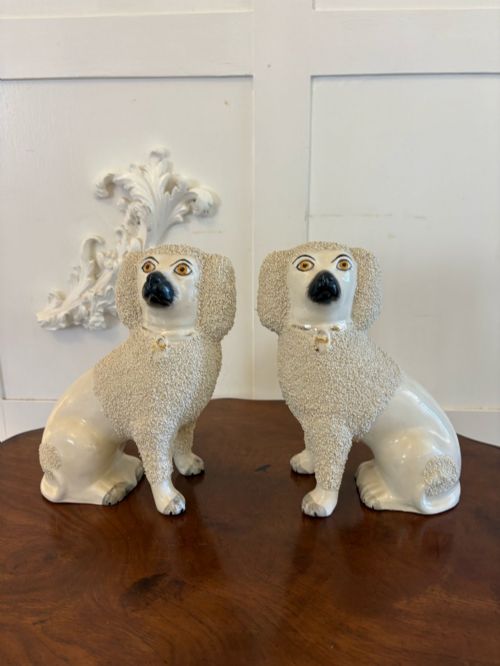
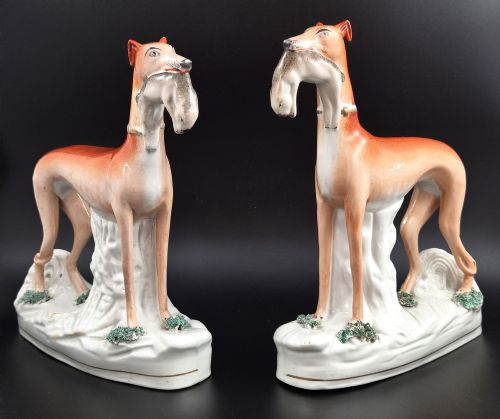
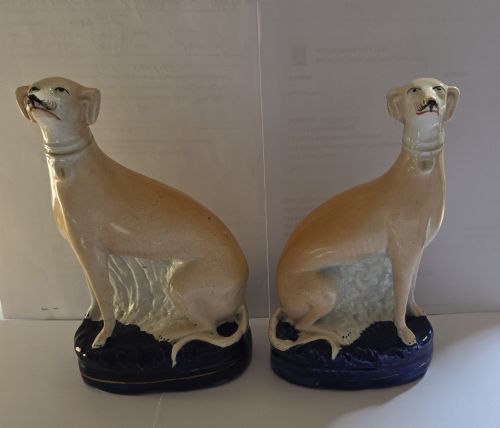
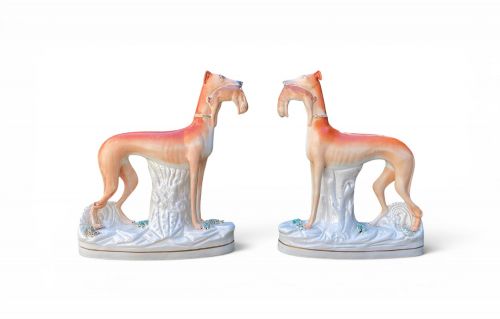
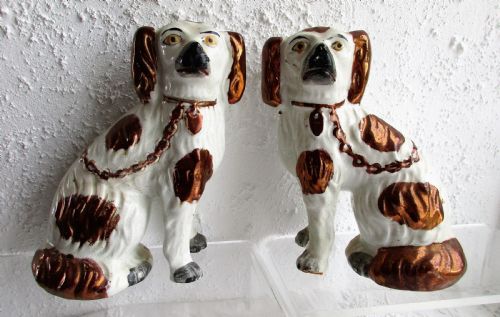
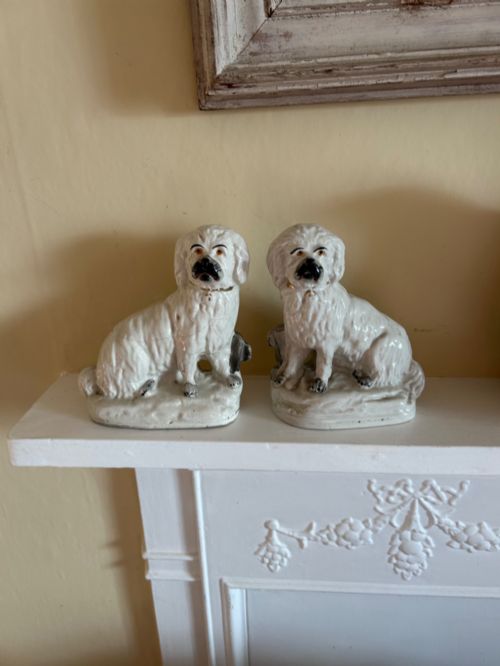
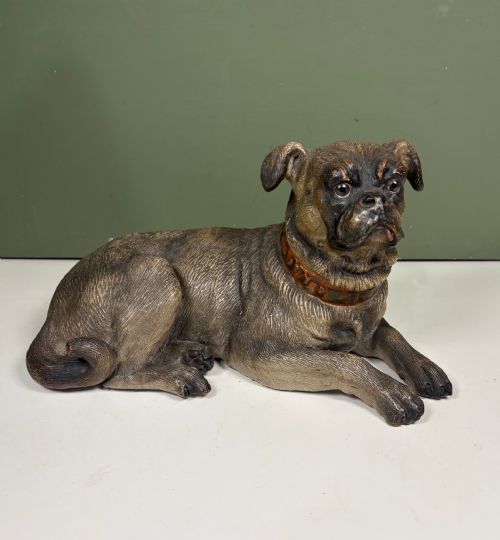
When you search for staffordshire pottery dog figures, you encounter a diverse array of nineteenth century ceramic animals designed to adorn domestic interiors. The spaniel, often known as the comforter spaniel, dominates the selection, frequently appearing in pairs intended to sit on either side of a fireplace. Alongside spaniels, the listings feature greyhounds, poodles, pugs, whippets, dalmatians, and terriers, spanning the Georgian, Victorian, and Edwardian periods.
The objects take various functional and decorative forms beyond simple mantel ornaments. Collectors find greyhounds configured as quill holders or inkwells, alongside money boxes and figure groups depicting hunting dogs with hares. These pieces originate primarily from the nineteenth century, utilising traditional earthenware and ceramic bodies moulded in regional potteries.
Most examples date from the height of Victorian production, particularly the middle and later decades of the nineteenth century, though earlier Georgian and later Edwardian items occasionally appear. The figures range from miniature poodles to unusually large hounds and spaniels, reflecting the broad scale of domestic output during the period.
Materials and technique
Potters utilised earthenware and ceramic bodies, shaping the figures through press moulding or slip casting techniques. Once formed, pieces received lead glaze surfaces that provided a smooth, protective coating over the clay.
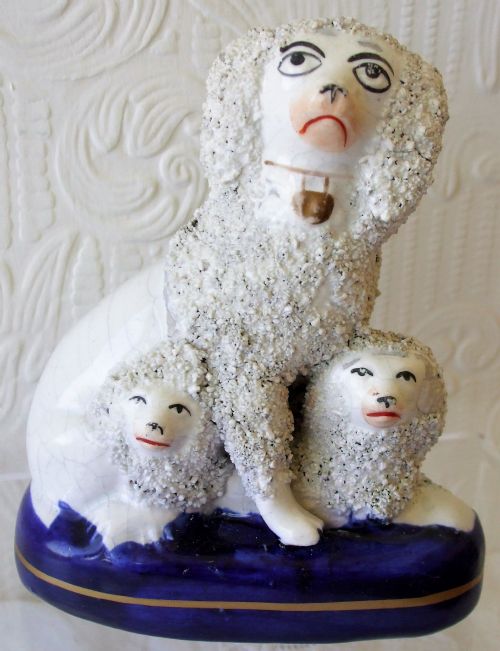
Specialised surface treatments distinguished certain varieties, such as the textured clay application found on poodle figures to simulate curly fur, alongside distinct colour palettes ranging from simple white and gilt to rich red and white or copper tones.
Some nineteenth century poodles were made with separate legs and textured clay confetti to ensure their curly fur looked extraordinarily fluffy.
Quality variations
The precision and delicacy of the enamel painting determine much of the visual appeal, separating finely rendered expressions from hurried factory decoration. Crisp moulding that preserves the fine details of fur, eyes, and collars distinguishes superior examples from softer, worn impressions.
Completeness as a matched pair significantly influences the standing of a set, particularly for spaniels and greyhounds designed for mirror placement on either side of a hearth. The presence of original decorative elements, such as working inkwells, quill holder apertures, or intact gold leaf highlights, also elevates the status of individual items.
Thomas Parr·Wooley·Wedgwood and Co Ltd
The Staffordshire Pottery Dog Figures Glossary
- Comforter spaniels
- Staffordshire spaniels traditionally displayed in pairs on cottage mantelpieces. These figures earned their name from their role as comforting domestic companions in nineteenth century homes.
- Earthenware
- A porous pottery body fired at lower temperatures, commonly used for nineteenth century figures. It serves as the primary material base before glazing and enamel decoration are applied.
- Lead glaze
- A glossy coating containing lead compounds applied to ceramics before firing. This technique creates a smooth, reflective surface characteristic of Victorian pottery figures.
- Quill holder
- A ceramic figure featuring small apertures or troughs designed to hold writing quills or pens. These functional pieces combine decorative animal forms with desk accessories.
- Copper lustre
- A metallic glaze finish producing a reflective, coppery sheen. Potters applied this technique to create ornate decorative surfaces on specific nineteenth century dog figures.
Staffordshire Pottery Dog Figures: Frequently Asked Questions
What are Staffordshire comforter spaniels?
Staffordshire comforter spaniels are ceramic figures modelled on King Charles spaniels that Victorian households placed on mantelpieces. People kept them as decorative ornaments and companions for the hearth.
Pairs of these dogs typically faced inward toward each other, creating a balanced display on either side of the fireplace. Their popularity made them a staple of nineteenth century English domestic pottery.
How were pottery dog figures used?
These ceramic figures served primarily as decorative ornaments for mantelpieces, sideboards, and drawing-room tables. Certain forms also incorporated practical functions into their design, such as inkwells, pen holders, and money boxes.
Desk accessories like greyhound quill holders combined utility with the popular animal themes of the period. Owners displayed them to demonstrate taste and an affinity for hunting animals and household pets.
How can I tell Victorian dogs apart from earlier pieces?
Georgian and early nineteenth century pieces often feature simpler modelling, distinct early glaze characteristics, and different coloration compared to mass-produced high Victorian examples. Stoneware bodies and specific early palette choices help indicate an earlier date of origin.
Victorian pieces from the mid to late nineteenth century show greater standardisation in moulding and more vivid enamel decoration. Examining the weight, clay type, and glazing style provides clues to distinguishing between production periods.
Why do Staffordshire dogs usually come in pairs?
Potters manufactured these dogs in matched left-facing and right-facing pairs to frame domestic fireplaces symmetrically. This arrangement suited the formal layout of Victorian mantelpieces.
Displaying them together was standard practice in nineteenth century households, reflecting the Victorian preference for balanced decor. Finding a true original matched pair remains important for collectors.
What breeds are represented in these figures?
Makers modelled these ceramics on a wide variety of popular dogs, including spaniels, greyhounds, poodles, pugs, whippets, dalmatians, and terriers. Spaniels and greyhounds appear most frequently in surviving historical inventory.
Specialist variations include poodles with textured coats and hunting dogs depicted alongside hares. These choices reflect both fashionable pets of the era and working animals associated with the countryside.