


Victorian Ceramic Hearth Dogs
Victorian ceramic hearth dogs are decorative pottery figures that bring traditional charm to a fireplace.
Victorian Ceramic Hearth Dogs
When searching for victorian ceramic hearth dogs, a buyer encounters a specific tradition of pottery figures made to sit beside a fireplace. These spaniels, poodles, Maltese terriers, and pugs date across the nineteenth century, from the Regency period through to eighteen ninety.
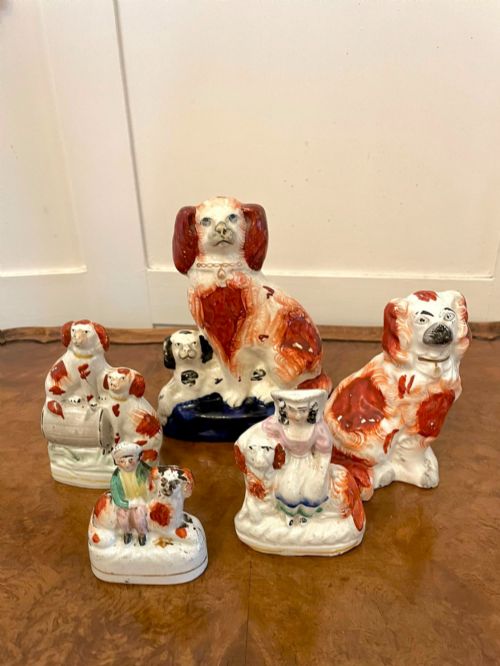
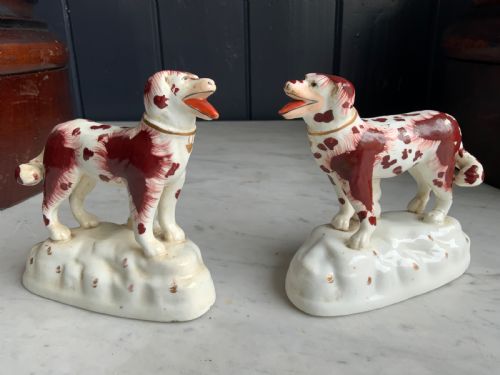
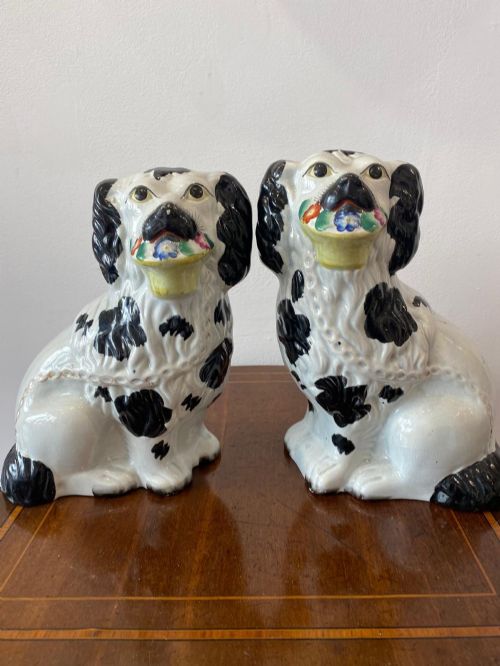
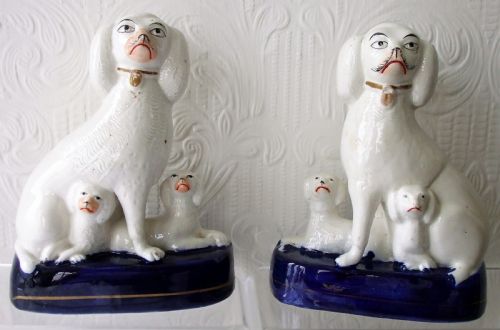
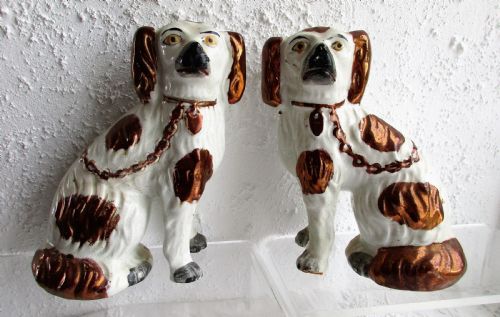
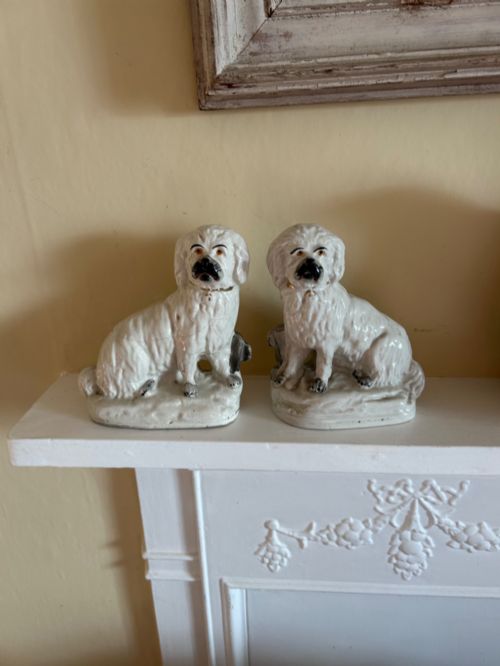
The most common version met on this page is the seated spaniel, frequently listed as a pair of comforter spaniels. These figures appear in various colour schemes including plain white, white with gilt, red and white, and copper lustre.
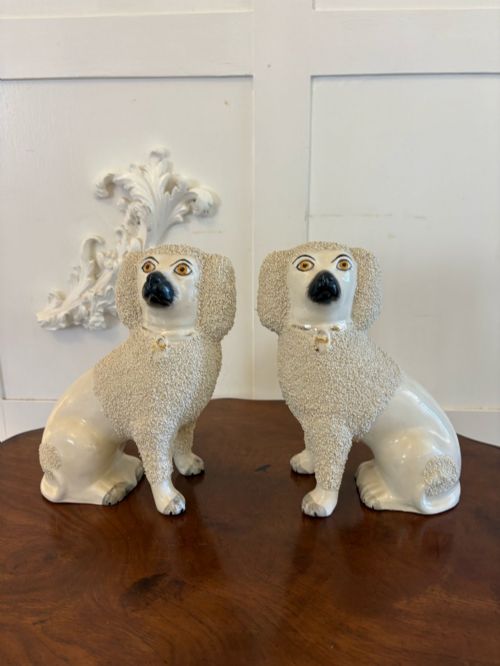
Makers produced these decorative objects in collections, pairs, and groups that sometimes include pups or blue cushions with encrusting. The listings show forms ranging from standard seated dogs to large models and poodles with puppies.
Methods and Materials
Potters shaped these earthenware and ceramic figures using traditional moulding techniques before applying lead glaze and enamel colours. Many examples incorporate hand-painted details to define the facial expressions and coats of the animals.
Makers utilised gold leaf, gilt, and copper lustre finishes to highlight collars, lockets, and markings on the pottery bodies. Certain pieces feature textured surfaces created through clay encrusting on the bases or cushions.
Several Staffordshire poodles on this page come accompanied by miniature pups, proving that even clay dogs needed a little family around them.
Judging Quality
The presence of secondary details such as modeled pups, gilt highlights, and copper lustre accents elevates a pair. Matched pairs with clean moulding and uniform glaze coloration command greater interest than mismatched or heavily worn figures.
Beswick
The Victorian Ceramic Hearth Dogs Glossary
- Comforter spaniels
- Staffordshire pottery dogs modeled as seated spaniels, traditionally placed on either side of a fireplace mantelpiece. These figures derive their name from the toy spaniels kept as lapdogs during the period.
- Copper lustre
- A metallic glaze technique producing a reflective, coppery sheen on the surface of pottery. This finish was frequently applied to the coats or collars of nineteenth-century ceramic figures.
- Earthenware
- Porous pottery fired at lower temperatures, commonly used for mass-produced nineteenth-century figures. It requires an applied glaze to become impervious to liquids.
- Lead glaze
- A glossy coating containing lead oxide applied to pottery before firing to create a smooth, shiny finish. This treatment protects the underlying earthenware body and intensifies painted colours.
- Enamel
- Vitreous paint applied over the fired glaze and fixed with a secondary, lower-temperature firing. It allowed potters to add bright red, black, and gold details to the finished figures.
Victorian Ceramic Hearth Dogs: Frequently Asked Questions
What are hearth dogs?
Hearth dogs are ceramic animal figures designed to sit on the fireplace hearth in pairs. They served as decorative ornaments in nineteenth-century parlours.
Most represent spaniels or poodles and faced inward toward each other from opposite ends of the mantel.
Why do they come in pairs?
Pairs were manufactured to sit symmetrically on either side of a domestic fireplace. This balanced arrangement suited Victorian interior design conventions.
Finding a matched pair remains a primary consideration for collectors assembling a traditional display.
How do I date these figures?
Dating relies on stylistic clues, glaze characteristics, and recorded production periods. Pieces range from the Regency era through the late nineteenth century.
Copper lustre finishes and encrusted details often point towards the middle decades of the eighteen hundreds.
Where should I place them?
These figures look best displayed on a mantelpiece, shelf, or atop a traditional fireplace hearth. They add a touch of English traditional character to a room.
Keep them away from areas of heavy foot traffic to prevent accidental knocks.