




Antique White Dog Sculptures
These antique white dog sculptures bring centuries of canine character into your home, ranging from Staffordshire pottery poodles to delicate Japanese Hirado porcelain figures.
Antique White Dog Sculptures
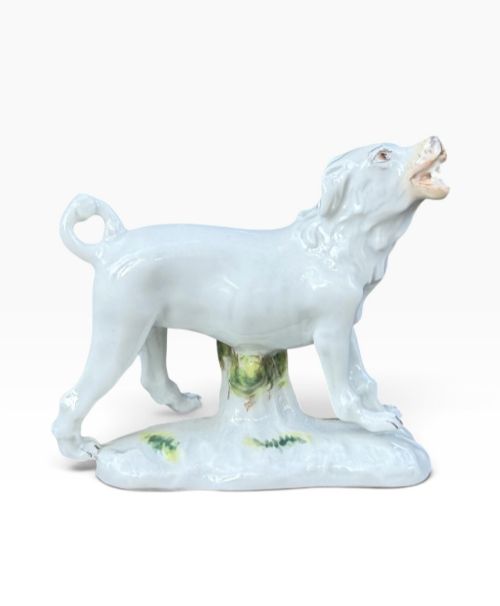
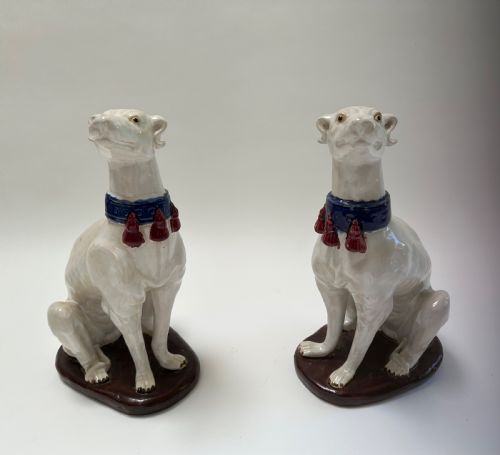
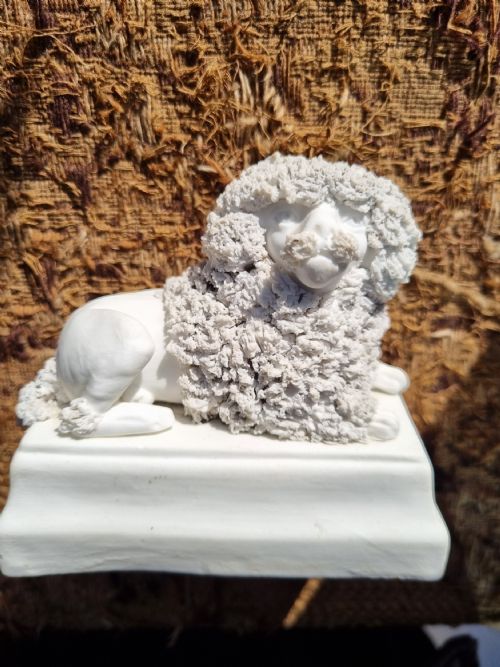
When you search for antique white dog sculptures, you are looking at a diverse group of decorative figures and ornaments spanning the nineteenth and early twentieth centuries. The pieces on this page include Staffordshire pottery poodles and greyhounds, alongside Japanese Hirado porcelain guardian lion dogs and European parian statuary.
Makers in Britain and continental Europe produced these animals to capture the loyal stance and playful nature of hounds, setters, and gundogs. Alongside them, Japanese kilns created intricate porcelain puppies and mythical guardian dogs finished in clean white tones.
Materials and methods
Potters and sculptors utilised fine materials such as porcelain, earthenware, and parian ware to model these dogs. Many pieces rely on a smooth glaze or a bisque finish to render the coat in a brilliant white, sometimes enhanced with subtle enamel paint details.
Factories employed specialised moulding techniques to achieve the varied textures seen in the fur of poodles and the smooth muscles of hunting hounds. Heavier figures often combine earthenware bases with lead glaze, while parian ware provides a marble-like texture ideal for classical statuary.
Several dogs sit patiently alongside their sculpted pups, proving that nineteenth-century canine devotion knew no bounds.
Distinctions in quality
The finesse of the modelling separates finer figures from standard production pieces, particularly in the rendering of facial expressions and the texture of the fur. Skilled modellers working for established factories achieved a naturalistic weight and posture in their hounds and gundogs.
The purity of the glaze and the crispness of the biscuit porcelain or parian surface also define the standard of a piece. Finer examples retain sharp definition in the moulded details without losing their form during the firing process.
Thomas Parr·John Durham·Enoch Wood factory
The Antique White Dog Sculptures Glossary
- Parian Ware
- A fine-grained, unglazed porcelain resembling marble, developed in the nineteenth century for portrait busts and animal figures.
- Biscuit Porcelain
- Unbleached and unglazed porcelain fired once to produce a matte, white surface with a tactile quality.
- Lead Glaze
- A glossy coating applied to earthenware before firing, giving pottery a waterproof finish and a reflective sheen.
- Hirado Porcelain
- High-quality Japanese porcelain produced in the Hizen province, known for its fine white body and delicate sculptural work.
- Blanc De Chine
- A French term for white Chinese porcelain, often used by extension to describe European white-glazed figures.
Antique White Dog Sculptures: Frequently Asked Questions
How do I clean antique porcelain dogs?
Dust these figures gently with a soft, dry brush to prevent the accumulation of dirt in the crevices of the model. Avoid using harsh chemical cleaners or submerging unglazed pieces in water.
For glazed surfaces, a damp cloth with mild soap can be used sparingly, followed by immediate drying with a soft towel.
Were these dogs meant for display?
Most of these figures served as decorative ornaments on mantelpieces, sideboards, and tables in nineteenth-century homes. Staffordshire pottery dogs were often displayed in mirrored pairs.
Japanese Hirado and Kutani figures similarly functioned as ornamental objects, bringing both artistic merit and cultural symbolism to interior spaces.
How can I tell parian ware from porcelain?
Parian ware has a distinctive matte finish that closely resembles carved marble, lacking the glassy sheen typical of glazed porcelain. It feels heavier and denser than standard earthenware.
Porcelain figures often show a smoother, vitrified body that rings slightly when tapped, whereas parian absorbs light and feels cooler to the touch.
What is a guardian lion dog?
A guardian lion dog, or shishi, is a traditional mythical creature rooted in East Asian culture, designed to protect sacred spaces and homes. Japanese examples combine fierce expressions with intricate sculptural detail.
These figures often appear seated with one paw resting on a brocade ball or alongside companion puppies, rendered in white porcelain.