

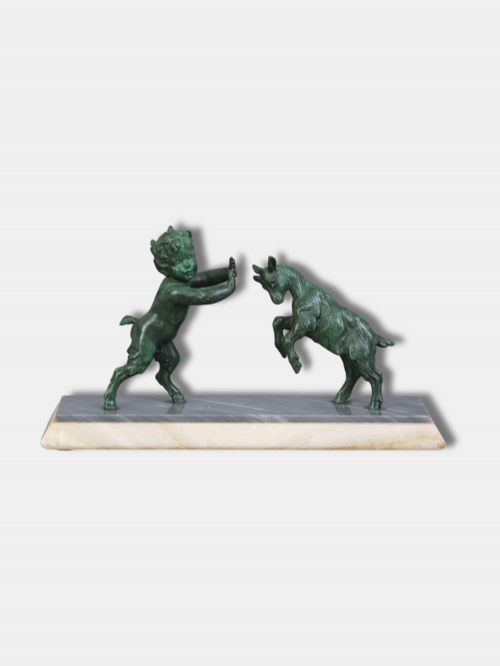
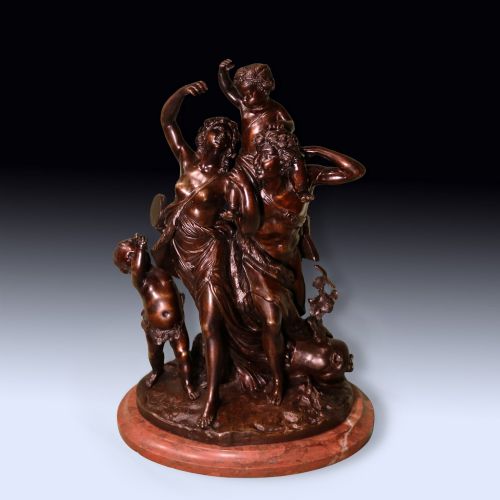
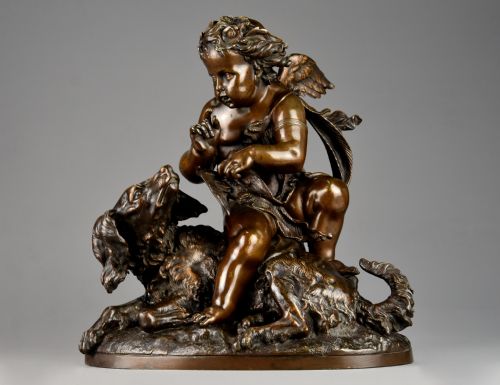


Antique Bronze Group
When you search for an antique bronze group, you are looking at multi-figure compositions cast in metal from the nineteenth and early twentieth centuries.
Antique Bronze Group
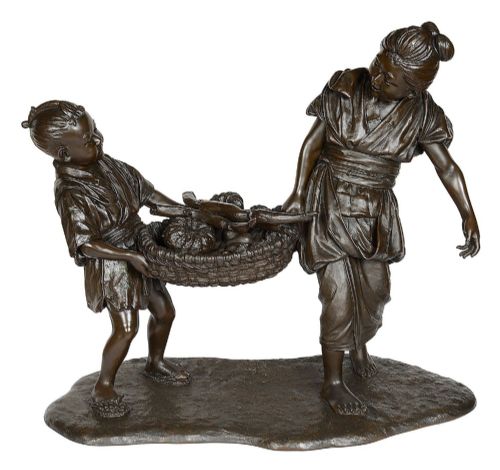
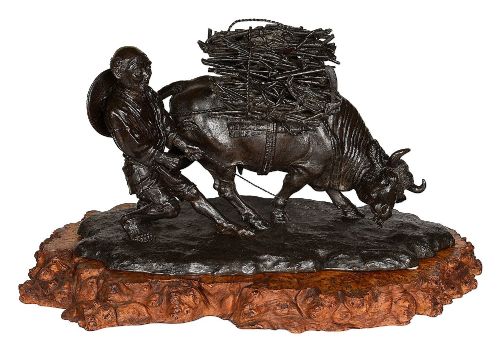
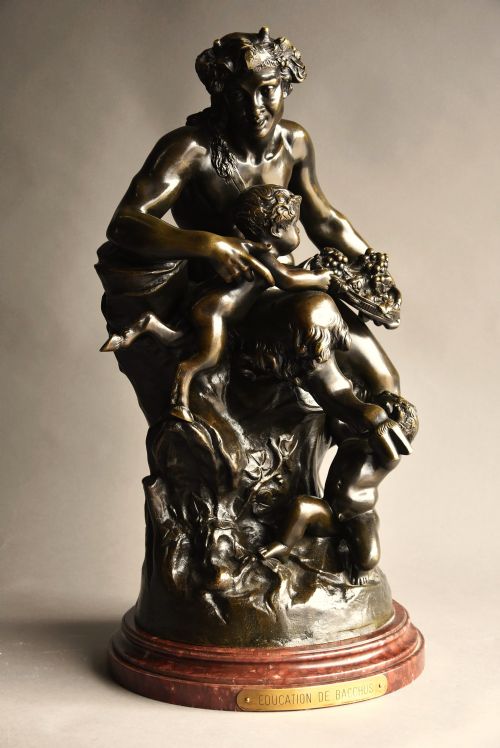
An antique bronze group comprises multiple figures interacting within a single sculpted scene rather than standing as a solitary subject. The pieces on this page span several decades, encompassing French mythological subjects, animalier studies, and Japanese Meiji period okimono.
French nineteenth-century workshops dominate the selection, often rendering classical or romantic narratives involving putti, satyrs, and animals. Alongside these European examples sit Japanese metalwork groups depicting figures with animals or children with fruit.
The compositions vary from intimate tabletop bronzes to large scale decorative objects mounted on marble or onyx bases. Buyers searching for an antique bronze group find everything from classical revival works to Art Deco animal studies.
How they were made
Foundries produced these works primarily using the lost wax method or sand casting, which allowed complex multi-figure arrangements to be rendered in sections before assembly. The metal surface received chemical patination to produce dark brown, green, or gilt finishes.
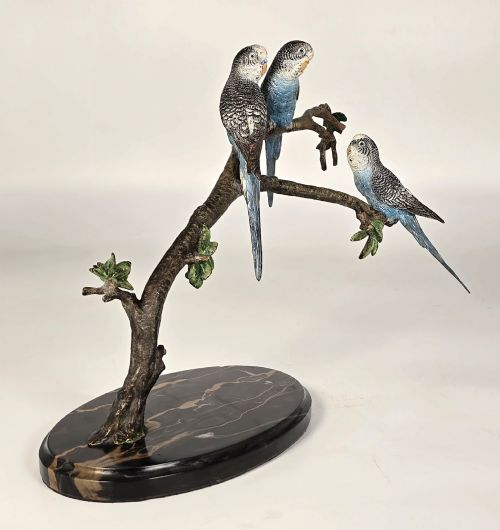
Many works combine cast bronze with secondary materials such as marble, onyx, or carved wood for bases and architectural elements. Certain pieces incorporate cold painted polychrome decoration or highlights in shakudo and silvered bronze.
Listings feature nineteenth-century French and Japanese Meiji period bronze groups alongside Art Deco spelter figures.
What varies in quality
The application of the patina alters the visual depth of the sculpture, with superior examples showing subtle tonal variations across the multi-figure surface. The integration between the bronze figures and their marble or stone bases also marks the difference between standard production and fine atelier output.
Jomi Eisuke·Emile Carlier·Kaniya Kuniharu·Auguste Moreau·G. Gardet·Vannetti·P. J. Mene·Carl Kauba·Xavier Raphanel·Alfred Dubucand·Charles Cumberworth
The Antique Bronze Group Glossary
- Animalier
- A nineteenth-century sculptural movement focused on the realistic depiction of animals, particularly in motion or combat. Artists such as P. J. Mene and Alfred Dubucand worked extensively in this genre.
- Patina
- The surface coloration and sheen developed naturally over time or applied chemically by the foundry. Bronze patination ranges from deep blackish-brown to warm green and gilt finishes.
- Okimono
- A Japanese decorative object intended for display on a shelf or in a tokonoma alcove. Meiji period examples frequently depict figures, elephants, and tigers.
- Putto
- A chubby male child figure, often winged, derived from classical art and frequently seen playing instruments or interacting with satyrs and animals in French bronzes.
- Spelter
- An alloy of zinc and copper used as an affordable substitute for bronze during the late nineteenth and early twentieth centuries. Spelter groups are common in Art Deco designs.
Antique Bronze Group: Frequently Asked Questions
What is an antique bronze group?
An antique bronze group is a sculptural composition featuring two or more figures interacting within a single cast piece. These works capture narrative scenes, mythological encounters, and animal behaviour.
The category spans European foundry output from the nineteenth century alongside Japanese Meiji period metalwork. Collectors value them for their intricate detail and dynamic multi-figure arrangements.
How do I distinguish bronze from spelter?
Bronze is a heavy alloy of copper and tin that takes a deep, durable chemical patina and shows a reddish or golden hue where exposed. Spelter is a softer zinc-based alloy that feels lighter and often exhibits flaking paint rather than a bonded patina.
Many Art Deco figural groups utilised spelter as a cost-effective alternative to bronze. Examining the underside or unpainted areas usually reveals the lighter, greyish metal of spelter.
Where were these bronze groups displayed?
Nineteenth-century collectors placed these sculptures on mantelpieces, library tables, and pedestals within formal parlours. Their multi-view compositions made them suitable as centrepieces for domestic interior decoration.
Large scale works often incorporated heavy marble or onyx bases to anchor the weight of the metal. Smaller cabinet bronzes sat easily on side tables and desks.
How should I care for antique bronze?
Antique bronze requires minimal intervention to preserve its original surface and chemical patina. Dusting gently with a soft brush prevents particulate buildup in the recessed areas of the casting.
Avoid using metal polishes, oils, or modern cleaning agents, as these strip the historical patina. Maintaining stable indoor humidity prevents moisture damage to any attached marble or wooden bases.