



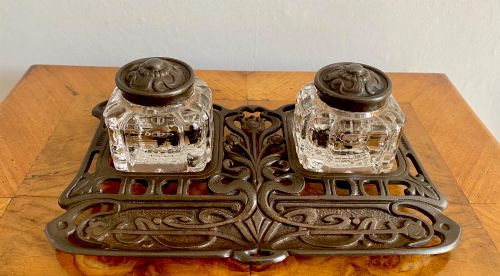


Antique Bronze Desk Tidy
An antique bronze desk tidy organises correspondence with heavy metal work and fitted inkwells, bringing substance and style to a working surface.
Materials and methods of construction
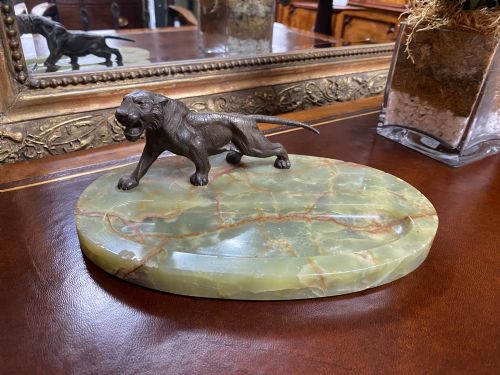
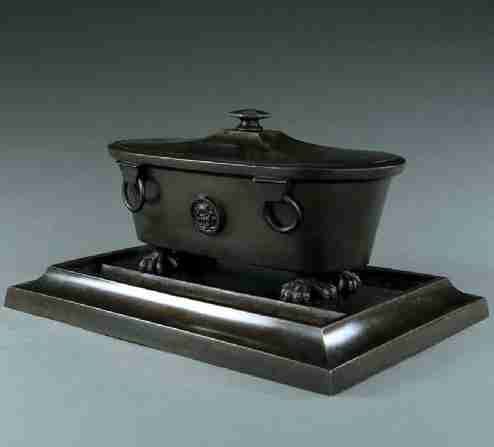
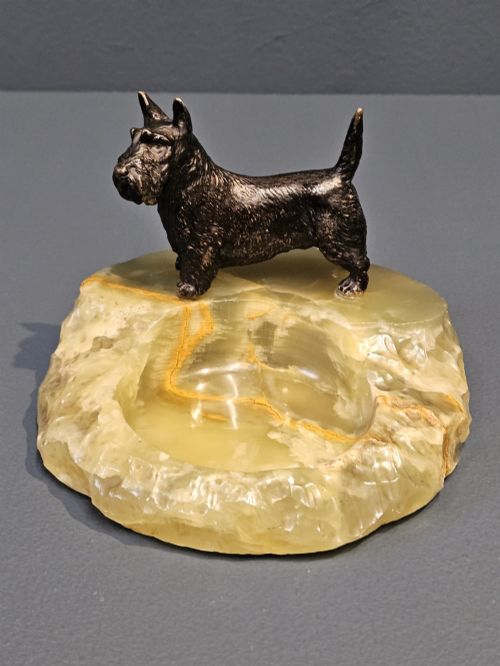
Foundry work relied on bronze, ormolu, and gilded bronze cast into sculptural forms, occasionally finished with cold painted polychrome details. Metal components were frequently mounted onto heavy bases of marble, onyx, or mahogany to provide stability.
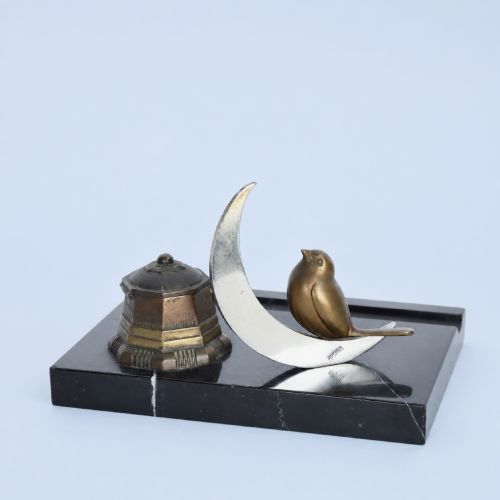
Fitted glass ink bottles and ceramic elements integrated directly into metal housings alongside pen trays and champleve enamel decoration. Artisans combined metal casting with stone cutting and woodworking to assemble these utilitarian objects.
What separates examples by quality
The integration of materials dictates standard, with high-tier pieces uniting unblemished marble or onyx bases with heavy fire-gilded ormolu mounts and original glass liners. Lesser examples rely on simpler brass fabrication and mismatched replacement bottles.
Antique Bronze Desk Tidy Retail Price Guide 2026
Typical asking prices for bronze desk tidy among the pieces listed under this phrase on Sellingantiques today, from the lower quarter to the upper quarter. They describe what is for sale here now, not the wider market.
Listings demonstrate wide material use, pairing bronze and ormolu with marble, onyx, mahogany, glass, and ceramic elements.
Asprey Of London·Lefebvre of Belgium·Jules Dalou·Maurice Dufrene·Bergmann
The Antique Bronze Desk Tidy Glossary
- Ormolu
- Gilt bronze mounted on decorative metalwork, widely utilised in French Empire and Victorian desk stands. The technique involves applying a finely ground gold-mercury amalgam to bronze before firing.
- Encrier
- A French term for an inkstand or inkwell fitted for writing desks. These portable desktop reservoirs frequently include pen rests and sanders.
- Cold painted bronze
- A method where bronze figures received paint directly onto the cold metal surface rather than through kiln firing. Austrian workshops specialised in this finish for figural animals and novelty items.
- Champleve
- An enamelling technique where troughs or cells are hollowed out of a metal surface and filled with vitreous enamel. This colourful decoration appears on nineteenth-century French desk stands.
- Malachite
- A green copper carbonate mineral utilised for decorative inlay and small ornamental objects. Its distinctive banded patterns complement bronze mounts on desk tidies.
Antique Bronze Desk Tidy: Frequently Asked Questions
Are ink bottles usually original?
Original glass inserts feature appropriate period thickness, bubbles, and minor wear matching the age of the bronze stand. Many surviving pieces have replacement bottles fitted to replace lost or broken originals.
Checking the collar and base dimensions helps determine if an insert fits the specific foundry well. Mismatched replacements often sit too high or rattle within the metal housing.
How do I date a desk stand?
Stylistic indicators provide the primary guide, with heavy classical motifs pointing to nineteenth-century French Empire and flowing organic lines indicating Art Nouveau design. Material combinations like ormolu and mahogany typically suggest mid Victorian manufacture.
Signatures, foundry marks, and registration numbers stamped into the metal offer more precise chronological markers when present. Comparing construction techniques with dated benchmark pieces narrows the production window further.
What is the difference between a tidy and an inkstand?
A desk tidy generally emphasises pen trays, open compartments, and letter racks for general desk organisation. An inkstand specifically centres around one or more inkwells fixed to a shared base.
Many pieces combine both functions by incorporating pen rests alongside enclosed ink reservoirs. The terminology often overlaps depending on the presence of dedicated bottle housings.