



Antique Ormolu Inkwell
An antique ormolu inkwell brings the weight of nineteenth-century writing desks into a modern room through fire-gilded bronze and marble.
Antique Ormolu Inkwell
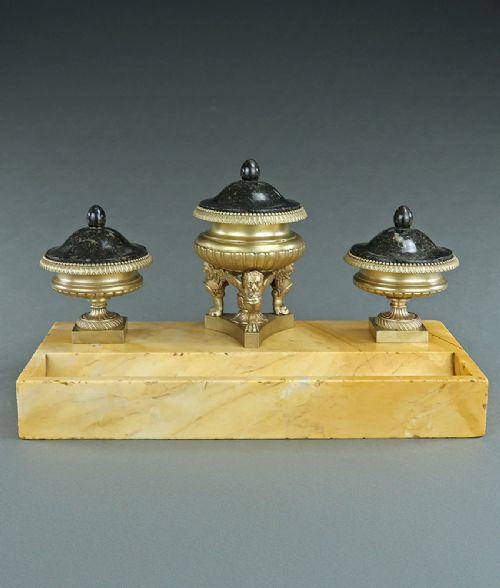
An antique ormolu inkwell is a desk accessory designed for holding writing fluid, combining gilded metal with bases of marble or wood. When you search for an antique ormolu inkwell, you encounter French Empire, Victorian, and Neoclassical desk pieces.
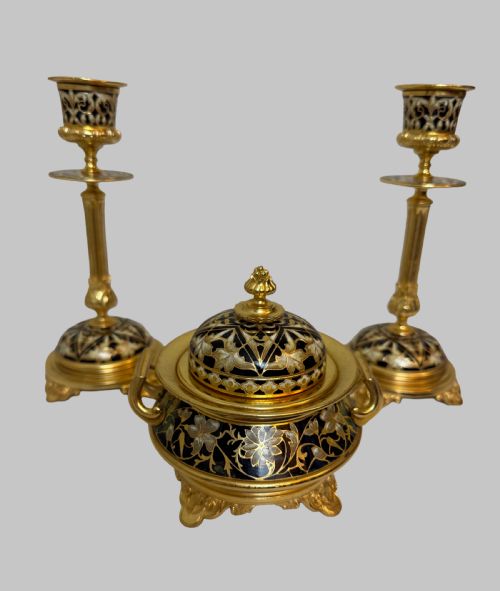
The objects take the form of single inkwells, substantial inkstands, and multi-piece desk sets featuring candlestands or clocks. Most examples date from the nineteenth century, drawing on French design and British Victorian tastes.
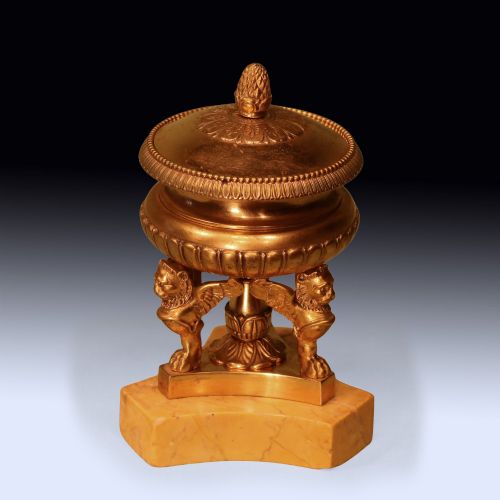
Desks from this era required functional ornaments that doubled as sculptural works of art. These pieces range from simple marble blocks mounted in bronze to figural compositions depicting animals, busts, and classical motifs.
Materials and construction methods
Makers formed these pieces using cast bronze that received a mercury gilding process known as ormolu, producing a rich golden surface that endures without tarnishing. This metalwork was combined with carved natural stones such as Sienna marble, vert marble, and onyx.
Secondary materials like brass, glass inserts, coromandel-wood, and mahogany provide structural contrast and functionality to the desk stands. Artisans mounted the heavy bronze castings onto stone bases using threaded pins and screws concealed beneath the pieces.
Materials appearing across the inventory include gilt bronze, ormolu, Sienna marble, vert marble, onyx, brass, glass, coromandel-wood, and mahogany.
Distinctions in craftsmanship
Quality reveals itself in the crispness of the bronze chasing and the depth of the fire gilding across high-relief ornamentation. Superior pieces display finely detailed animal figures, human busts, and floral motifs that retain their sharp edges and warm lustre.
The selection of the marble base also marks the tier of the piece, with dense, highly figured Sienna or vert marble elevating the status of the bronze mountings. Heavier gauge metalwork and integrated sets indicate workshop production intended for grander libraries.
Albert Marionnet·Moser
The Antique Ormolu Inkwell Glossary
- Ormolu
- Gilded bronze produced by applying a mercury and gold amalgam to cast bronze and heating it until the mercury vaporised. This historic technique creates a distinctive golden finish found on nineteenth-century French and English decorative objects.
- Encrier
- A French term for an inkstand or portable writing desk set containing inkwells and often pen holders. These units sat upon library tables to organise writing implements.
- Champleve
- An enamelling technique where troughs or cells are sunk into the surface of a metal object and filled with vitreous enamel before firing. It appears on nineteenth-century desk accessories alongside gilt bronze mounts.
- Sienna marble
- A yellow-hued decorative marble quarried in Italy with dark veining, frequently utilised as a contrasting base for ormolu desk stands. Its rich colour complements the warm tone of gilded bronze.
- Inkstand
- A comprehensive desk tray or stand incorporating one or more inkwells, sanders for drying ink, and occasionally taper sticks. They served as the central writing apparatus on period desks.
Antique Ormolu Inkwell: Frequently Asked Questions
How do I date an antique inkstand?
Dating relies on stylistic clues such as Neoclassical, French Empire, or Victorian design motifs combined with the materials used.
Nineteenth-century examples often pair gilt bronze with marble bases, coromandel-wood, or champleve enamel details.
Were these inkwells made in France?
Many fine ormolu desk sets and inkstands originated in France during the nineteenth century under the Empire and Napoleon III periods.
British makers also produced or incorporated French-style ormolu mounts on domestic woods like mahogany and coromandel.
How should I clean ormolu bronze?
Historic ormolu requires gentle dusting with a soft dry cloth to protect the delicate mercury gilding.
Avoid chemical polishes and abrasive cleaners that can strip away the original gold layer from the bronze surface.