


Vintage Brass Inkwell
A vintage brass inkwell brings tactile weight and period character to a desk, turning the act of writing into a deliberate ritual.
Vintage Brass Inkwell
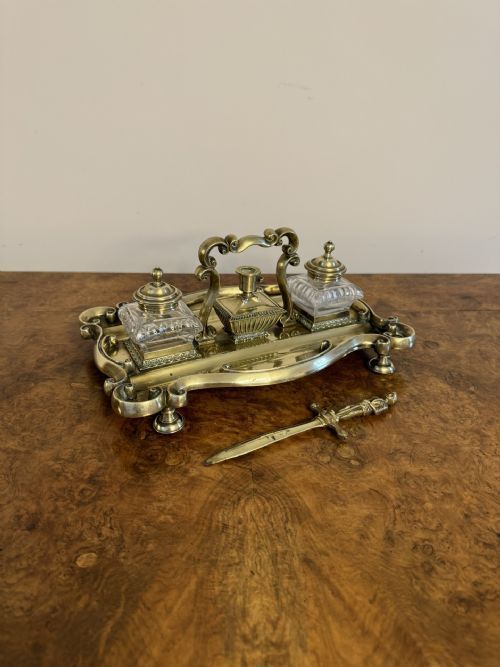
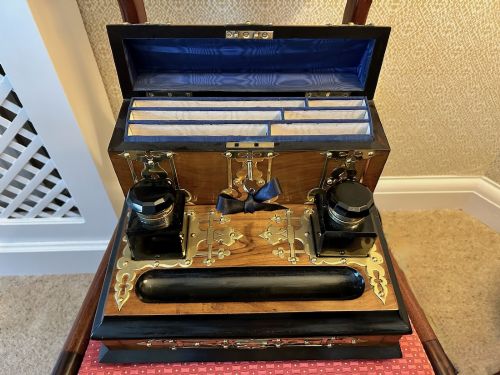
A vintage brass inkwell selection encompasses everything from simple domestic desk accessories to elaborate multi-piece inkstands incorporating cut glass and marble bases. When buyers search for a vintage brass inkwell, they encounter functional writing tools shaped by Victorian, Edwardian, and Art Nouveau aesthetics. The forms range from standalone receptacles to larger desk sets fitted with drawers, pen rests, and original glass ink inserts.
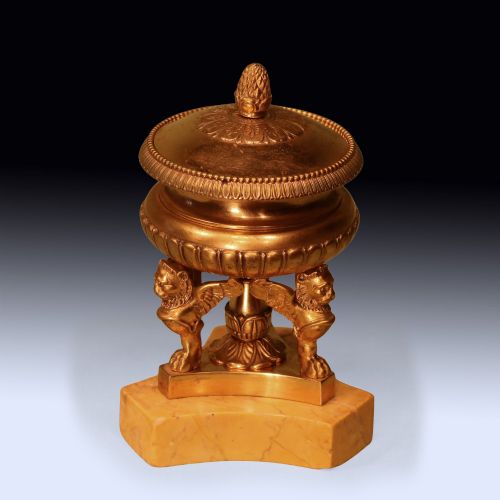
The materials and origins in this group stretch across the nineteenth and twentieth centuries, blending brass with materials such as ormolu, gilt bronze, oak, walnut, and ceramic. Pieces reflect international tastes, spanning English domestic workshops, French Paris makers, and Continental foundries. Novelty designs shaped as animals or jockey caps also appear alongside formal architectural stands.
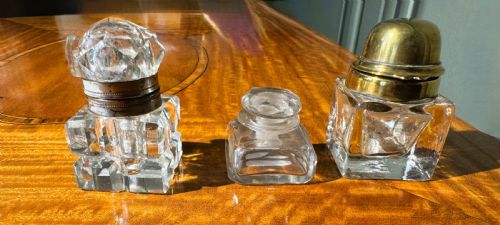
Buyers are most likely to meet Victorian and Edwardian brass models, often paired with glass reservoirs or mounted on marble and wooden bases. These items served as central fixtures on nineteenth-century writing desks, holding the liquid ink necessary for daily correspondence before the widespread adoption of the fountain pen.
What varies in quality
The caliber of a piece rests heavily on the crispness of the metal casting and the depth of hand-chasing applied after the mould was released. Heavy gauge brass and well-defined ornamentation distinguish superior examples from simpler, mass-produced items.
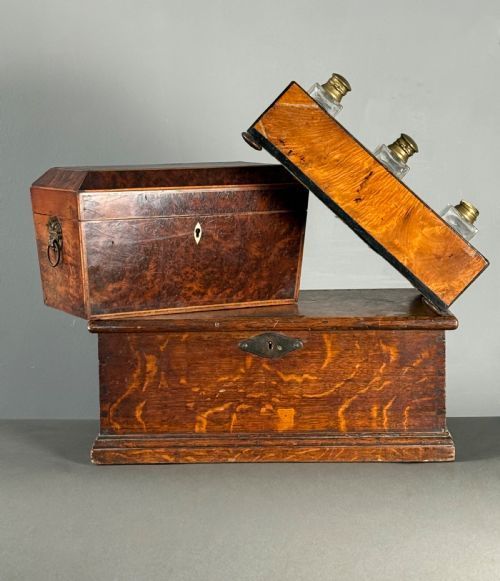
Material integration marks another clear division, seen in the selection of richly figured marble, substantial burr walnut, or high-grade cut glass rather than plain timber and thin pressed sheet metal. Retaining original glass ink bottles with matching collars adds significantly to the integrity of a desk set.
Artistic ambition elevates certain objects, such as novelty animal figures or organic Art Nouveau bronze work, where sculptural modeling requires advanced craftsmanship. Finer pieces demonstrate careful balancing between the heavy brass housing and the stone or wooden base.
Materials paired with brass across these items include cut glass, burr walnut, mahogany, marble, ormolu, and champlevé enamel.
James Cartland and Sons·Kralik·Loetz
The Vintage Brass Inkwell Glossary
- Inkstand
- A complete desk tray or stand holding one or more inkwells, often featuring integrated pen rests and a compartment for stamps or wafers.
- Ormolu
- Gilded bronze, produced by applying a mercury-gold amalgam to cast bronze and heating it to leave a rich golden coating.
- Champlevé
- An enamel technique where troughs or cells are hollowed out of the metal surface and filled with vitreous enamel before firing.
- Divit
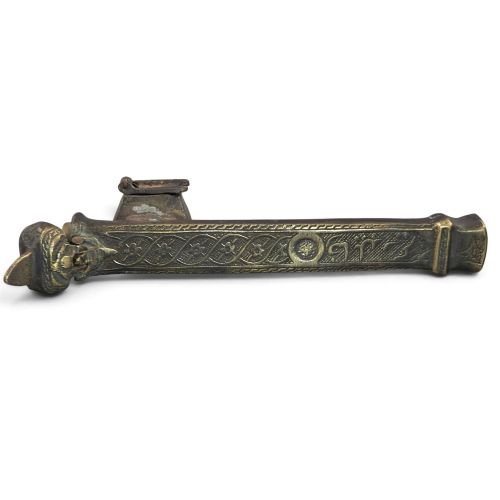
- A traditional Middle Eastern or Ottoman portable pen case and inkwell combined, often carried in a sash or belt.
- Grand Tour
- A cultural journey undertaken by nineteenth-century elites, inspiring souvenirs such as classical marble and bronze desk accessories.
Vintage Brass Inkwell: Frequently Asked Questions
What is the difference between an inkwell and an inkstand?
An inkwell is the single vessel designed specifically to hold a reservoir of liquid ink for writing. It typically consists of a small container with a hinged lid to prevent the ink from drying out.
An inkstand is a larger, more comprehensive desk accessory that incorporates one or more inkwells alongside dedicated troughs for holding dip pens, blotters, and sealing wax.
How do I date a brass inkwell?
Dating relies on stylistic clues, manufacturing techniques, and the secondary materials used in the construction. Victorian and Edwardian pieces often display registration numbers, ornate floral casting, or heavy oak and walnut mounting.
Art Nouveau examples from around nineteen hundred favour sinuous, organic lines and iridescent glass inserts, while eighteenth-century pieces like travelling divits show hand-worked engraving and distinct regional construction.
Were these items meant to travel?
Most domestic brass inkwells and heavy desk stands were intended to remain stationary upon a library table or writing desk. Their substantial bases of marble, bronze, or hardwood provided the necessary weight to keep them steady during use.
Certain specialised forms, such as Ottoman brass pen cases or fitted travelling sets, were designed for mobility, incorporating secure screw-top lids or locking cases to prevent spills on the move.
How should I clean a vintage brass inkwell?
Maintenance should focus on preserving the natural patina accumulated over decades of use rather than achieving a bright, mirror-like shine. Gentle dusting with a soft, dry cloth is usually sufficient to remove surface grime.
Harsh chemical polishes or abrasive pads must be avoided because they strip away historical character and can damage delicate patination, enamel work, or mounted stones.