

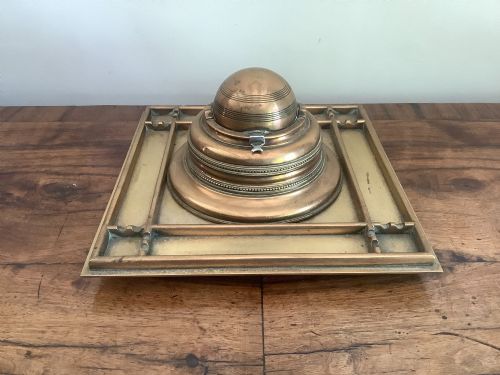


Desk Inkwell Tray
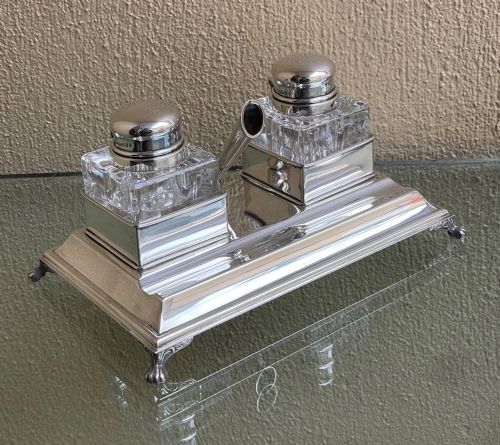
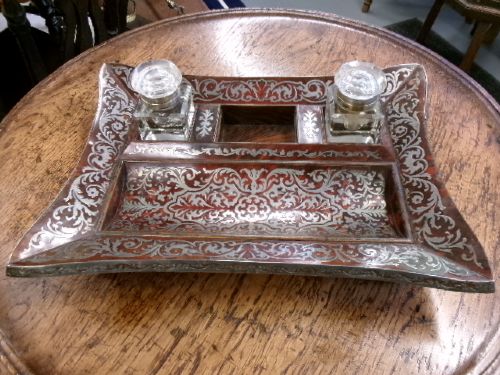
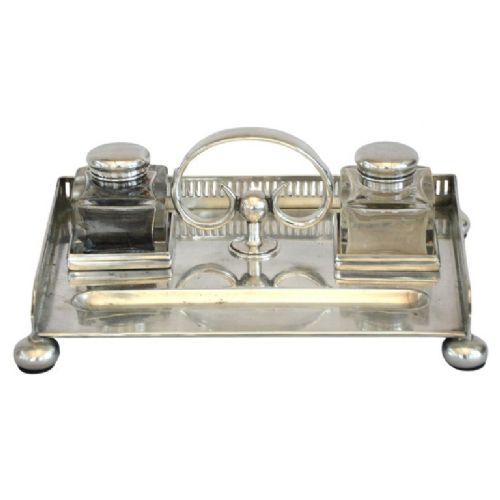
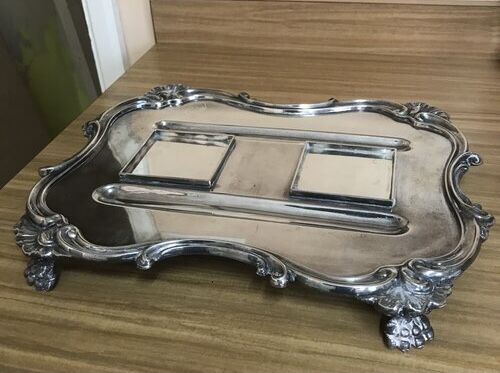
A desk inkwell tray organises the writer's essentials, combining a stable base with fitted ink receptacles and pen rests.
Desk Inkwell Tray
A desk inkwell tray serves as the central station for correspondence, uniting pens, sanders, and ink reservoirs in a single portable base. You will frequently encounter Victorian examples alongside pieces from the nineteenth century, ranging from simple wooden trays to elaborate multi-piece sets.
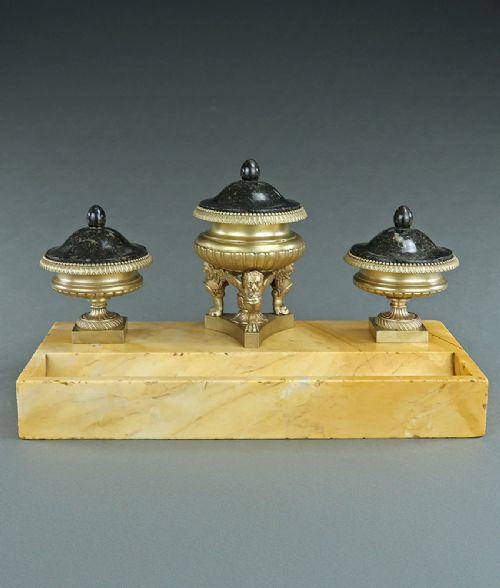
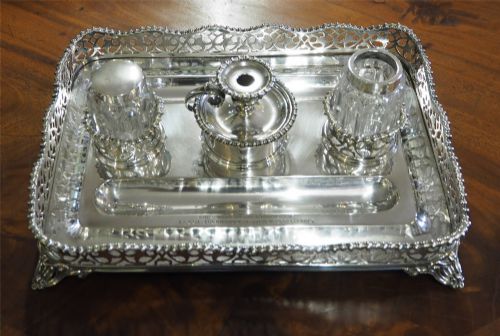
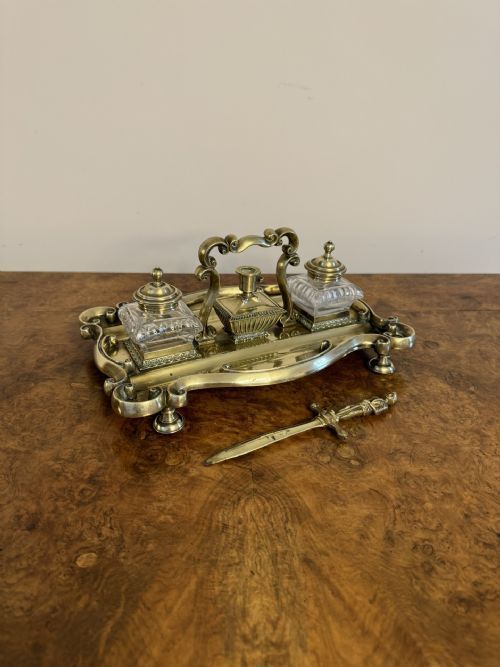
The format encompasses various configurations, including standalone trays with fitted wells, heavy silver-mounted stands with chambersticks, and figural carved wood models. Makers utilised diverse materials such as brass, silver, and exotic timbers to construct these functional desk accessories.
Materials and construction
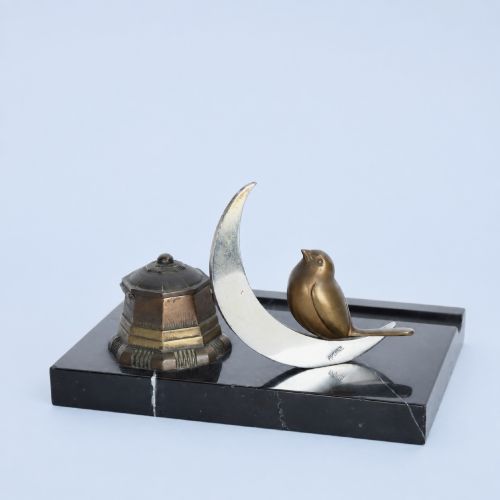
Metals form the backbone of many pieces, utilising cast brass, patinated bronze, and silver plate shaped through founding and detailed chasing. Silversmiths applied hallmarks to sterling examples, while Sheffield plate and electroplate provided durable alternatives for larger establishments.
Woodworking traditions produced finely fitted trays from coromandel, walnut, and rosewood, frequently enhanced with Boulle work, mother of pearl inlay, or brass mounts. Ceramic and glass components, including cut glass bottles and porcelain reservoirs, complete the assemblies.
Materials span cut glass, sterling silver, silver plate, bronze, carved wood, tortoiseshell, and porcelain across Victorian and earlier periods.
Qualities of distinction
Execution of detail separates standard desk accessories from exceptional works, visible in the sharpness of cast brass ornamentation and the precision of inlaid veneers. Heavier gauges of silver and substantial bronze castings indicate superior manufacturing investment.
Integrity of the fitted components dictates overall success, where original matching glass inserts and undamaged porcelain elements remain intact within their dedicated wooden or metal recesses.
Elkington·Walker And Hall·Harrods·Robert Garrard·Rupert Favell·James Cartland And Sons·Lefebvre
The Desk Inkwell Tray Glossary
- Standish
- A portable desk tray or stand holding inkwells, sanders, and pen compartments. This term frequently applies to larger or more formal silver and brass writing equipment.
- Boulle work
- Marquetry technique utilising tortoiseshell and brass inlaid in elaborate scroll patterns. It appeared frequently on luxury French and English desk sets.
- Ormolu
- Gilded bronze mounted onto decorative objects and furniture. The technique provides bright metallic highlights on nineteenth-century desk trays.
- Faience
- Tinned glazed earthenware produced in traditions such as Dutch Delft. These colourful ceramic bodies formed striking bodies for desktop inkwells.
- Chamberstick
- A small portable candlestick attached directly to a desk stand or tray. It provided illumination for sealing letters during evening correspondence.
Desk Inkwell Tray: Frequently Asked Questions
What is a desk inkwell tray?
A desk inkwell tray is a desktop accessory designed to hold writing instruments and ink reservoirs securely in one place.
These pieces range from simple wooden trays to grand silver and bronze sets created for formal correspondence.
How were these trays used?
Owners placed them on writing tables to keep bottled ink, quill pens, and blotting sand readily available.
The integrated pen rests and fitted wells prevented spills and kept the writing surface organised.
How do I care for antique brass?
Dust surfaces gently with a soft dry cloth to preserve the patinated finish over time.
Avoid harsh commercial polishes that strip away the aged character accumulated across the centuries.
Are glass inserts usually original?
Many surviving desk trays retain their original cut glass or blown ink bottles nestled within the fitted compartments.
Replacements do occur due to accidental breakage, so inspecting the fit and glass consistency helps determine originality.