



Antique Brass Face Clock
When you search for an antique brass face clock, you are looking for timepieces defined by metallic dials set within wooden or stone cases.

Understanding the antique brass face clock
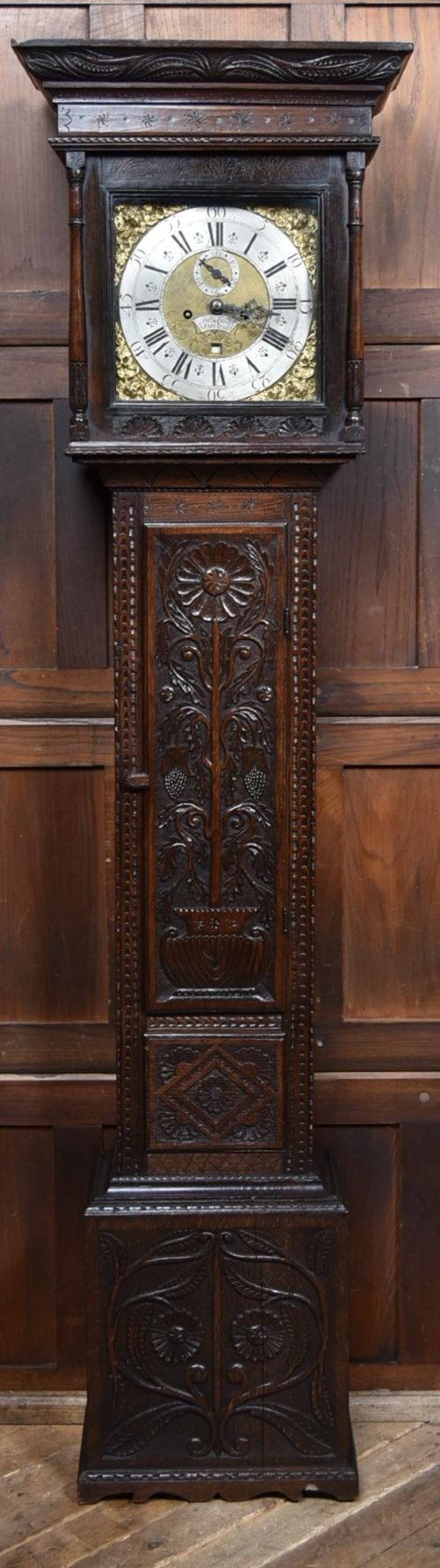
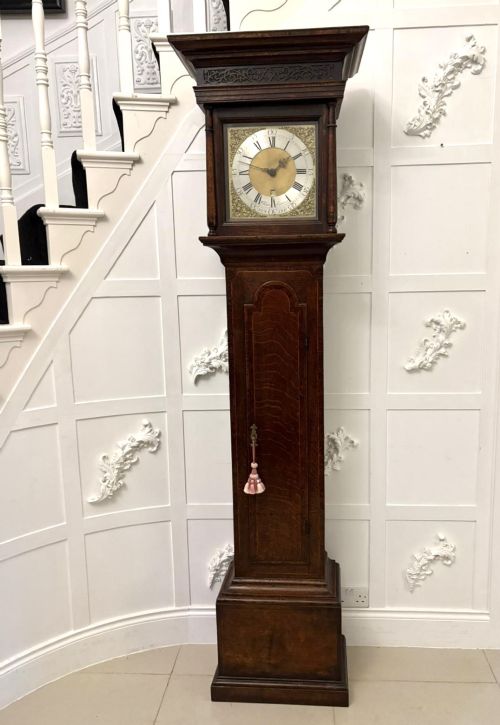
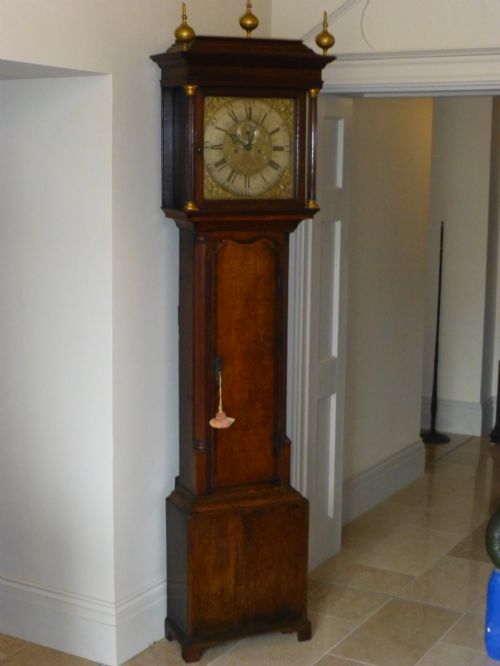
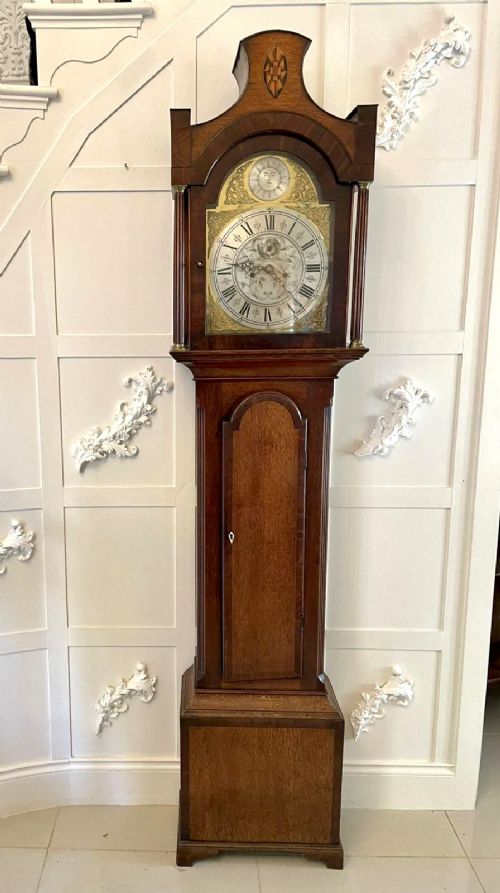
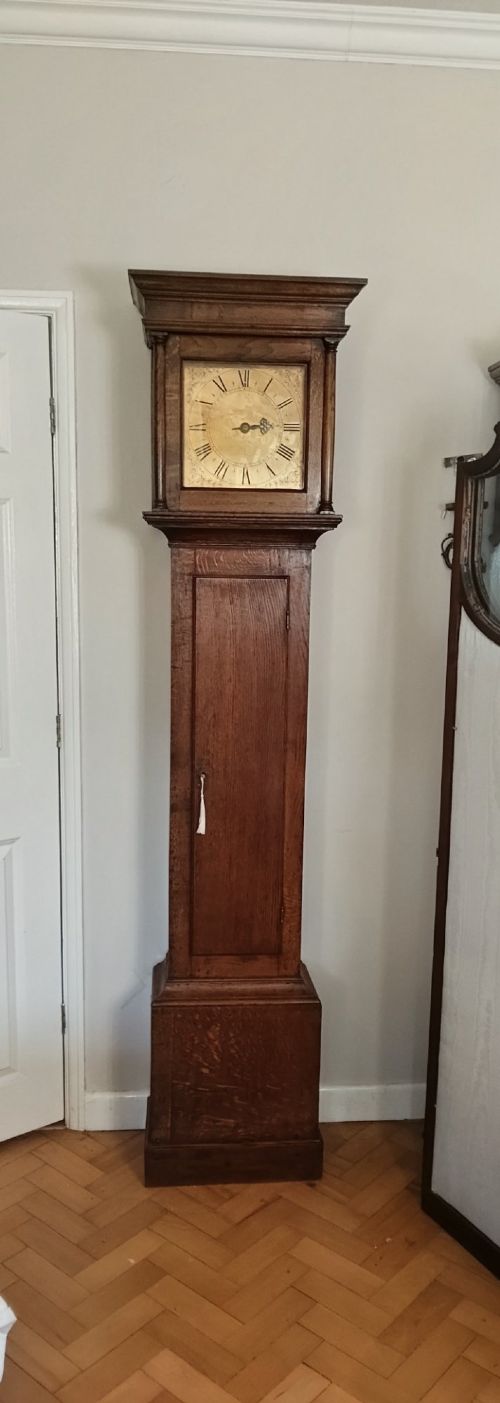
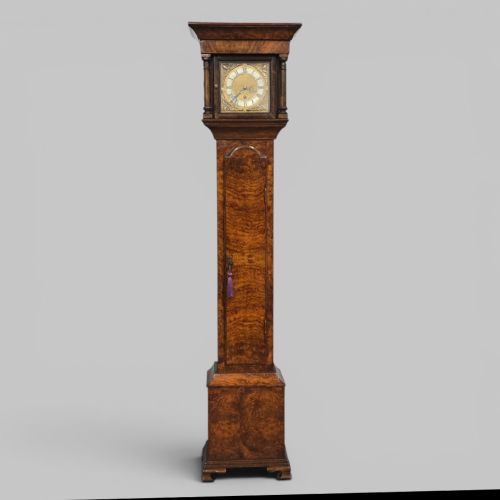
An antique brass face clock encompasses tall case clocks, wall clocks, mantel clocks, and smaller grandmother or granddaughter variations spanning the Georgian, Victorian, and Edwardian eras. These timepieces range from imposing floor-standing longcase examples to compact mantel versions designed for domestic interiors.
The materials paired with these brass dials include oak, mahogany, burr walnut, pollard oak, slate, and marble, housed in styles that stretch from Queen Anne Revival to Victorian architectural forms. The most frequently encountered pieces on this page are tall oak and mahogany longcase clocks originating from the eighteenth and nineteenth centuries.
Makers recorded in the archive and current listings span regional workshops and London makers, demonstrating that these timepieces were produced across cities and smaller towns alike. Buyers encounter everything from simple thirty-hour movements to eight-day chiming mechanisms behind the engraved or cast brass dials.
Materials and construction methods
The cases of these timepieces utilise solid timbers such as oak and mahogany, often enhanced with burr walnut or pollard oak veneers and decorative carving. Glazed doors protect the dial and pendulum, while slate and marble appear in heavier architectural mantel designs.
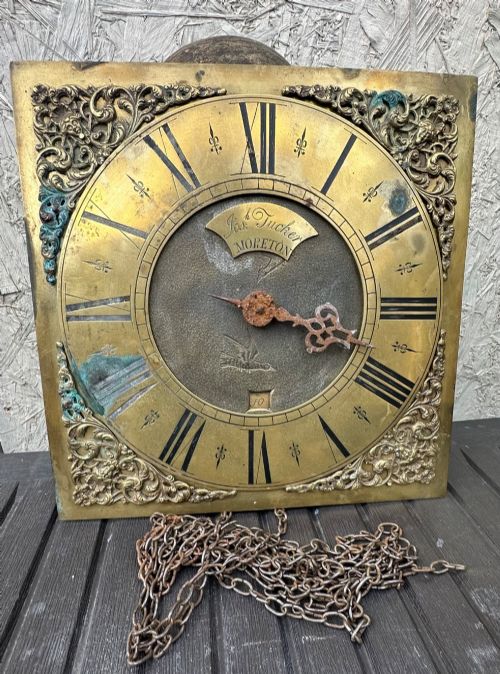
Dials are constructed from cast and engraved brass, sometimes paired with steel hands and subsidiary rings for seconds or calendar displays. Movements combine brass wheels and plates with iron or steel arbors, driven by lead or iron weights suspended by cords or chains, or powered by brass-spring barrels.
Retail Price Guide 2026
Typical UK retail prices for brass face clock, calculated from the Sellingantiques database of over a million retail prices indexed since 2003. This retail price guide relies exclusively on Sellingantiques data; no external sources or auction records are used, so the figures do not describe the wider market.
Some makers hid secret signatures inside the brass dial plates, leaving miniature messages for future clockmakers to discover during routine cleaning.
Distinctions in craftsmanship and design
The upper tier of these timepieces displays crisp, deep carving on the timber cases and finely hand-engraved detail across the brass dial plates, often signed by the maker. Poorer examples show worn dial engraving, crude timber replacement parts, or proportions that lack the balance of period originals.
Movement sophistication sets individual pieces apart, with eight-day gear trains, chiming mechanisms, and subsidiary dials representing more complex work than basic thirty-hour single-train movements. The choice of figured cabinet timbers like pollard oak and burr walnut likewise elevates the visual presence of the housing.
William Betagh Dublin·David Morice Auchtermuchty·James Draycot Wells·William Webster London·Benjamin Reeves Lamberhurst·John Simpson London·George Rice Rudgely·Newman Norwich·Hugh Lough Penrith
The Antique Brass Face Clock Glossary
- Longcase clock
- A tall freestanding pendulum clock enclosed in a wooden case, commonly called a grandfather clock. These floor-standing pieces protect the swinging pendulum and driving weights.
- Cartel wall clock
- An ornamental clock designed to be fixed directly to a wall, frequently housed within an ornate wooden or gilt frame. They appeared in domestic interiors during the eighteenth century.
- Grandmother clock
- A smaller, more slender version of the traditional longcase clock, standing lower to the ground. They became popular in later revival periods such as the early twentieth century.
- Eight day clock
- A timepiece movement requiring winding only once a week, utilising dual weights or spring barrels. This mechanism represents a step up in complexity from thirty-hour alternatives.
- Brass dial
- The visible front plate of the clock face cast and engraved from brass, often featuring spandrels in the corners. These metal faces replaced earlier painted iron dials in many traditional pieces.
Frequently Asked Questions
How do I wind an eight day clock?
Insert the winding key into the designated holes on the brass dial face and turn it gently until the weights rise or the spring reaches tension.
Take care not to overwind the mechanism, as this can strain the internal brass gear trains and cords.
Where should I place a longcase clock?
Position your tall clock against a solid interior wall away from direct sunlight, heating vents, and damp exterior surfaces.
A stable floor surface is essential so the heavy oak or mahogany case remains upright and the pendulum swings evenly.
What is the difference between oak and walnut cases?
Oak cases offer a heavy, robust housing with visible grain patterns typical of eighteenth-century vernacular furniture and country workshops. Walnut and burr walnut versions present smoother, highly figured decorative surfaces favoured in grander urban commissions.
Both timbers protect the brass dial effectively, though walnut requires stable humidity to prevent veneer lifting.
How do I tell an 18th century clock from a later revival?
Eighteenth-century examples display hand-cut brass movement plates, regional maker signatures engraved directly onto the dial, and pegged timber construction. Later revivals from the Edwardian period feature machine-finished components and different interior framing methods.
Examining the backboards and movement fixings usually reveals the true period of assembly.