


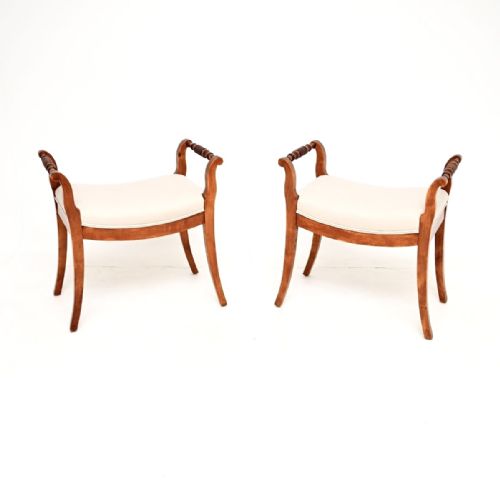

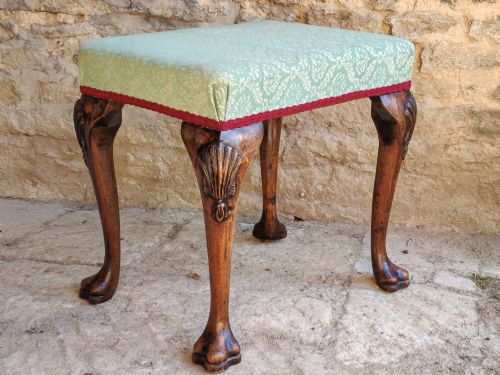
19th Century Upholstered Stool
When you handle a 19th century upholstered stool, you hold a piece of history designed for comfort and elegance in the home.
19th Century Upholstered Stool
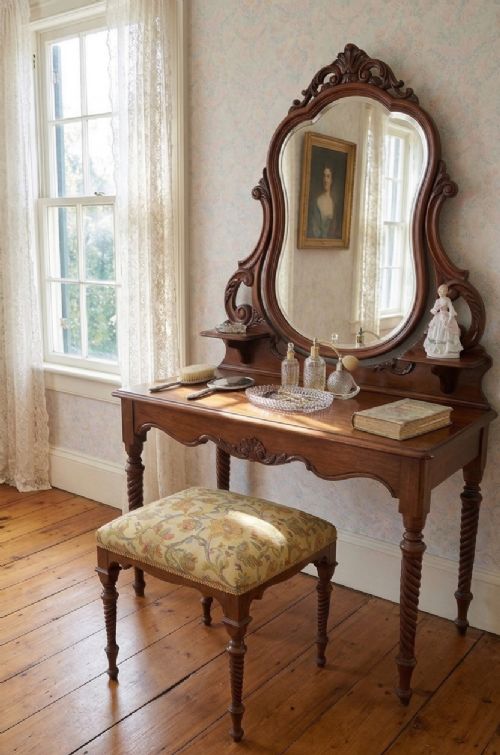
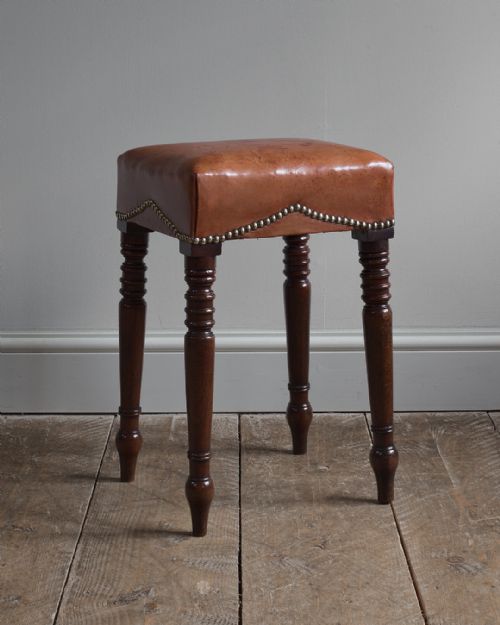
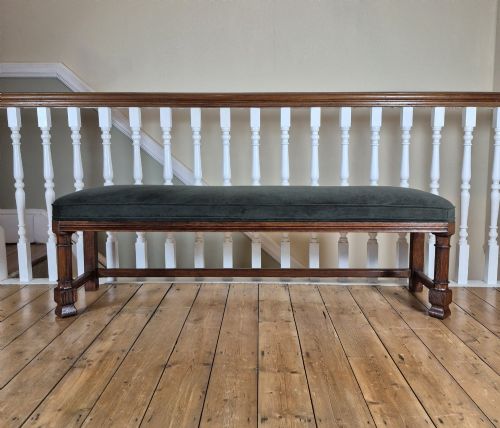
A 19th century upholstered stool encompasses a broad variety of domestic seating forms, including footstools, piano stools, benches, and dressing stools. Buyers searching this phrase most frequently encounter Victorian and Regency walnut or mahogany frames supporting traditional textile or velvet upholstery.
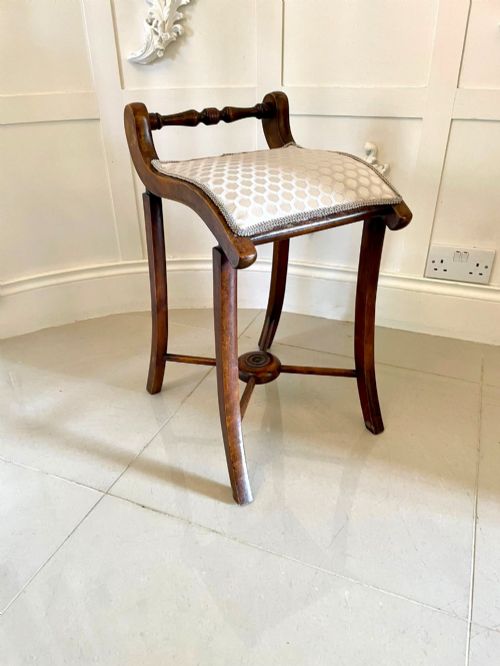
The selection ranges from compact footstools to large centre stools and window seats, originating from English country houses, French salons, and workshops across Europe. Form follows function closely, with lower footstools intended for fireside comfort and taller variants serving dressing tables or music rooms.
How They Were Made
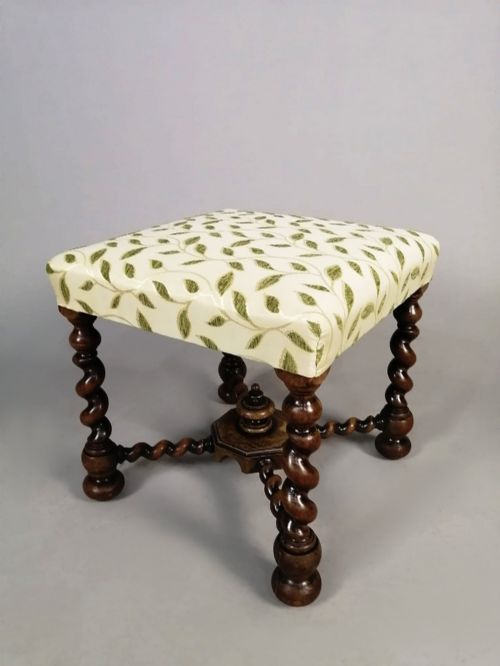
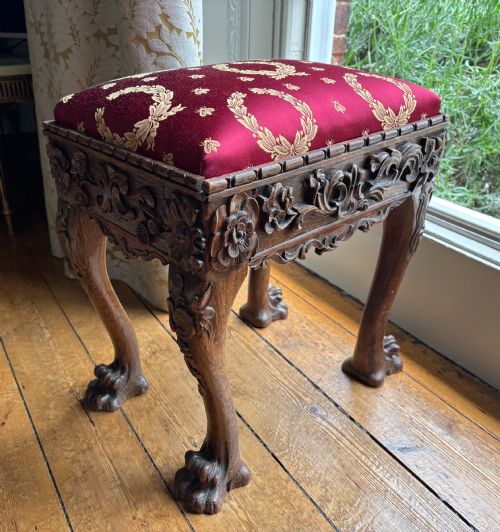
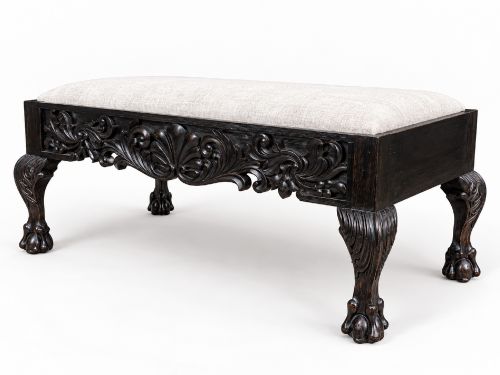
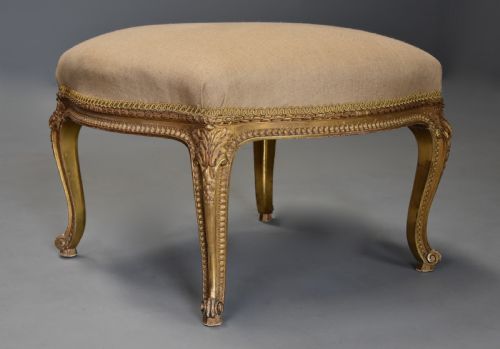
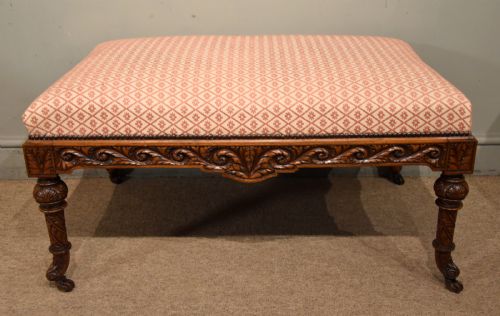
Cabinetmakers utilised dense timbers like rosewood, mahogany, walnut, and oak to construct durable frames, often employing carved cabriole legs, spiral turnings, or x-frame supports. Joinery relied on traditional techniques such as mortise and tenon to ensure structural integrity under daily use.
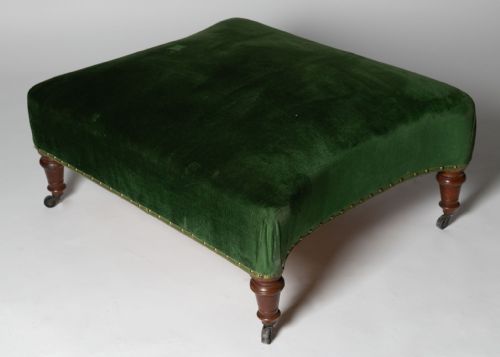
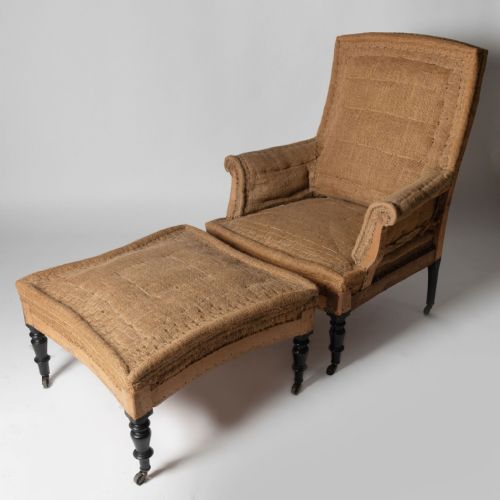
Upholstery involved securing heavy textiles, green linen, leather, or velvet over layered padding, occasionally supported by brass castors or decorative gilt highlights. The integration of materials reflects the stylistic shifts across the period, moving from restrained Regency lines to elaborate Victorian revival designs.
19th Century Upholstered Stool Retail Price Guide 2026
Typical asking prices for 19th century upholstered stool among the pieces listed under this phrase on Sellingantiques today, from the lower quarter to the upper quarter. They describe what is for sale here now, not the wider market.
The inventory records pieces spanning the Georgian era through the late Victorian period.
What Varies In Quality
The distinction between standard production and superior examples lies in the crispness of the frame carving, the selection of timber grain, and the proportions of the turned legs. Finer pieces demonstrate careful attention to detail in secondary woods, robust joinery, and the inclusion of quality hardware such as stamped brass castors.
Upholstery finish and textile selection also differentiate pieces, with high-end examples retaining sophisticated hand-stitched elements or period-appropriate fabrics that complement the architectural style of the wooden frame.
Charles Nosotti·Mathew Gregson·Copes And Collinson
The 19th Century Upholstered Stool Glossary
- Cabriole leg
- A furniture leg that curves outward at the knee and tapers inward toward the ankle, reminiscent of animal limbs. This form became popular during the Queen Anne Revival and Victorian periods.
- X-frame
- A structural furniture support formed by two intersecting diagonal members shaped like the letter X. This design often provides both stability and decorative architectural interest.
- Gout stool
- A specialised footstool featuring an adjustable inclined top designed to elevate and support the foot of a person suffering from gout. These pieces often incorporate mechanical adjustments.
- Castor
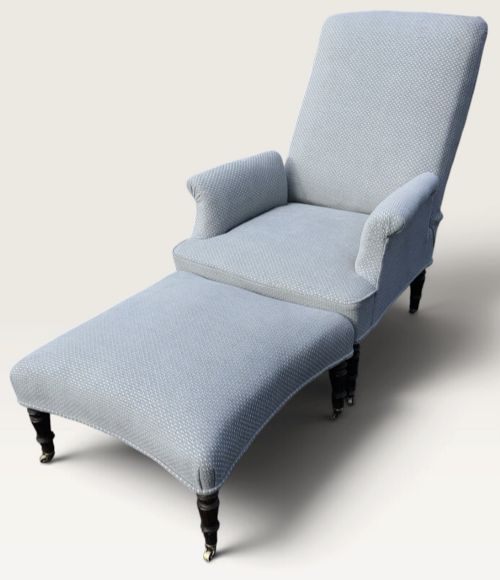
- A small wheel or set of wheels mounted on a swivel at the base of a furniture leg to facilitate movement. Brass versions are common on larger Victorian centre stools.
- Window seat
- An elongated stool or bench designed to fit within the architectural recess of a window bay. These items frequently feature upholstered tops and decorative carved ends.
19th Century Upholstered Stool: Frequently Asked Questions
What is a 19th century upholstered stool?
A 19th century upholstered stool is a small piece of wooden seating with a padded top, produced during the 1800s in various revival styles.
These items served multiple domestic purposes, acting as footrests, dressing table seats, or piano benches in period homes.
How were these stools used originally?
Original uses varied by height and form, ranging from low fireside footstools to large centre stools placed in the middle of principal rooms.
Many were paired with matching armchairs or dressing tables to provide comfortable auxiliary seating for daily grooming or relaxation.
How do I identify the period of a stool?
Dating relies on observing the primary timber used, such as rosewood or walnut, alongside the prevailing decorative style like Gothic Revival or Regency.
Construction methods and hardware, including specific types of brass castors or joinery, also help establish the approximate decade of manufacture.
Can I use an antique stool daily?
Solid timber frames joined with traditional methods remain remarkably sturdy and well-suited for everyday domestic use.
Regular care of the wooden surfaces and occasional reupholstery ensure these functional antiques endure modern household demands.