



Antique Velvet Ottoman
An antique velvet ottoman brings rich texture and practical seating to a room, spanning periods from the Regency era through the Victorian age.
Antique Velvet Ottoman
An antique velvet ottoman is a low, upholstered seat or footrest designed for comfort and interior display, often appearing alongside related forms such as footstools and window seats.
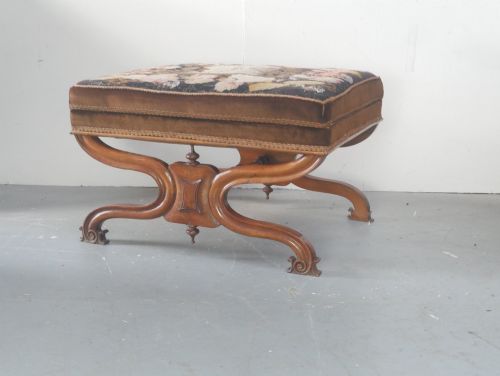
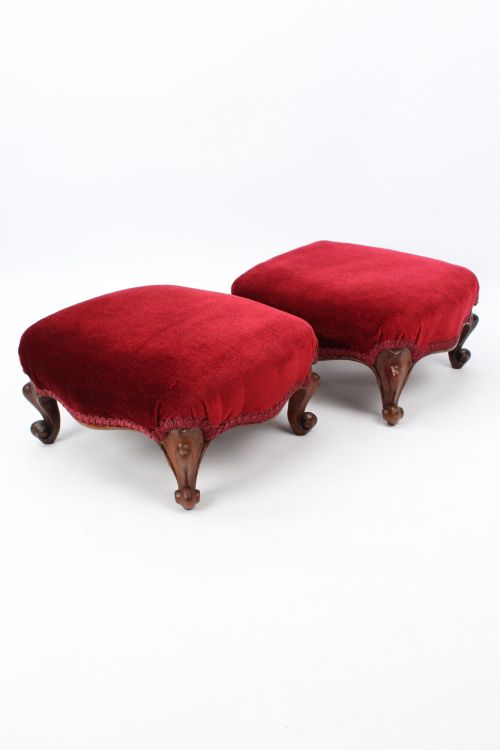
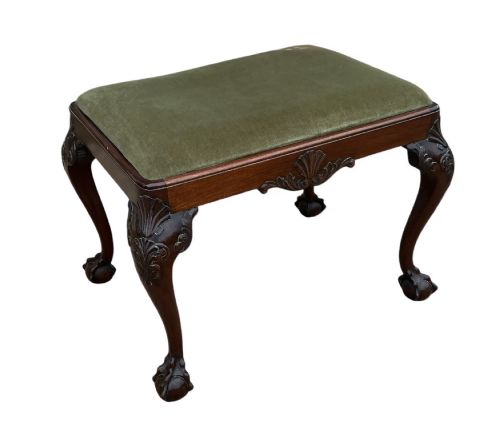
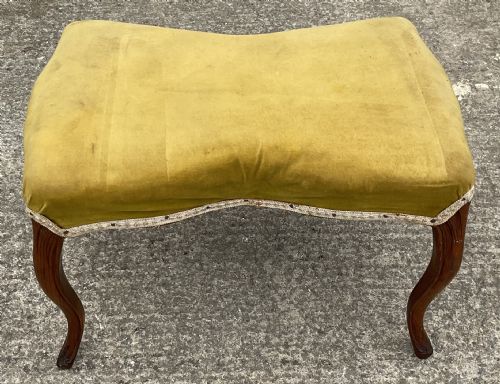
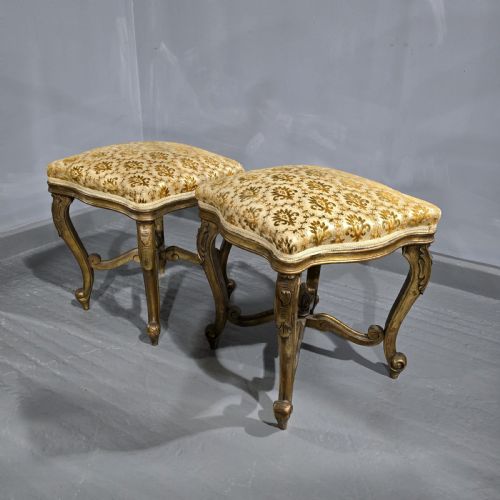
The pieces seen here range from nineteenth-century Victorian walnut frames and Regency mahogany designs to larger storage ottomans and French variants, reflecting diverse period aesthetics.
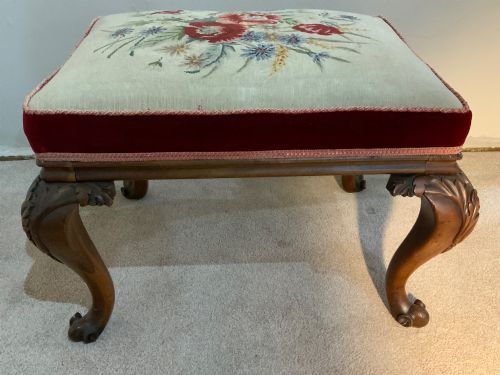
Buyers seeking this phrase most frequently encounter nineteenth-century walnut or mahogany stools upholstered in velvet, tapestry, or textile, alongside occasional box ottomans with button seats.
How they were made
Cabinetmakers utilised dense timbers such as mahogany, walnut, and rosewood to construct sturdy frames, frequently incorporating carved details, brass accents, or distinct leg forms.
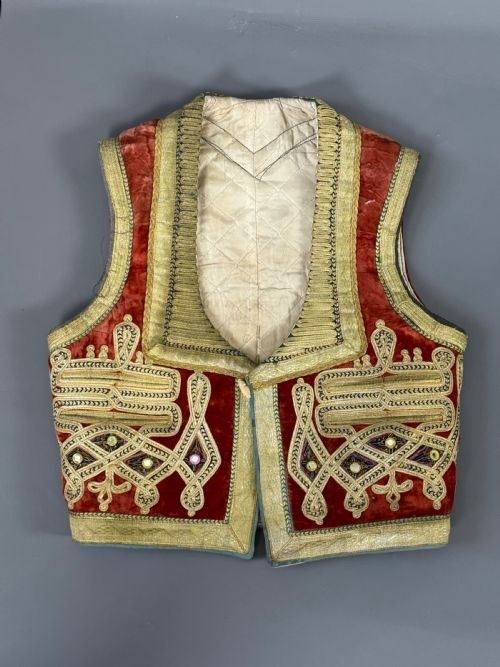
Upholsters layered textiles, textiles, and needlepoint over padding to create the seat, finishing the surfaces with durable velvet and metal-thread embroidery where appropriate.
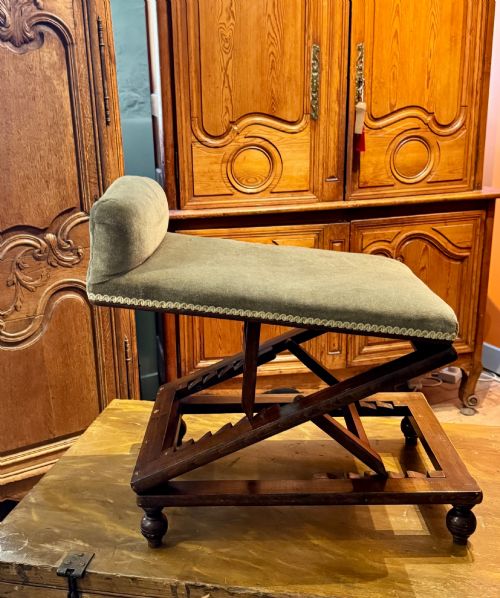
Metamorphic gout stools arrived with adjustable mechanisms to pamper aching feet while keeping Victorian ankles strictly out of sight.
What varies in quality
The distinction between standard items and superior examples lies in the crispness of the timber carving and the structural integrity of the frame joints.
Hallett and Sons·A.M.E. Fournier·Awn Pugin
The Antique Velvet Ottoman Glossary
- Ottoman
- A low, upholstered seat or footstool typically lacking arms or a back. It often incorporates hidden storage beneath a hinged or buttoned top.
- Gout stool
- An adjustable footrest designed to elevate and support the foot or leg. These pieces frequently feature pivoting mechanisms to alter the angle.
- Needlepoint
- Embroidery stitched onto a stiff open-weave canvas ground to form dense pictorial or geometric patterns. It provides a durable and decorative seat cover.
- Sabre leg
- A concave-curving furniture leg that tapers toward the foot, characteristic of the Regency period. It draws inspiration from ancient Greek klismos furniture.
- Victorian Rococo Revival
- A mid-nineteenth-century style drawing on organic, asymmetrical scrolls and floral motifs. Furniture from this movement displays deep carving and curvilinear forms.
Antique Velvet Ottoman: Frequently Asked Questions
What is an antique velvet ottoman?
An antique velvet ottoman is a historic upholstered seat or footrest covered in plush fabric, designed for domestic comfort and interior decoration.
These pieces function as versatile furniture items, serving as low seats, footrests, or storage receptacles depending on the specific nineteenth-century design.
How were antique ottomans used?
Historic households utilised these low seats in drawing rooms, dressing rooms, and parlours for resting feet or accommodating additional guests.
Box variants also served to conceal blankets or garments, combining practical storage with refined upholstery.
How do I live with an ottoman?
Position the piece in a living room or bedroom as a central footrest, a dressing stool, or an occasional seat beside a window.
Protect the historic velvet and timber frame from direct sunlight and excessive wear by placing it away from high-traffic pathways.
How do I tell periods apart?
Regency examples often display clean lines with sabre or lions paw feet, whereas Victorian pieces frequently feature heavier walnut frames and buttoned upholstery.
Examining the underlying timber species, joinery methods, and upholstery techniques helps clarify whether a piece originates from the early nineteenth century or the later Victorian decades.