



Antique Footstool with Storage
These antique footstool with storage pieces combine practical concealment with period elegance, offering a concealed compartment beneath a padded top.
Antique Footstool with Storage
An antique footstool with storage serves dual purposes as a comfortable seat or footrest and a hidden box for household items. The forms seen here span from the Regency era through the Victorian period into the Art Deco style of the nineteen thirties.
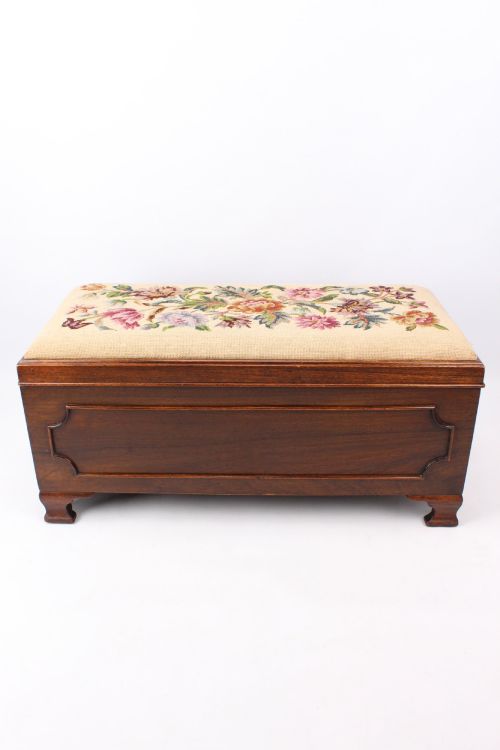
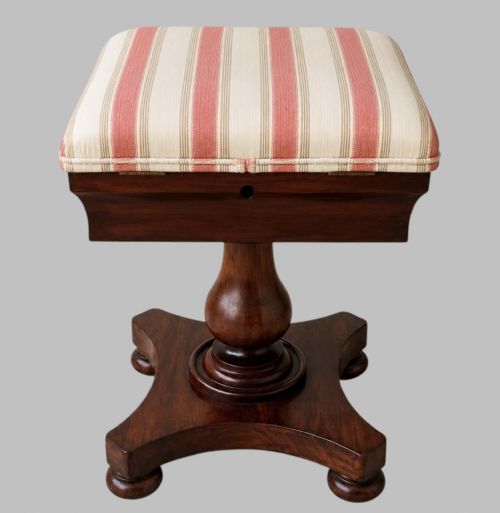
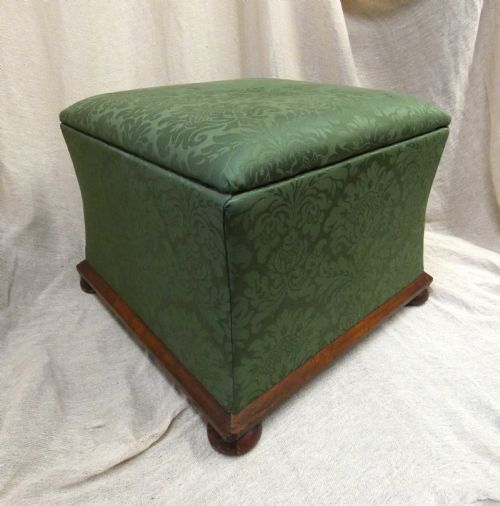
Most examples take the form of an ottoman or a box seat stool, sometimes functioning as a piano stool or a duet stool. The internal compartment reveals itself beneath a hinged seat or a removable upholstered top.
Materials and construction
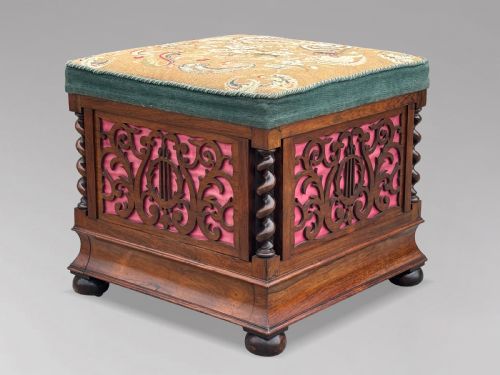
Cabinetmakers built the frames of these pieces using solid timbers such as mahogany, walnut, and rosewood. These rich hardwoods provided the structural integrity needed to support daily seating while offering a polished exterior.
Upholstery completed the upper section, utilising textiles like velvet, wool, and fabric alongside needlework covers such as gros-point. Details like brass fittings and carved lions paw feet occasionally accent the wooden frames.
Some Victorian pianists kept their sheet music safely tucked beneath their posteriors during enthusiastic duets.
Assessing quality and craftsmanship
The distinction between standard examples and finer pieces lies in the crispness of the timber carving and the sophistication of the joinery. Superior frames display careful selection of wood grain and refined proportions.
Original upholstery methods and period needlework surfaces elevate the integrity of a piece. The smooth operation of the hinged mechanism for the storage compartment further indicates thoughtful manufacture.
The Antique Footstool with Storage Glossary
- Ottoman
- A low upholstered seat or footstool without arms or a back, frequently fitted with an internal storage space beneath a hinged top. This form became a staple of Victorian and later domestic interiors.
- Gros-point
- A type of counted thread embroidery executed on canvas using a coarse wool yarn. This durable needlework frequently covers the seats of period stools.
- Duet stool
- An elongated piano stool designed to seat two players side by side. Many variants include a hinged seat covering a compartment for sheet music.
- Gothic Revival
- An architectural and decorative style drawing inspiration from medieval forms. Pieces from this movement often feature pointed arches and heavy timber construction.
Antique Footstool with Storage: Frequently Asked Questions
How do I use a storage footstool today?
These pieces serve well in living spaces as extra seating, low tables, or footrests while concealing blankets or magazines inside.
The hinged compartment keeps daily clutter out of sight without sacrificing floor space or period character.
What periods do these storage stools come from?
The selection spans the Regency era, the Victorian period, and Art Deco designs from the early twentieth century.
Victorian and mid nineteenth century examples make up a significant portion of the available pieces.
What woods were used for the frames?
Cabinetmakers utilised dense hardwoods including mahogany, walnut, and rosewood for their durability and attractive grain patterns.
These timbers were often polished to a high sheen or carved with stylistic details.
What is a piano duet stool?
A piano duet stool is a wider seating variant built to accommodate two musicians sharing a keyboard instrument.
They frequently incorporate a hinged top that opens to reveal storage space for scores.