



Gothic Revival Upholstered Stool
These gothic revival upholstered stool pieces combine architectural timber frames with rich textile seating, offering genuine nineteenth-century character for any interior.
Gothic Revival Upholstered Stool
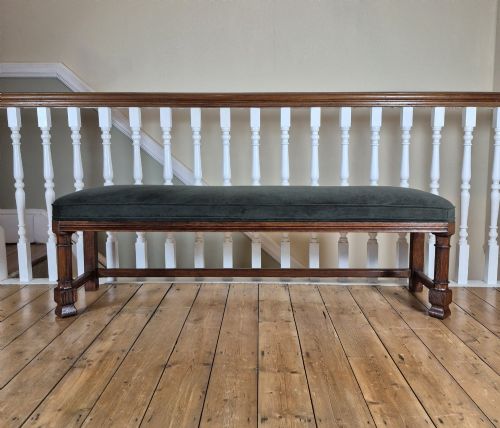
A gothic revival upholstered stool brings heavy timber construction and ecclesiastical forms into domestic spaces, drawing directly from medieval architecture. These low seating forms take the shape of footstools, window seats, and long benches designed with structural vigour.
Most examples you encounter date from the Victorian era, spanning the middle to the late nineteenth century. Makers adopted specific stylistic directions such as Scottish Baronial, Reformed Gothic, and the Aesthetic Movement while keeping the core medieval revival framework intact.
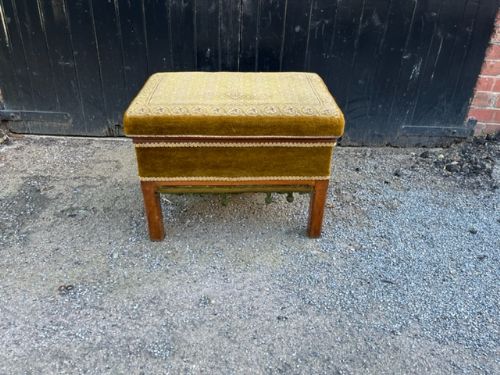
Forms vary from compact footstools with carved details to broader window seats and ottomans intended for functional placement in halls and drawing rooms. The woodwork typically employs oak or walnut, paired with period textiles that complete the historic design.
Materials and construction
The heavy frames rely on structural timbers like solid oak and walnut, occasionally enhanced with burr elm veneers for visual grain movement. Joinery reflects traditional nineteenth-century cabinet-making techniques designed to support sturdy domestic use.
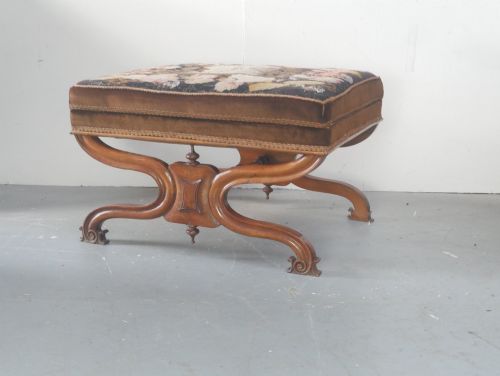
Upholstery relies on traditional textiles recorded in the period, including velvet, tapestry, and heavy patterned fabric fixed over padding. Metal elements such as brass appear in structural fittings or decorative hardware, while carved timber details often feature pointed arch motifs and animal heads.
Carved walnut window stools occasionally sport vigilant hunting dog heads keeping watch over the parlour.
Distinctions in craftsmanship and design
Quality rests in the architectural precision of the timber carving and the architectural coherence of the frame. Pieces with deeply undercut tracery, crisp linenfold panels, or specific stylistic lineage stand apart from plainer utility items.
The selection of secondary timbers and the integrity of the original framing timber dictate the structural longevity. Finer examples integrate decorative elements like carved hunting dog heads or complex X-frame geometry with complete visual harmony.
Awn Pugin
The Gothic Revival Upholstered Stool Glossary
- Gothic Revival
- An architectural and decorative style that revives medieval forms, pointed arches, and structural massing. It dominated British design through much of the nineteenth century.
- Scottish Baronial
- A nineteenth-century revival style incorporating defensive Scottish castle architecture into domestic furnishings. It favours robust proportions and heraldic or regional motifs.
- Reformed Gothic
- A rationalist approach to nineteenth-century design championed by theorists who sought honest construction and flat, linear ornamentation. It strips away excessive historical clutter in favour of structural clarity.
- X-frame
- A seating support structure formed by intersecting diagonal timber members that create a cross profile from the side. This ancient form enjoyed renewed popularity during the Victorian period.
- Prie Dieu
- A devotional chair featuring an upper rest designed for kneeling and prayer. These pieces frequently incorporate Gothic Revival tracery and sacred iconography.
Gothic Revival Upholstered Stool: Frequently Asked Questions
What is a gothic revival upholstered stool?
A gothic revival upholstered stool is a nineteenth-century seating piece built from solid woods like oak or walnut, featuring medieval architectural motifs. They range from small footstools to long window seats.
These items were constructed during the Victorian period to bring historic architectural character into domestic interiors. They combine sturdy timber frames with period textiles such as velvet and tapestry.
How do I date these stools?
Dating relies on identifying stylistic markers, timber types, and construction methods associated with the nineteenth century. Specific movements like Reformed Gothic or the Aesthetic Movement help narrow the timeline.
Evidence from this period points to distinct design phases between eighteen-fifty and eighteen-ninety. Examining the integration of the upholstery with the wooden frame also provides clues to the manufacturing decade.
Where were these pieces used originally?
These furnishings were placed in hallways, drawing rooms, and large reception spaces within Victorian homes. Window seats specifically served functional spots beside large Victorian glass panes.
Smaller footstools and ottomans accompanied larger seating arrangements in formal parlours. Their heavy timber construction suited the public rooms of grand nineteenth-century houses.
How do I care for the upholstery?
Preserving the fabric requires gentle maintenance, avoiding direct sunlight and excessive moisture to protect historical textiles. Professional textile cleaning helps maintain fragile period surfaces.
The wooden frames benefit from occasional micro-wax application to nourish dry timber without harming the finish. Keeping the structural joints stable ensures the antique frame continues to support weight safely.