


Victorian Velvet Footstool
A victorian velvet footstool brings tactile richness and solid nineteenth-century timber to a room, offering both practical comfort and decorative presence.
Victorian Velvet Footstool
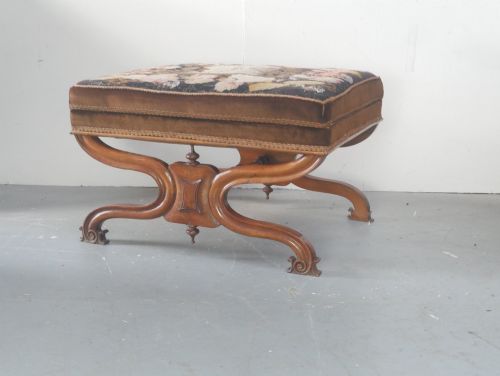
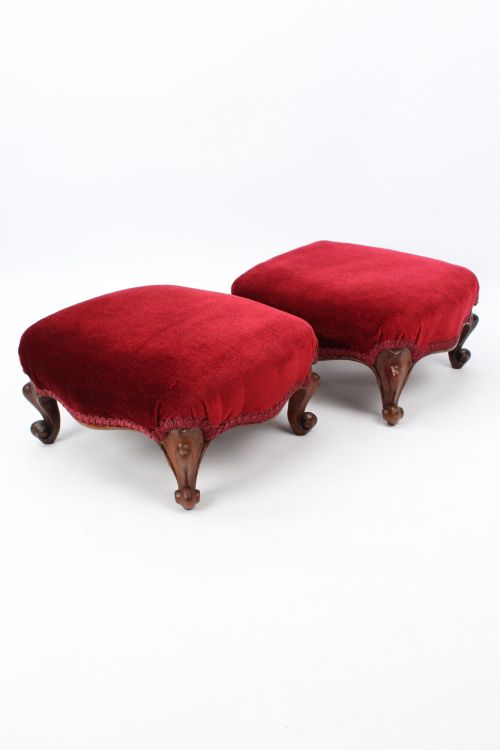
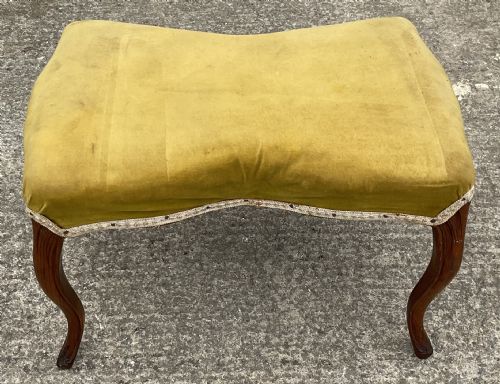
When searching for a victorian velvet footstool, collectors encounter a diverse group of low seating forms designed for drawing rooms, boudoirs and music rooms during the nineteenth century. These pieces range from small low stools intended to support tired feet to larger salon, centre and ottoman stools built for independent seating.
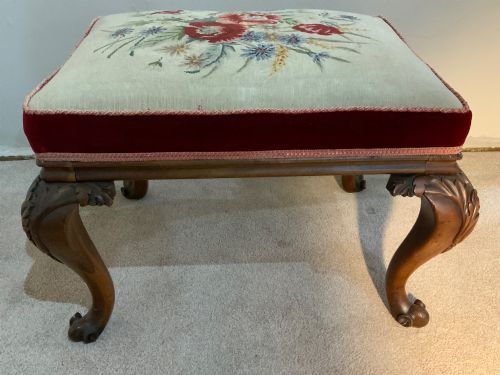
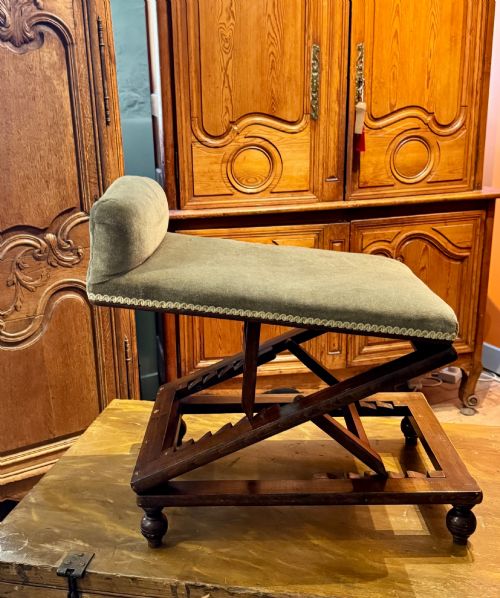
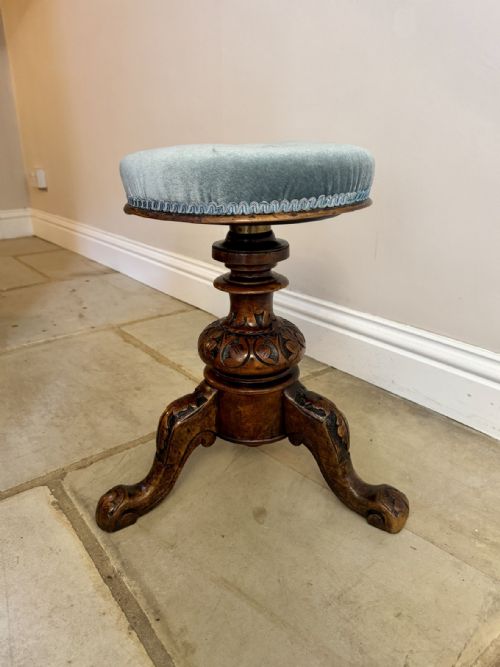
The versions most frequently met on this page combine sturdy timber frames in walnut, mahogany, rosewood or oak with soft textile upholstery. Footstools appear in various configurations, including rectangular dressing stools, revolving piano stools, adjustable gout stools and larger country house ottomans.
Design influences span the core nineteenth-century vernacular, taking in Victorian Rococo Revival, Gothic Revival, Aesthetic Movement and Scottish Baronial styles. Makers adapted these forms for both intimate domestic spaces and formal reception rooms, resulting in a rich variety of scales and decorative details.
What varies in quality
The distinction between ordinary and superior examples rests primarily in the ambition of the timber carving and the architectural confidence of the frame. Pieces with deeply carved walnut, well-proportioned cabriole legs or thoughtful stylistic nods to Gothic and Rococo revivals stand apart from utilitarian seating.
Originality of upholstery materials, such as early needlepoint or period velvet, alongside sophisticated mechanical elements in revolving piano stools or adjustable gout rests, elevates an individual piece above standard domestic production.
Metamorphic gout stools reveal that even Victorian ailments required clever mechanical engineering disguised in polished beech.
Hallett & Sons·James Shoolbred·Awn Pugin·A.M.E. Fournier
The Victorian Velvet Footstool Glossary
- Gout stool
- A specialised nineteenth-century footstool featuring an adjustable incline designed to elevate and comfort the foot or leg. These pieces often incorporate mechanical ratchets or pivots.
- Centre stool
- A substantial freestanding stool intended to sit in the middle of a room rather than against a wall. They usually feature finished upholstery and woodwork on all sides.
- Ottoman
- A large upholstered seat or footstool, sometimes incorporating internal storage space. Nineteenth-century examples often served dual purposes in grand country houses.
- Cabriole leg
- A furniture leg that curves out and then in, mimicking animal limbs in the Rococo style. This form appears frequently on walnut and mahogany Victorian frames.
- Needlepoint
- A type of canvas work embroidery commonly used for nineteenth-century footstool upholstery. It provides a durable and decorative surface texture that complements velvet borders.
Victorian Velvet Footstool: Frequently Asked Questions
How do I use a footstool today?
These nineteenth-century pieces function naturally beside armchairs and sofas as traditional foot rests or low occasional seats. Their compact dimensions also allow them to sit neatly beneath windows or beside dressing tables.
Larger ottoman and centre versions can stand independently in open spaces, providing extra surface area or casual seating without dominating a room.
Were these always used for feet?
While many smaller examples supported feet and legs, larger forms served varied domestic roles across the nineteenth century. Piano stools provided adjustable seating for musicians, while salon and centre stools functioned as movable seats in busy reception rooms.
Storage ottomans added practical utility to bedrooms and dressing rooms, hiding household items beneath their upholstered lids.
How do I tell a piano stool apart?
Piano stools are typically distinguished by their circular tops and mechanical central screws or swivels that allowed musicians to adjust their height. They appear frequently in rosewood and walnut, reflecting the musical pursuits of Victorian parlours.
Unlike fixed footstools, their primary purpose was active seating rather than resting tired limbs.
What is a gout stool?
A gout stool is an adjustable nineteenth-century footrest designed with a sloping top panel to elevate the foot at a comfortable angle. They often incorporate beech or mahogany frames with mechanical hinges.
These pieces were specifically built to relieve discomfort, marking them out from standard decorative footstools.