
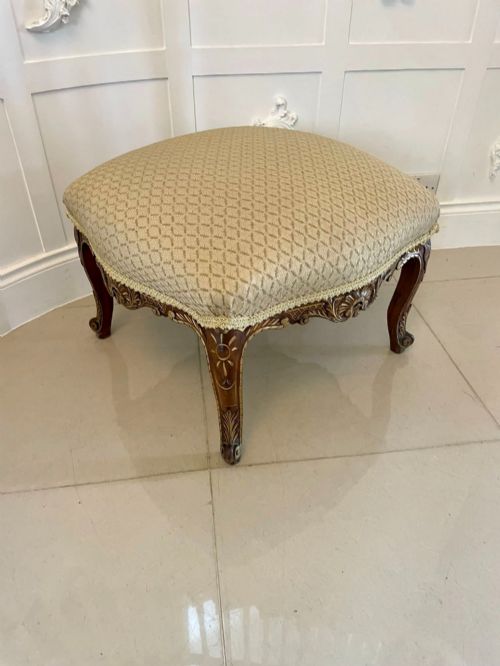
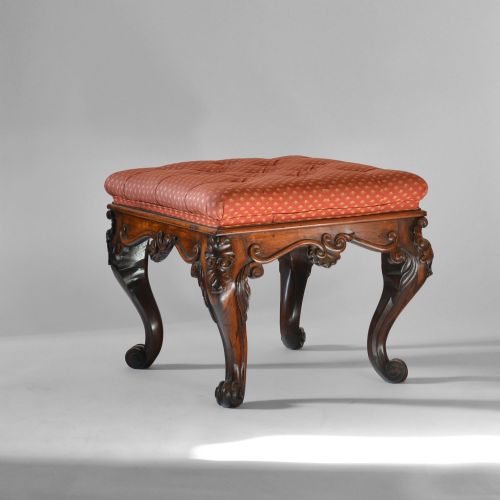
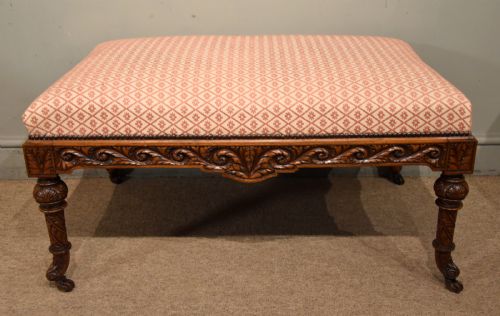
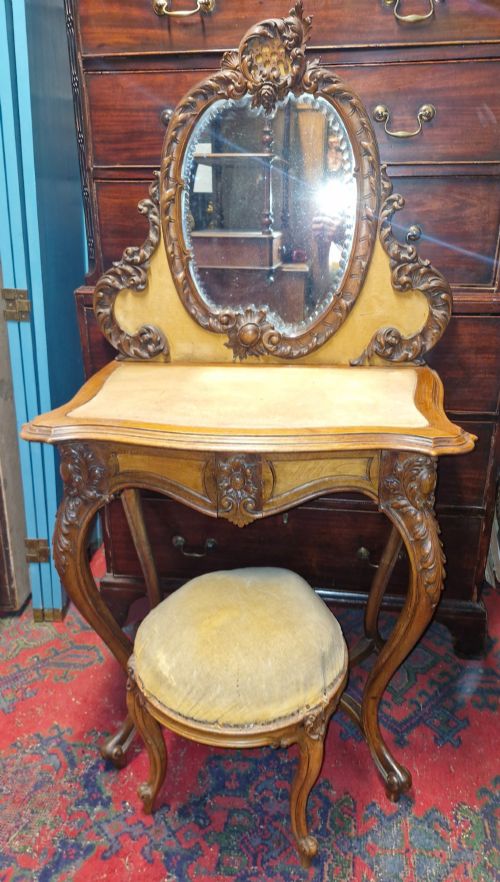
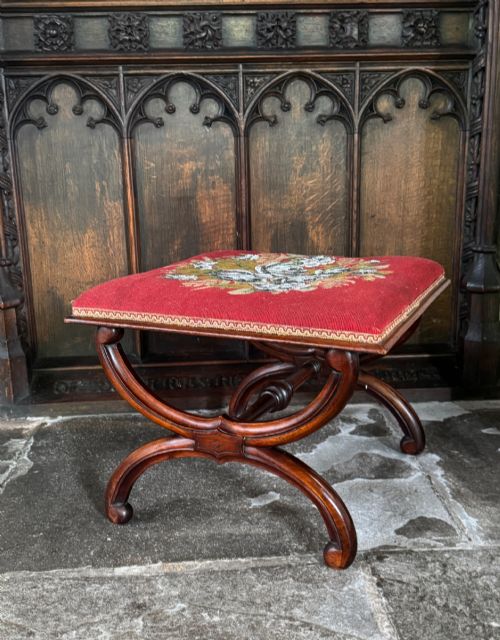
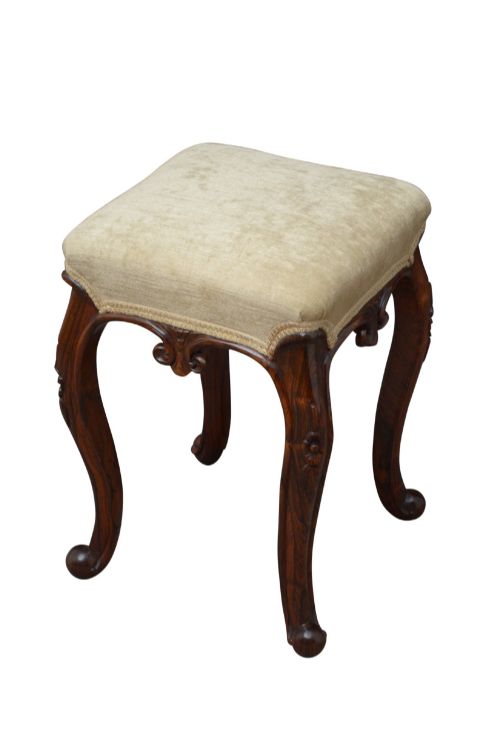
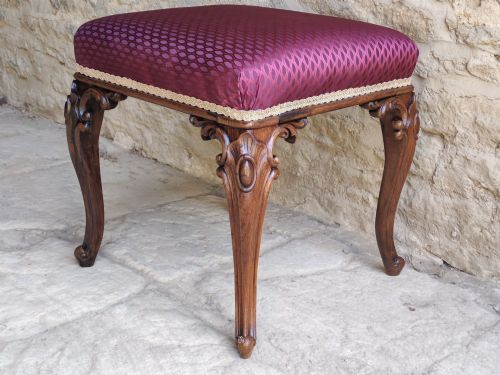
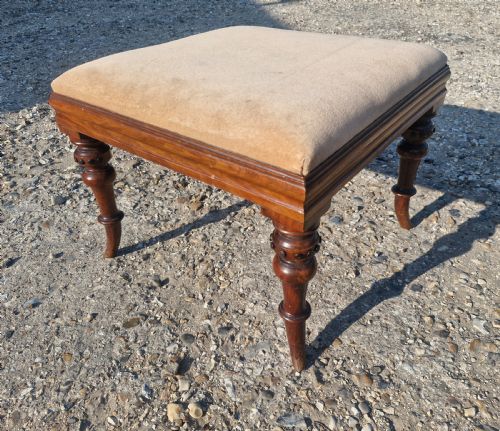
Victorian Carved Vanity Stool
A victorian carved vanity stool brings nineteenth-century craftsmanship to a dressing area with rich timbers and intricate woodwork.
Victorian Carved Vanity Stool
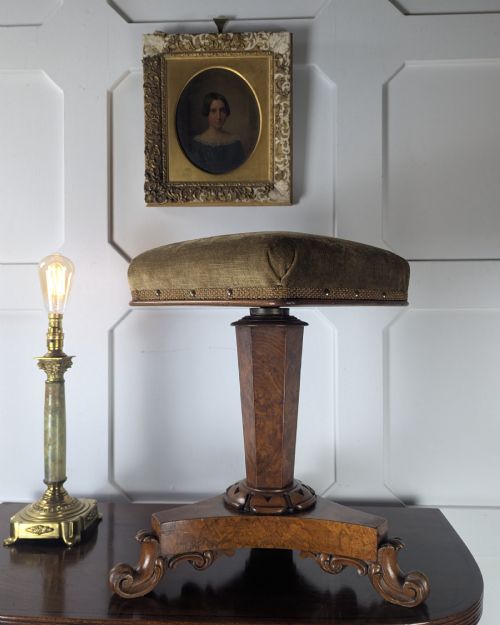
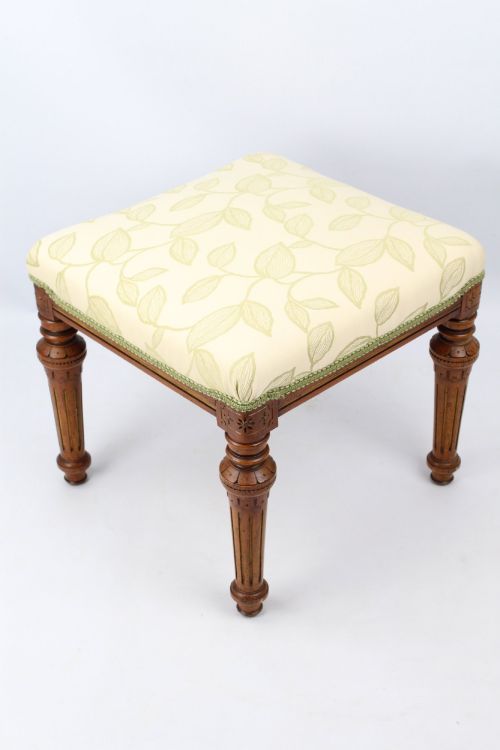
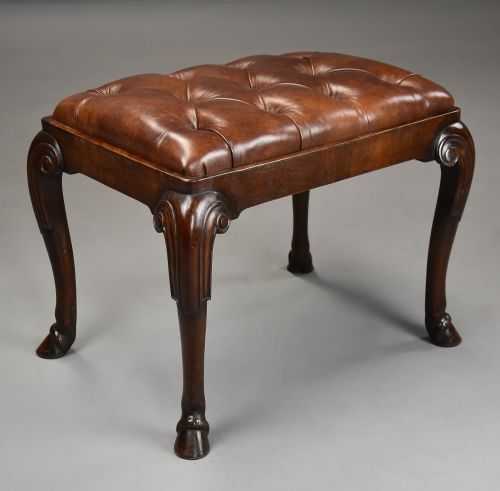
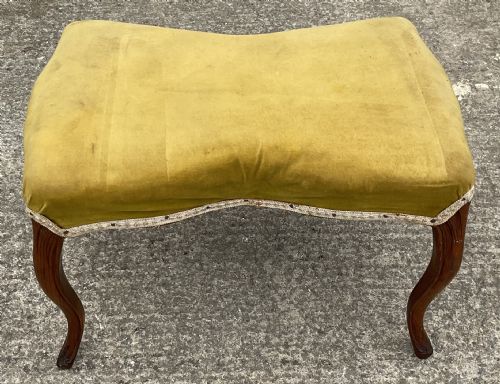
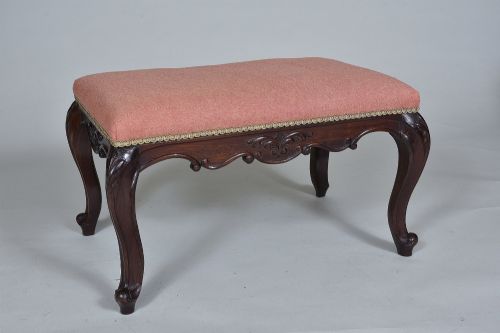
A victorian carved vanity stool sits within a bedroom or dressing space, providing a low seat for use beside a dressing table or mirror. The pieces gathered under this phrase include footstools, piano stools, and dressing chairs designed during the nineteenth century.
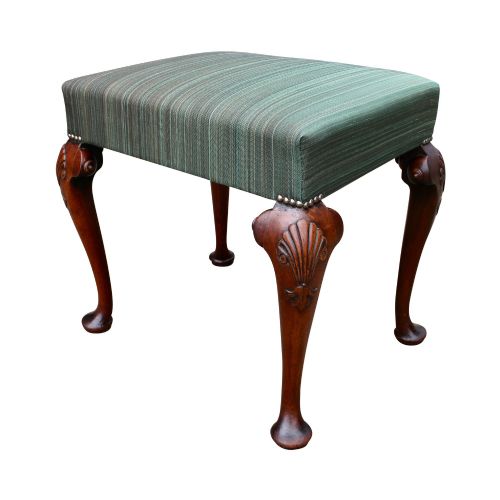
Walnut, mahogany, and rosewood form the primary timber frames for these items, shaped in revival styles that echo Queen Anne, Rococo, and Chippendale designs. These seats reflect the domestic comfort and ornate tastes of the period.
Examples on this page span from the early nineteenth century through to nineteen hundred, showing the evolution of domestic seating from William IV designs to late Victorian aesthetic and revival forms.
How they were made
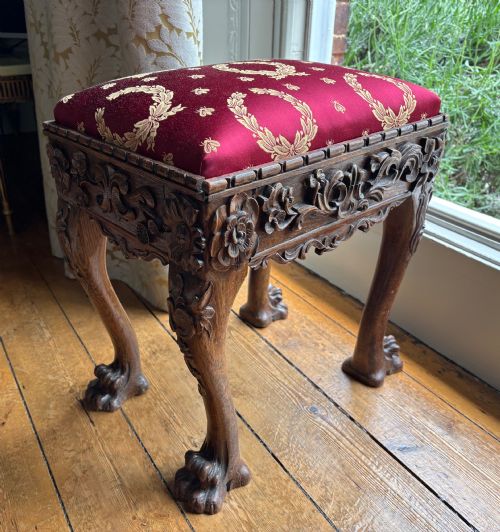
Cabinetmakers shaped solid timber frames from walnut, mahogany, and rosewood, employing hand-carving techniques to create cabriole legs, twisted rope supports, and elaborate floral motifs. These structural woods provide the necessary strength for daily seating.
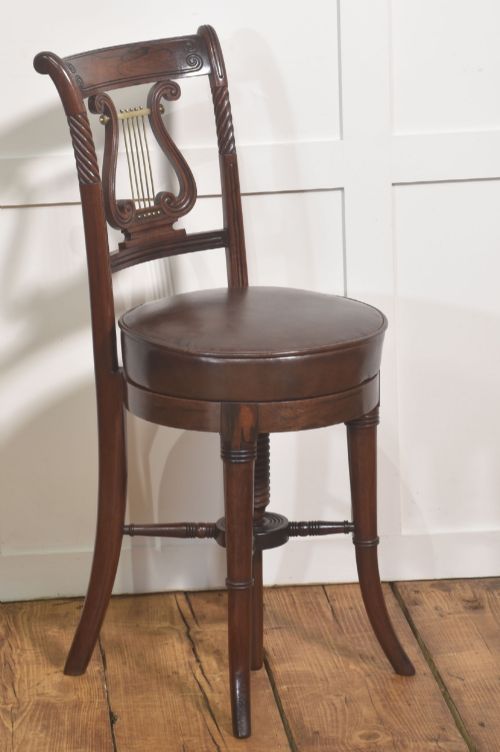
Upholstery completed the pieces, utilising fabric, velvet, leather, and beadwork secured over padded frames. Some variants incorporated mechanical brass adjustments for height or revolving seats.
Listings span the nineteenth century, incorporating walnut, mahogany, and rosewood frames alongside fabric, leather, and velvet upholstery.
What varies in quality
The sophistication of the hand-carving on the wooden frame separates standard seating from finer cabinet work, with crisp detail in the foliage and scrollwork indicating superior workshop execution. The choice of dense timbers such as figured walnut and rosewood also elevates a piece.
The integrity of the construction, from stable cabriole joints to the retention of original adjusting mechanisms where applicable, determines the grade of the stool. Selection of premium upholstery materials like beadwork or quality textile adds further distinction.
Jas Shoolbred
The Victorian Carved Vanity Stool Glossary
- Cabriole leg
- A furniture leg that curves outward and then tapers inward, mimicking an animal's limb. This form appears frequently on eighteenth-century revival stools from the Victorian era.
- X-frame stool
- A seat supported by intersecting diagonal members forming an X shape. This ancient structural form gained popularity in various nineteenth-century revival schemes.
- Adjustable piano stool
- A rotating or screw-mechanism seat designed for musicians at the keyboard. Many Victorian examples feature central wooden screws to alter the height.
- Aesthetic Movement
- A late nineteenth-century design current emphasising visual beauty over narrative function. Pieces from this movement often display ebonised finishes.
- Beadwork seat
- Upholstery created by stitching small glass beads onto canvas to form intricate patterns. This technique provided a durable and decorative surface for footstools and dressing seats.
Victorian Carved Vanity Stool: Frequently Asked Questions
How were vanity stools used?
These low seats provided practical seating in bedrooms and dressing rooms while individuals prepared their hair or clothing.
They paired closely with dressing tables and mirrors, offering a portable seat that could tuck neatly away when not in use.
What woods were used for Victorian stools?
Cabinetmakers primarily worked with walnut, mahogany, and rosewood to construct sturdy frames.
More exotic timbers such as goncalo Alves and teak also appear in specific nineteenth-century pieces on this page.
How do I identify a piano stool?
Piano stools typically incorporate a mechanism that allows the seat height to be adjusted for the player.
Revolving tops or central wooden screw threads distinguish these functional seats from standard static dressing stools.
How do revival styles affect the design?
Revival designs borrow decorative motifs from earlier eras like the reign of Queen Anne or Chippendale furniture.
Victorian makers reinterpreted these historical patterns using contemporary Victorian carving techniques and dense hardwoods.
How do I live with a antique stool?
These compact seats fit easily into modern hallways, bedrooms, or living spaces as occasional seating.
Their varied upholstery and carved wooden frames allow them to function as decorative accents or footrests.