
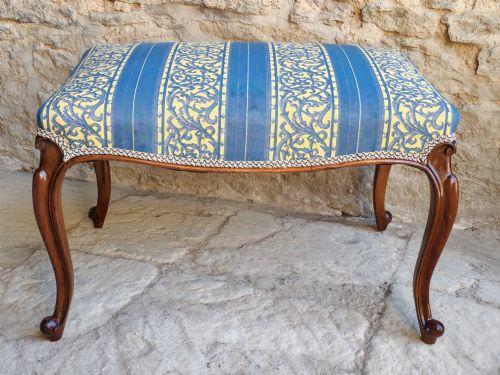
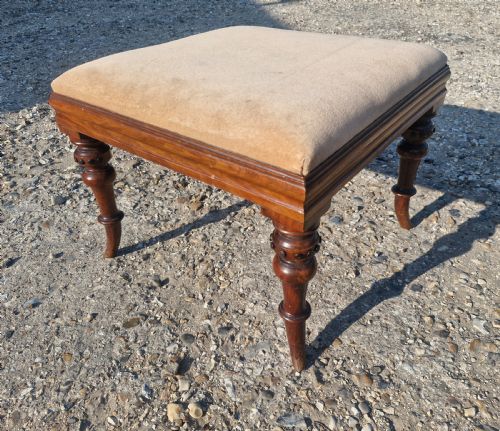


Carved Walnut Foot Stool
A carved walnut foot stool brings rich timber and tactile upholstery to a room, offering both period character and practical repose.
Carved Walnut Foot Stool
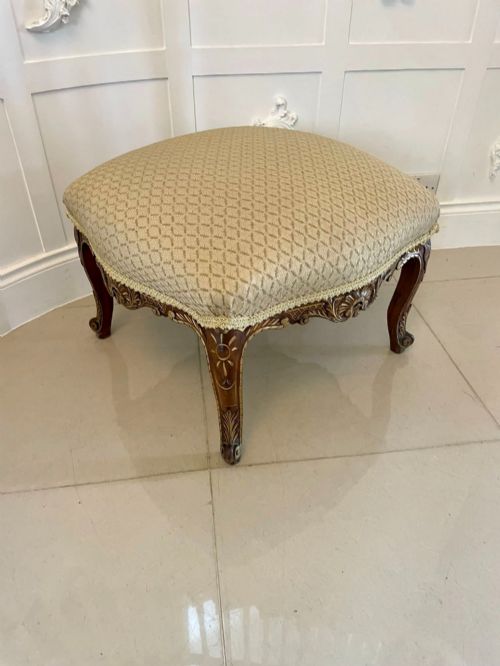
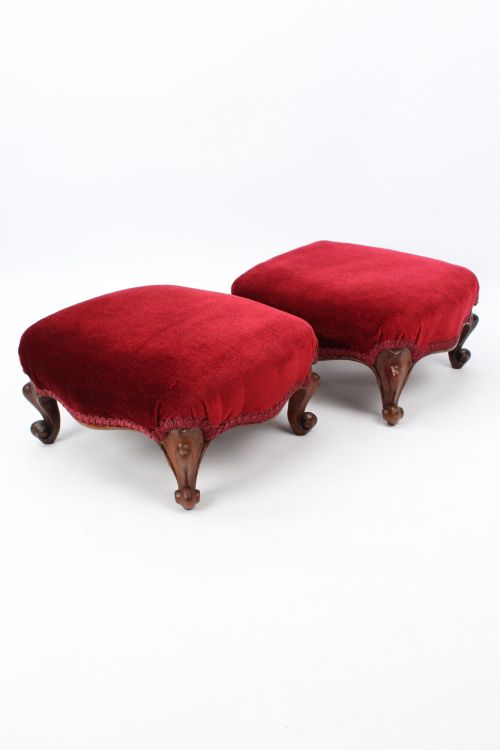
A carved walnut foot stool is a low seating piece typically designed to support resting feet or serve as a compact seat. The examples gathered here span from the mid eighteenth century through to the Victorian era and the early twentieth century.
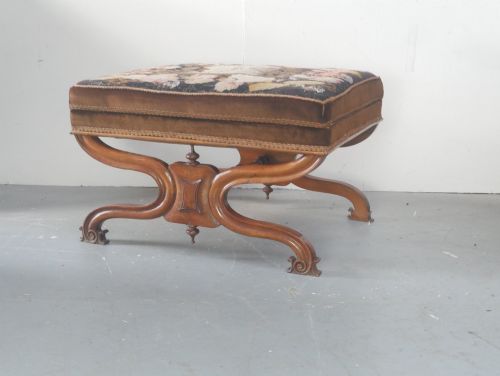
You will most frequently meet Victorian interpretations on this page, alongside earlier Georgian, Regency, and Queen Anne styles. These pieces range from simple domestic footstools to larger framed window seats and X frame stools bearing sculptural details.
How they were made
The primary structural timber across these pieces is walnut, often shaped with substantial carving, cabriole legs, or architectural flourishes. Workshops combined this dense wood with various textile elements, securing fabric, velvet, tapestry, and traditional upholstery over the frames.
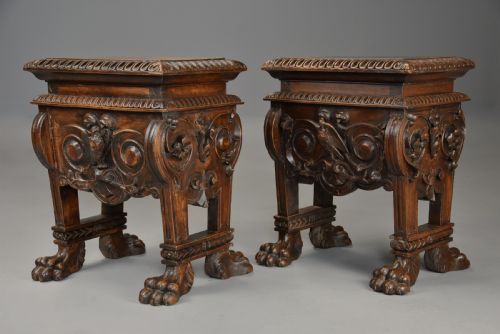
Additional decorative or structural components include brass accents and occasional giltwood highlights. Joinery techniques and deep relief carving define the distinct regional styles, from Scottish Baronial forms to Venetian and French workshop outputs.
Hunting dog heads peer out from Victorian X frame window seats, keeping silent watch beside the hearth.
What varies in quality
Quality rests heavily on the depth and crispness of the timber carving, distinguishing master craftsmanship from routine production. Pieces bearing sculptural elements like animal heads or fluid cabriole lines demonstrate superior handwork by skilled makers.
The integrity of the walnut frame and the fidelity of revival styles, such as Queen Anne or Italian Renaissance interpretations, further separate ordinary examples from exceptional surviving pieces.
The Carved Walnut Foot Stool Glossary
- Walnut
- A dense, dark timber prized for its rich grain and suitability for intricate carving. It forms the primary structural material for these stools.
- Cabriole leg
- A furniture leg that curves outward and then tapers inward, mimicking an animal's limb. This design feature appears frequently on eighteenth and nineteenth century examples.
- X frame
- A structural support formed by two intersecting members shaped like the letter X. It provides both stability and architectural presence to window seats and stools.
- Tapestry
- A heavy hand woven or jacquard textile used for upholstery. It often depicts pictorial or floral scenes on period pieces.
Carved Walnut Foot Stool: Frequently Asked Questions
How are carved walnut foot stools used?
These pieces function primarily as low footrests beside armchairs or as small movable seats in drawing rooms and dressing areas.
Larger variations also serve as window seats or low benches at the foot of a bed.
How do I identify a Victorian footstool?
Victorian examples often combine dark walnut frames with heavy floral upholstery, deep buttoning, or elaborate carved details.
They frequently reflect earlier design revivals, such as Queen Anne or Rococo styles, executed with nineteenth century techniques.
What timber was used for these stools?
Walnut is the defining timber across this entire selection, chosen for its durability and pleasing dark tone.
Secondary materials such as brass fittings and giltwood accents occasionally appear on more decorative iterations.
How do I care for antique upholstery?
Protect antique textiles like velvet, tapestry, and fabric from direct sunlight to prevent fading and fibre degradation.
Gentle surface dusting helps maintain the fabric without disturbing the underlying padding or frame.