

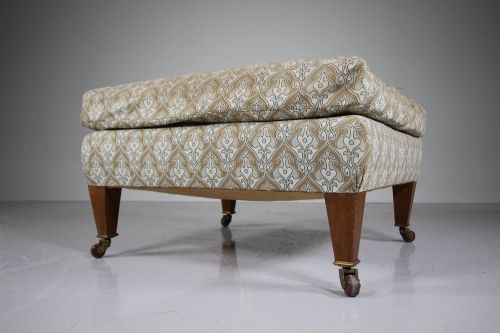
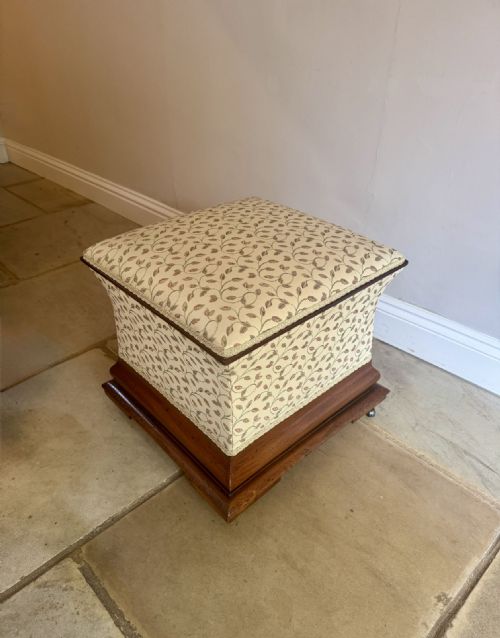
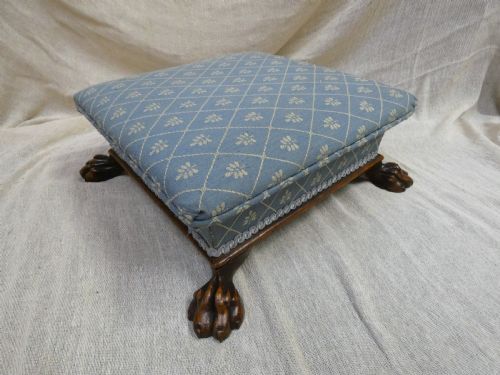

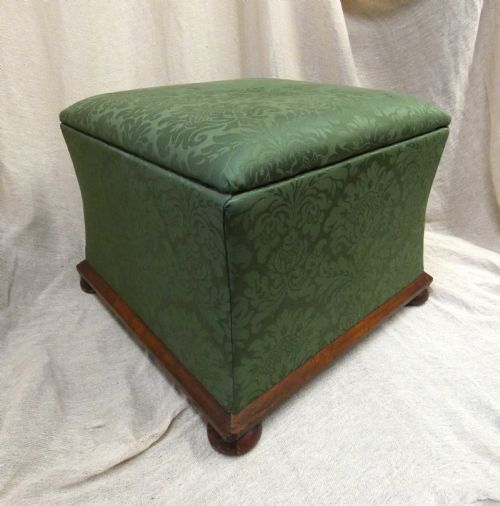


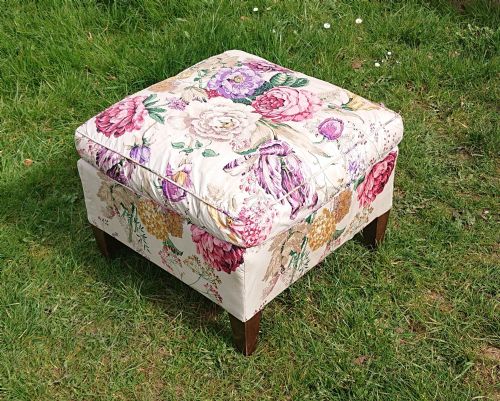


Square Upholstered Ottoman
A square upholstered ottoman provides a versatile seating and resting surface, uniting practical comfort with traditional British craftsmanship.
Square Upholstered Ottoman
A square upholstered ottoman functions as a low seat, a footrest or a central table alternative, appearing frequently as footstools and ottomans across multiple periods. The selection spans compact Victorian examples and generous Georgian proportions, alongside revival pieces that imitate earlier centuries.
Most pieces date from the nineteenth century, including specific Victorian and Edwardian iterations alongside earlier Georgian and Regency designs. These forms range from simple wooden frames with cushion tops to larger scale centre stools and box stools designed for storage.
Origins and styling lean toward traditional English aesthetics, with occasional Anglo-Indian rosewood examples and revival pieces reflecting William and Mary influences. Buyers encounter various descriptive titles such as foot stool, dressing stool and ottoman stool, all sharing a square footprint.
Materials and Construction
Frames rely primarily on traditional timbers including mahogany, walnut, oak and general hardwood, often shaped with hand carving or spiral turning. Walnut and mahogany predominate in the finer nineteenth-century examples, whilst oak appears in earlier regional items.
Upholstery materials utilise historic textiles such as wool, cotton, leather, needlepoint and herringbone fabric. Brass details frequently appear as castors, nails or structural hardware on the feet and frames of Victorian and Regency pieces.
Square Upholstered Ottoman Retail Price Guide 2026
Typical asking prices for square upholstered ottoman among the pieces listed under this phrase on Sellingantiques today, from the lower quarter to the upper quarter. They describe what is for sale here now, not the wider market.
Upholstery textiles span leather, wool, cotton, herringbone fabric, and needlepoint.
Assessing Quality
The choice of timber defines the baseline of construction, with dense hardwoods like walnut and mahogany offering superior structural integrity compared to general softwoods. Carved details, such as spiral turning or moulded rails, reflect the skill invested in the wooden frame.
Upholstery finish and textile selection separate standard workshop output from exceptional pieces. The incorporation of specialised materials like needlepoint or premium leather indicates a higher grade of original commissioning.
Howard and Sons
The Square Upholstered Ottoman Glossary
- Ottoman
- A low, upholstered seat or footstool without a back or arms, often built with a square top. This form serves multiple domestic functions including resting feet and providing casual seating.
- Needlepoint
- A type of counted thread embroidery stitched onto canvas, frequently used for historic upholstery. It provides a textured and decorative surface across the top of footstools.
- Spiral Carved
- A decorative woodworking technique where the timber is shaped into a twisting helix pattern. This ornamentation appears frequently on walnut and mahogany legs from the nineteenth century.
- Centre Stool
- A large stool designed to stand independently in the middle of a room rather than against a wall. These pieces typically feature generous proportions and substantial frames.
Square Upholstered Ottoman: Frequently Asked Questions
How do I use a square ottoman in my room?
These pieces function flexibly as footrests in front of armchairs, as low coffee tables when topped with a tray, or as extra seats around a room. Their square geometry allows them to anchor the centre of a space or fit neatly into corners.
Larger scale centre stools can also serve as soft surfaces for resting books or textiles, bridging the gap between seating and surface furniture.
What is the difference between an ottoman and a footstool?
In historical listings, the terms often overlap to describe low, upholstered furniture designed to support the feet or provide casual seating. Ottomans occasionally include box storage beneath the cushion top, whereas standard footstools focus purely on the frame and upholstery.
Both forms utilise the same sturdy timber frames and textile coverings, making them visually interchangeable in a traditional interior.
How do I identify a Victorian square ottoman?
Victorian pieces typically feature denser timbers like walnut or mahogany, paired with turned legs and traditional upholstery such as wool or leather. The evidence shows these often incorporate brass hardware and varied textile choices like herringbone.
Later Victorian examples may also display revival styling, echoing earlier Georgian or William and Mary proportions while maintaining nineteenth-century construction methods.
Are these ottomans sturdy enough for daily seating?
Solid timber frames constructed from hardwood, walnut or mahogany provide the structural strength needed for regular use as a seat. Traditional joinery ensures the base remains stable under weight.
Buyers should examine the specific timber and frame design in the listing to confirm its suitability for active daily sitting rather than light footrest use.