

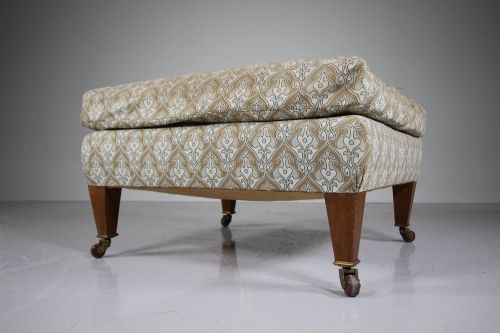


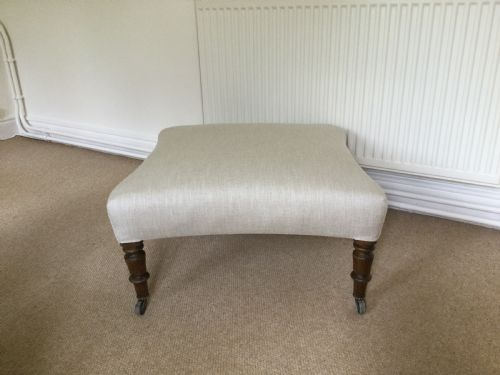


19th Century Pouffe
These 19th century pouffes and footstools bring low seating and resting places into a room, offering varied upholstery and timber frames.
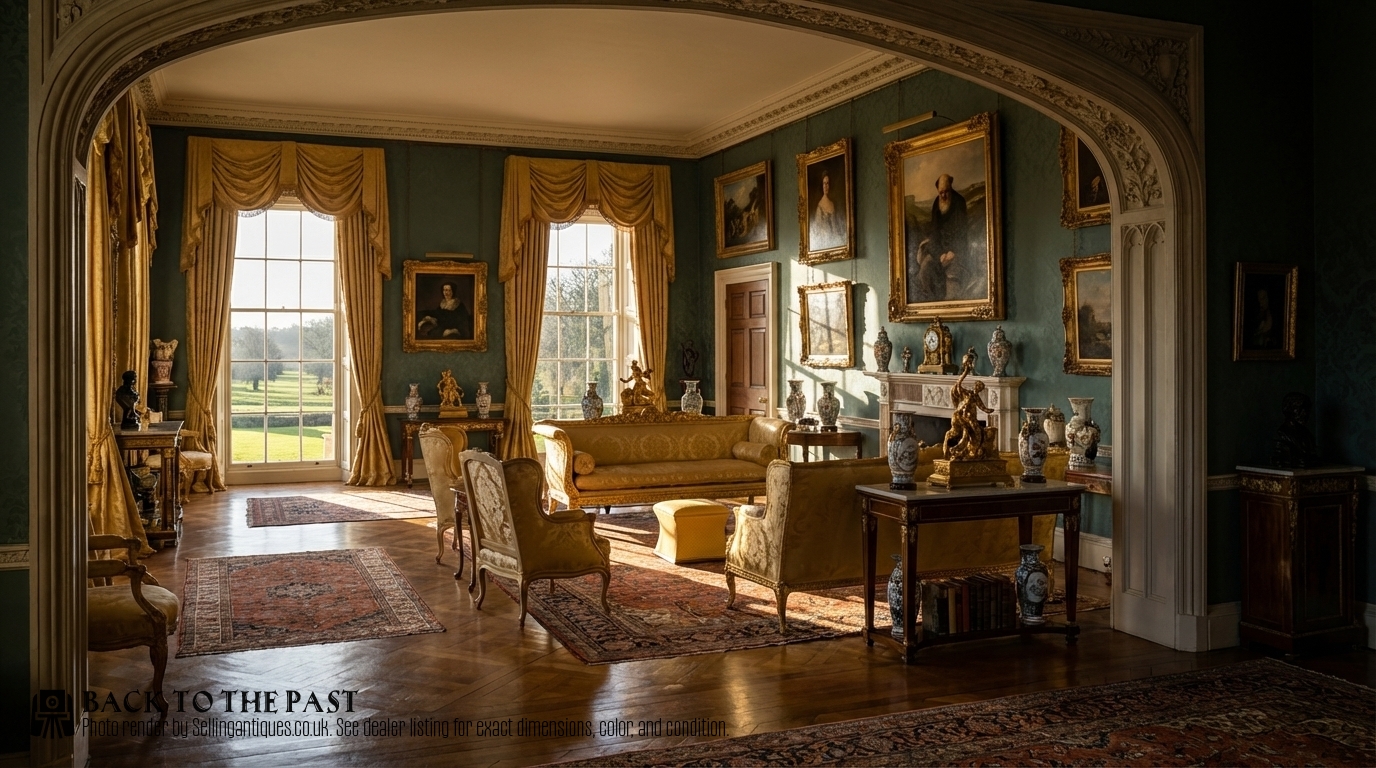
19th Century Pouffe
A 19th century pouffe encompasses low upholstered seating, ottomans, footstools and fireside stools designed for domestic comfort. These pieces appear in forms ranging from simple low stools to storage ottomans intended for drawing rooms and dressing rooms.
The selections available here span the Victorian and Regency periods, alongside specific regional interpretations such as Anglo-Indian and French Country pieces. Buyers most frequently meet Victorian examples featuring needlepoint or fabric upholstery paired with mahogany, walnut or rosewood frames.
Makers and craftsmen of the era produced these items as functional domestic furnishings, incorporating styles like Jacobean Revival and turned cabriole legs. Their utility endures in modern interiors as movable footrests or occasional seats.
Construction and materials
Framing timber typically relies on dense hardwoods such as mahogany, walnut, rosewood and general hardwood or wood elements. Structural joinery supports the weight of users, occasionally incorporating turned or carved decoration on legs.
Upholstery materials include textiles, linen, velvet and fabric, frequently detailed with needlepoint work. Brass elements appear as decorative tacks or functional hardware on storage ottomans.
19th Century Pouffe Retail Price Guide 2026
Typical asking prices for 19th century pouffe among the pieces listed under this phrase on Sellingantiques today, from the lower quarter to the upper quarter. They describe what is for sale here now, not the wider market.
Footstools often carry hidden compartments for nineteenth-century footwear, keeping slippers tucked away neatly beneath the upholstery.
Assessing quality and craftsmanship
The standard of a 19th century pouffe rests upon the crispness of the timber carving and the integrity of the underlying frame. Heavier hardwoods and detailed turning distinguish finer pieces from simpler workshop output.
The preservation of original textile work and needlepoint influences the character of the piece. Refurbishment alters the historic surface, whereas intact period upholstery retains the original aesthetic intent.
The 19th Century Pouffe Glossary
- Ottoman
- A low upholstered seat or footstool without a back or arms, often built with internal storage. This form served Victorian drawing rooms for seating and foot support.
- Cabriole leg
- A furniture leg that curves outward and then tapers inward, mimicking an animal's leg in motion. This shape appears frequently on 19th century seating.
- Needlepoint
- Embroidery stitched on a stiff open-weave canvas, creating durable patterned surfaces. Victorian footstools often utilise this technique for top panels.
- Anglo-Indian
- A designation for items made in India during the British period, often featuring dense carving in exotic hardwoods. These pieces combine British furniture forms with local craftsmanship.
19th Century Pouffe: Frequently Asked Questions
How do I use a pouffe today?
These pieces function well as moveable footrests beside armchairs or as low occasional seating in living spaces. Their compact size allows them to be positioned easily where extra support is needed.
Larger storage ottomans also provide concealed space for blankets and magazines while serving a dual purpose as a coffee table surface when fitted with a rigid tray.
What is the difference between an ottoman and a footstool?
An ottoman traditionally denotes a larger upholstered seat or box with an internal compartment for storage. Footstools are generally smaller, lower frames designed primarily to support the feet.
In nineteenth-century usage, these terms often overlap, particularly when describing pieces with upholstered tops and turned wooden legs.
How do I identify a Victorian pouffe?
Victorian pieces frequently display rich timber frames such as walnut, mahogany or rosewood combined with heavy textile upholstery. Details like needlepoint panels and turned or cabriole legs point directly to this era.
Regional variations such as carved Anglo-Indian hardwood frames also emerge within the nineteenth-century timeline.
Are these pieces suitable for daily use?
Historic frames remain robust when constructed from dense hardwoods like mahogany and walnut. Regular weight-bearing use is generally acceptable provided the structural joinery is secure.
Care should be taken with antique textiles and needlepoint surfaces, which benefit from light use and protection from direct sunlight.