



Antique Bedroom Ottoman
An antique bedroom ottoman brings practical seating and hidden storage to a traditional interior, spanning diverse forms from Victorian walnut boxes to Swedish birch benches.
Antique Bedroom Ottoman
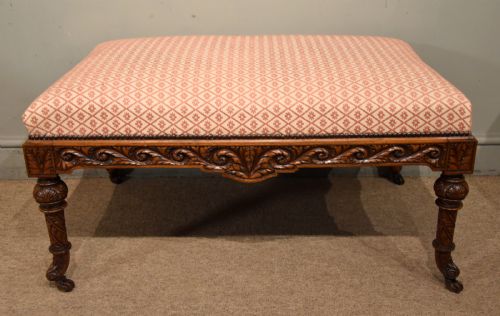
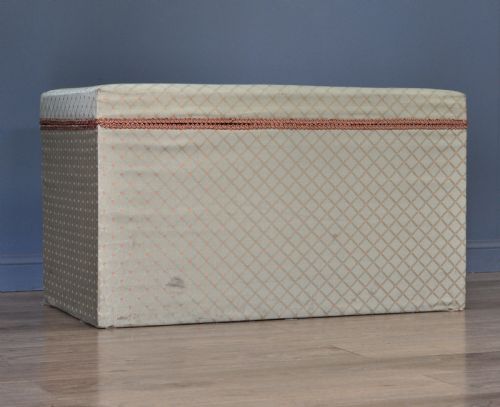
An antique bedroom ottoman combines upholstered seating with functional storage, taking forms such as blanket boxes, window seats, dressing stools, and long footstools. These pieces serve practical purposes at the foot of a bed or beside a dressing table while introducing period character to a room.
The pieces grouped under the search phrase antique bedroom ottoman range from mid-nineteenth-century walnut and rosewood boxes to early twentieth-century oak and birch designs. Victorian examples and later iterations from the nineteen-twenties dominate the selection, showing styles that move from heavy carved rosewood to lighter satin birch frames.
How they were made
Frames rely upon traditional timbers such as walnut, mahogany, rosewood, oak, and birch, shaped with turned or cabriole legs and sometimes ball and claw details. Woodworking techniques involve solid construction alongside carved ornamentation, particularly in Victorian Rococo Revival and Regency interpretations.
Upholstery forms an essential element, utilising textiles like chenille, tapestry, linen, and contemporary fabrics by makers such as Robert Kime over padding and webbing. Interiors often incorporate hinged lids for storage, securing the dual function of a seat and a box.
Antique Bedroom Ottoman Retail Price Guide 2026
Typical asking prices for bedroom ottoman among the pieces listed under this phrase on Sellingantiques today, from the lower quarter to the upper quarter. They describe what is for sale here now, not the wider market.
Listings feature periods spanning from the early nineteenth century through to nineteen-thirty, with walnut and mahogany as prominent framing materials.
What varies in quality
The calibre of timber selection and the sharpness of hand-carved details on the wooden frames set finer examples apart from simpler utilitarian boxes. Dense rosewood or figured walnut demonstrates a higher grade of material than standard pine or basic oak.
Integrity of construction in the joints and the standard of upholstery work dictate the overall standard of a piece. Original or sympathetic re-upholstery paired with robust joinery elevates the execution of the item.
James Shoolbred·Whytock and Reid
The Antique Bedroom Ottoman Glossary
- Cabriole leg
- A furniture leg that bends outward in a convex curve and tapers inward in a concave curve, ending in a pad or foot. This form appears frequently on walnut and rosewood stools.
- Cross stretcher
- An X-shaped wooden brace connecting the legs of a stool or table for added stability. These stretchers often feature a central finial or turning.
- Window seat
- A long, narrow upholstered bench designed to sit in the recess of a window. Examples range from French gilt frames to plain mahogany supports.
- Blanket box
- A deep chest with a hinged lid used originally for storing blankets and linens at the foot of a bed. Many double as upholstered seating benches.
- Satin Birch
- A pale hardwood with a lustrous grain often utilised in Scandinavian and Biedermeier furniture. It provides a lighter alternative to dark walnut or mahogany.
Antique Bedroom Ottoman: Frequently Asked Questions
Where should I place a bedroom ottoman?
These pieces fit naturally at the foot of a bed to hold spare linens, or beneath a window as a dedicated seat. Their dual role provides a surface for resting clothes alongside hidden interior storage.
Matching a walnut or mahogany ottoman with existing bedroom furniture helps anchor the room visually. Selecting the correct length ensures the piece complements the proportions of the bed frame.
How do I identify a Victorian ottoman?
Victorian examples typically employ heavy timbers like walnut, rosewood, or mahogany, often featuring carved ornamentation, cabriole legs, or deep upholstery. The construction methods reflect mid-nineteenth-century cabinet making.
Later pieces from the early twentieth century often adopt lighter birch or oak frames with simpler lines. Examining the interior construction and wood type helps clarify the manufacturing era.
Are these ottomans suitable for daily use?
Sturdy hardwood frames and solid joinery make these pieces robust enough for regular sitting and storage duties. Many have been re-upholstered to support contemporary domestic living.
Checking the stability of the hinge mechanism and the strength of the frame ensures the piece handles everyday use reliably. Professional restoration often reinforces internal wooden structures.
What is the difference between a stool and an ottoman?
Stools generally offer an open or skirted wooden frame designed purely for seating at a dressing table or in a salon. Ottomans incorporate an enclosed box structure with a hinged lid for storage.
While search terms often overlap, the presence of an internal compartment separates a true storage ottoman from a standard dressing stool or window seat.