






Traditional Upholstered Pouffe
A traditional upholstered pouffe offers low seating and footrests rooted in Victorian and early twentieth century domestic comfort.
Traditional Upholstered Pouffe
A traditional upholstered pouffe encompasses footstools, ottomans, and centre stools spanning the Victorian era through the early twentieth century. Buyers seeking this phrase encounter low timber frames padded and covered in various textiles, functioning as seats or foot rests.
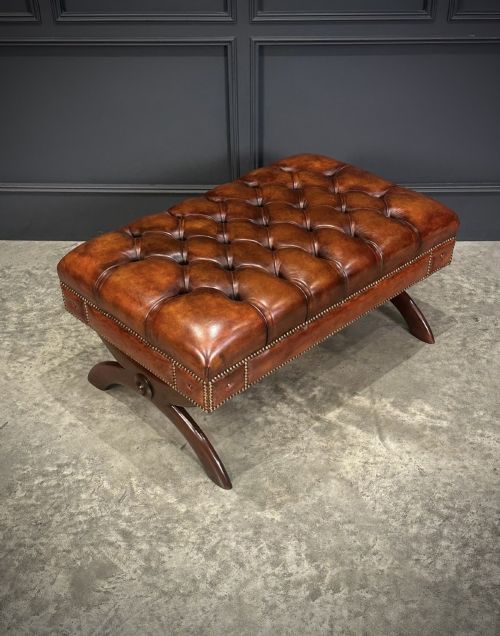
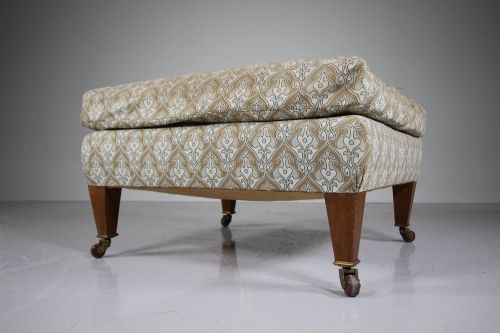
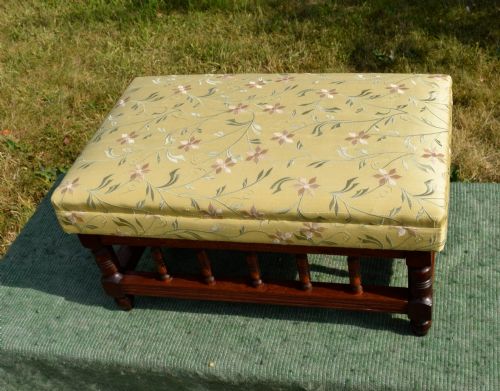
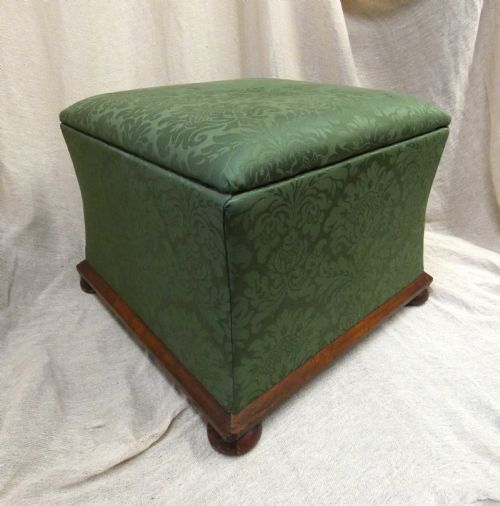
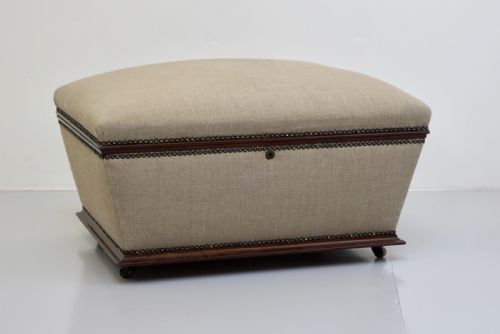
The assortment relies heavily on Victorian and 1920s examples, alongside pieces dated to 1850, 1880, 1900, and the nineteenth century. Forms range from simple square footstools to large heavy oak stools, French stools, and box ottomans.
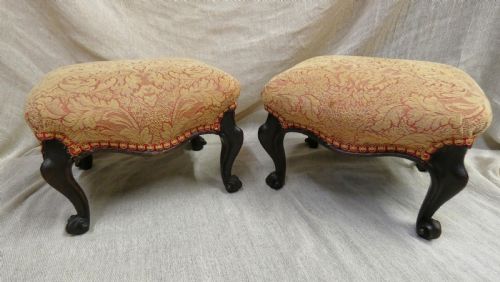
Origins and styles stretch from traditional English and Edwardian designs to Jacobean Revival, Queen Anne Revival, Napoleon III, French Chateau, and Regency. Many pieces arrive as pairs, offering matching seating options for drawing rooms and parlours.
How they were made
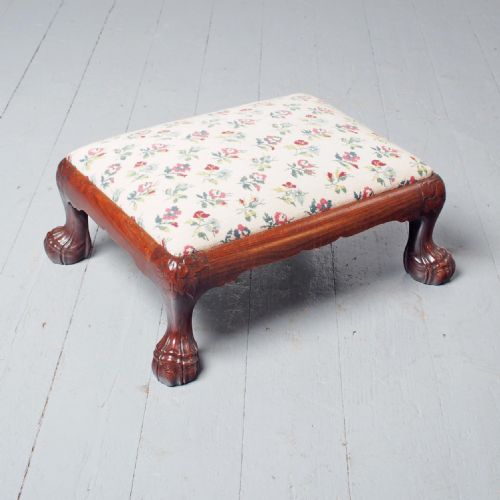
Construction relies on solid timber frames fashioned from mahogany, oak, and hardwood, providing robust structural foundations. Carved details frequently appear on exposed wooden elements like cabriole legs and frames.
Upholstery uses traditional textile coverings including fabric, upholstery fabric, damask fabric, and leather, paired with brass details. Padding beneath the outer textile layer secures the shape and comfort of the seat.
Traditional Upholstered Pouffe Retail Price Guide 2026
Typical asking prices for traditional upholstered pouffe among the pieces listed under this phrase on Sellingantiques today, from the lower quarter to the upper quarter. They describe what is for sale here now, not the wider market.
Some Victorian footstools hide sturdy wooden boxes beneath their padding, ready to store stray embroidery threads or forgotten letters from the parlour.
What varies in quality
Quality differences stem from the timber selection and the precision of the frame carving, distinguishing sturdy hardwood frames from simpler constructions. The complexity of stylistic revivals, such as intricate Jacobean or Chippendale influences, alters the character of each piece.
The preservation of the upholstery materials and the integrity of the underlying stuffing determine the overall condition and tactile appeal. Matched pairs also command different attention compared to single standalone stools.
Howard and Sons·Whytock and Reid
The Traditional Upholstered Pouffe Glossary
- Cabriole leg
- A furniture leg that curves outward and then tapers inward, mimicking an animal's curving leg. This shape frequently terminates in scroll or pad feet on period seating.
- Damask
- A reversible figured fabric woven on a jacquard loom with patterns formed by contrasting warps and wefts. It provides a textured and durable surface for traditional upholstery.
- Ottoman
- A low upholstered seat or footstool without a back or arms, often featuring internal storage space. Box ottomans represent a specific variant designed for utility within the home.
- Centre stool
- A large freestanding stool designed to sit in the middle of a room rather than against a wall. These pieces often feature substantial carved frames in oak or mahogany.
- Revival style
- A design movement that borrows decorative motifs from earlier historical periods like the Jacobean or Queen Anne eras. Makers applied these historical idioms to late nineteenth and early twentieth-century furniture.
Traditional Upholstered Pouffe: Frequently Asked Questions
How were traditional upholstered pouffe pieces originally used?
These pieces served primarily as footrests in front of armchairs or as low moveable seating in sitting rooms and parlours. Larger box variants also provided concealed storage for household textiles.
Their compact height made them versatile additions to nineteenth and early twentieth-century domestic interiors, easily shifted beside firesides or window seats.
Where should I place a traditional upholstered pouffe at home?
Position a stool or ottoman before a sofa or armchair to function as a footrest, or place a centre stool independently within a living space. Pairs work well positioned opposite one another or at the foot of a bed.
Keep them away from direct sunlight to protect antique fabrics and timber finishes from fading over time.
How do I identify a Victorian footstool?
Victorian footstools typically feature dark timber frames such as mahogany or oak, often paired with heavy textile upholstery or damask. Look for stylistic cues like turned wooden feet, carved decoration, or proportions suited to nineteenth-century seating.
Construction methods reflect the period, utilising traditional joinery and hand-tacked upholstery techniques rather than modern staples.
What is the difference between an ottoman and a footstool?
An ottoman generally refers to a larger upholstered seat that can double as a box for storage, whereas a footstool is typically smaller and designed purely to support feet. Both share low profiles and padded tops covered in fabric or leather.
Listings often group these terms together, reflecting historical overlaps in how makers described low upholstered seating.