

Antique Fabric Ottoman
These antique fabric ottoman pieces combine practical seating with upholstered comfort, offering period character and storage for the traditional interior.
Antique Fabric Ottoman
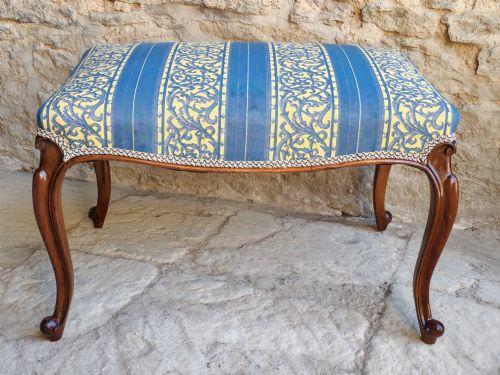
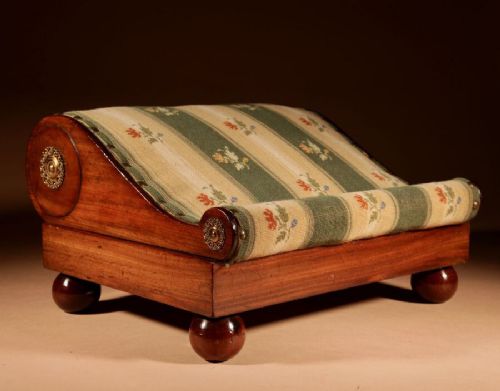
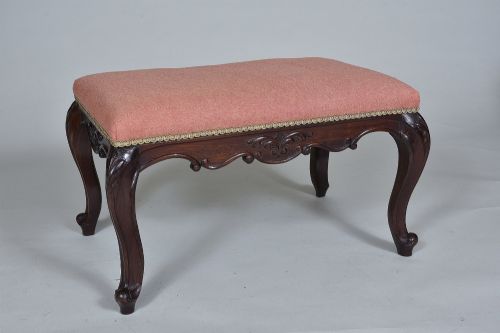
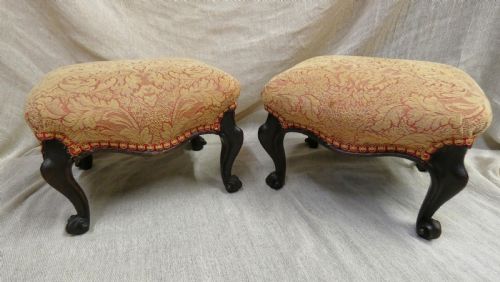
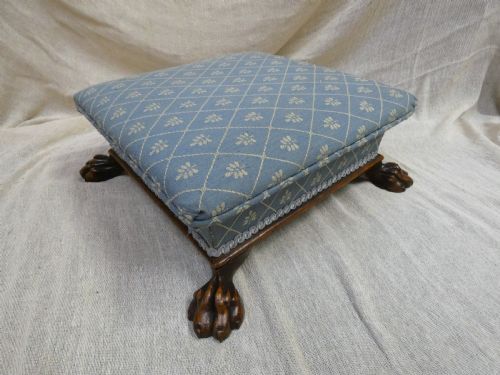
When you search for an antique fabric ottoman, you encounter low stools, blanket boxes, and window seats originating primarily from the nineteenth century and the Victorian era. These pieces combine upholstered seating surfaces with timber frames, occasionally incorporating internal storage compartments.
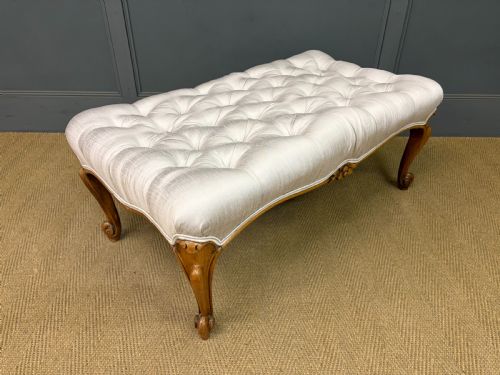
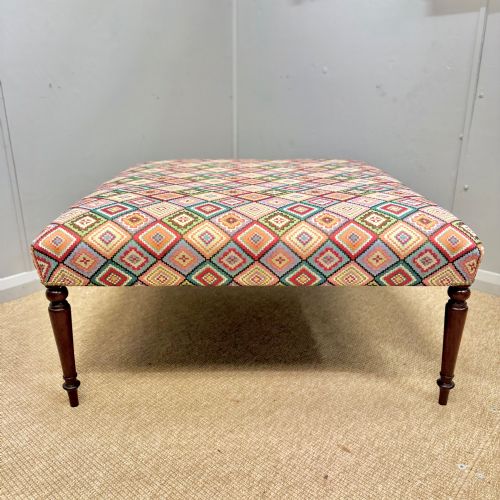
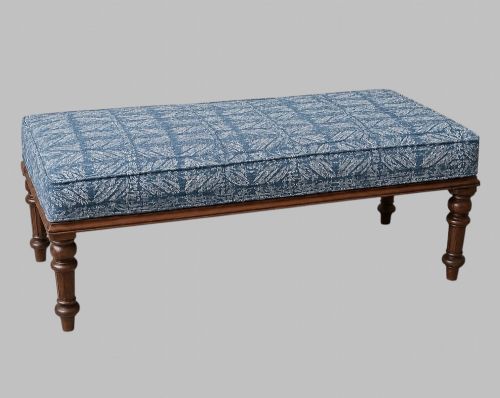
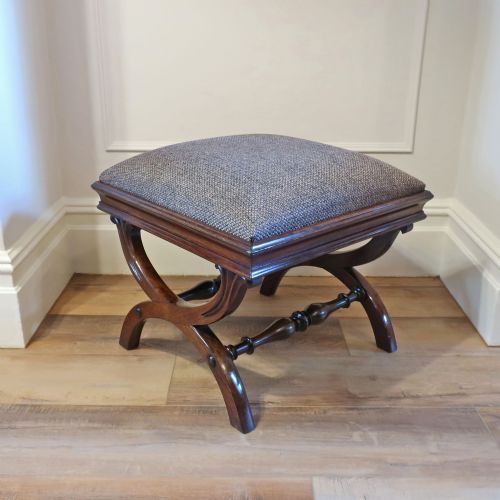
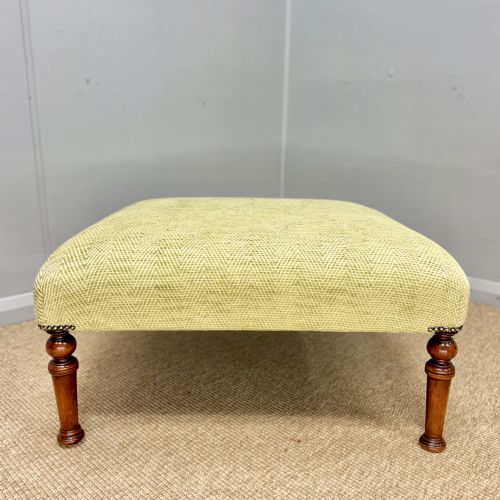
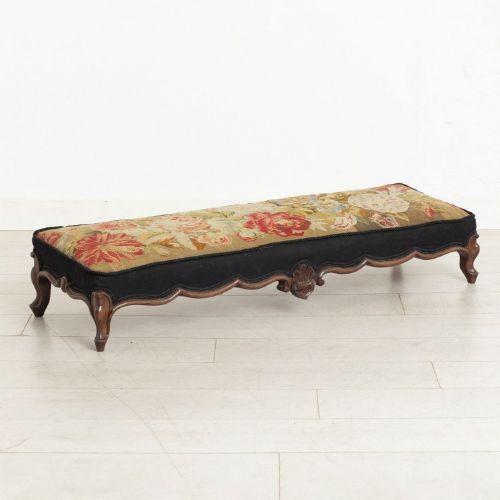
The versions most frequently met on this page include Victorian walnut or mahogany footstools and larger storage ottomans covered in needlepoint, kilim, or contemporary designer textiles. Formats range from compact footstools on brass castors to long window benches designed for reception rooms.
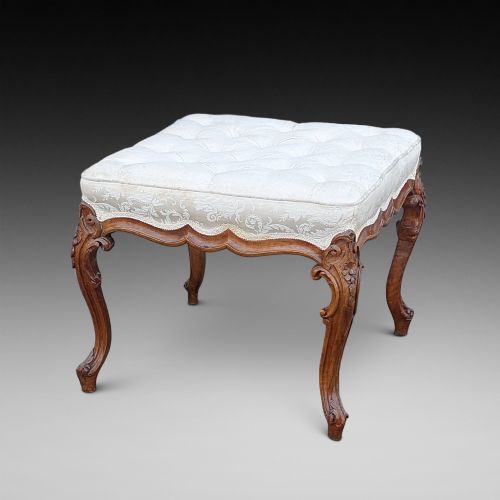
Makers and workshops of the period utilised various regional styles, spanning from Regency proportions to exuberant Victorian Rococo Revival curves and French carved giltwood frames.
Materials and construction methods
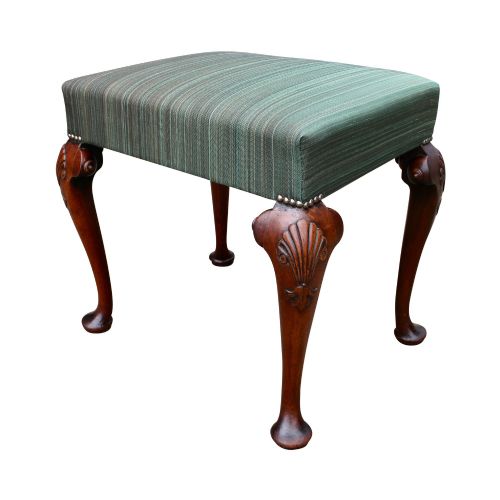
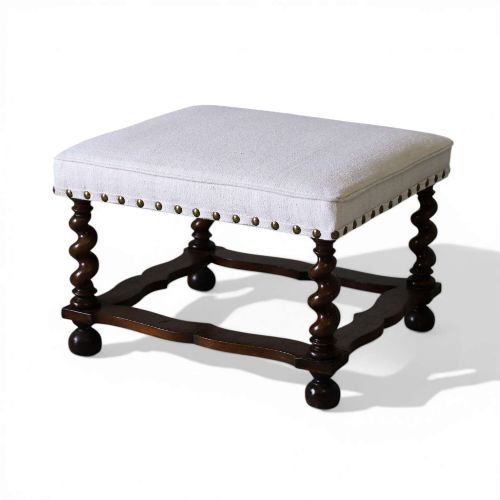
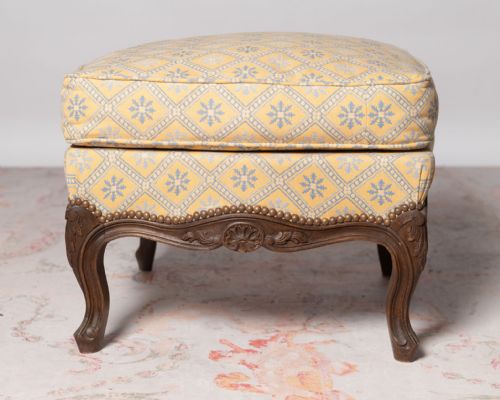
Frames are constructed from dense hardwoods such as mahogany, walnut, rosewood, and pine, frequently shaped with cabriole legs, barley-sugar turnings, or carved giltwood details.
Upholstery techniques rely on traditional stuffing and textile coverings, ranging from period needlepoint and kilim to modern specialist fabrics applied during professional restoration.
Metal components such as brass castors appear on larger floor pieces to assist mobility, while storage variants incorporate hinged lids and internal wooden box construction.
Materials span solid walnut, rosewood, and mahogany frames paired with kilim, needlepoint, and Liberty fabric upholstery.
Assessing quality in fabric ottomans
The distinction between standard examples and superior pieces rests upon the timber selection, the sophistication of the frame carving, and the integrity of the underlying joinery. Dense hardwoods and complex turning indicate higher workshop skill.
Upholstery execution and fabric provenance dictate visual appeal, where hand-worked needlepoint or retained original textiles elevate the piece above plain commercial work of the period.
Howard And Sons·Loidrault Freres Paris
The Antique Fabric Ottoman Glossary
- Cabriole leg
- A furniture leg that curves outward and then tapers inward, commonly seen on Victorian seating. This shape mimics animal legs and provides sturdy support without heavy stretchers.
- Kilim
- A flatwoven textile used historically for floor coverings and heavy upholstery. These woven rugs add geometric pattern and durable texture to nineteenth-century footstools.
- Needlepoint
- Stitched canvas embroidery executed in wool or silk threads. Victorian examples often display intricate floral or figurative designs on ottoman tops.
- Box ottoman
- A seated furniture form featuring a hinged lid that opens to reveal internal storage space. These dual-purpose items served bedrooms and dressing rooms for linens and garments.
Antique Fabric Ottoman: Frequently Asked Questions
What is an antique fabric ottoman?
An antique fabric ottoman is a padded seat, footstool, or storage box upholstered in period or replacement textiles. They date predominantly from the nineteenth century and combine functional utility with decorative woodwork.
These items range from low footstools placed beside armchairs to long window seats and blanket boxes designed to hold household linens.
How were antique ottomans used?
Historically, these pieces served multiple domestic functions including resting feet, extra fireside seating, and concealing blankets or needlework inside hinged boxes.
Larger variants functioned as window seats in formal reception rooms or as dressing stools positioned within nineteenth-century bedrooms.
How do I identify a Victorian ottoman?
Victorian examples typically feature dark hardwoods such as walnut or rosewood, sometimes shaped with cabriole legs or fitted with brass castors. Upholstery methods from this era often include buttoned backing or traditional needlepoint.
Proportions and decorative motifs reflect nineteenth-century revivals, ranging from simple mahogany frames to ornate giltwood carvings.
Can I use an antique ottoman daily?
Most pieces are structurally robust enough for regular domestic use, provided the hardwood frame and internal joints remain stable. Many surviving examples have undergone professional reupholstery to ensure modern seating comfort.
Placing them in moderate environments away from direct heat sources protects both the timber frames and the delicate textile coverings.