
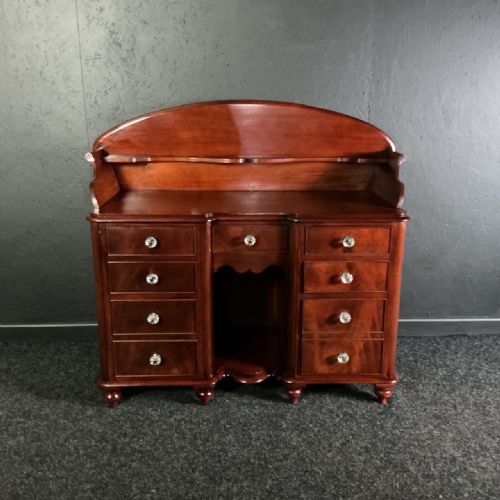


19th Century Pedestal Sideboard
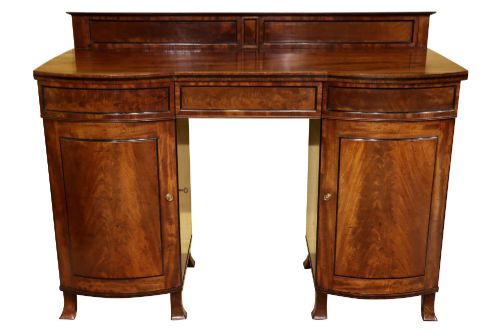
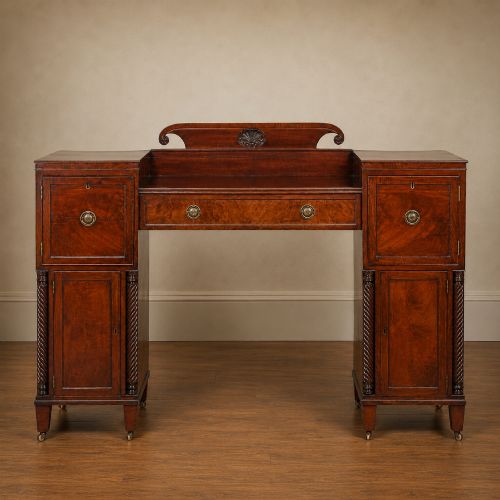
A 19th century pedestal sideboard anchors a dining room with substantial presence and enduring timber grain.

19th Century Pedestal Sideboard
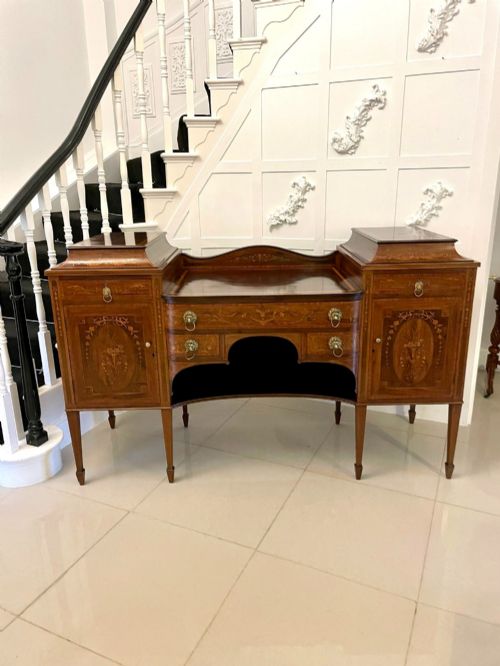
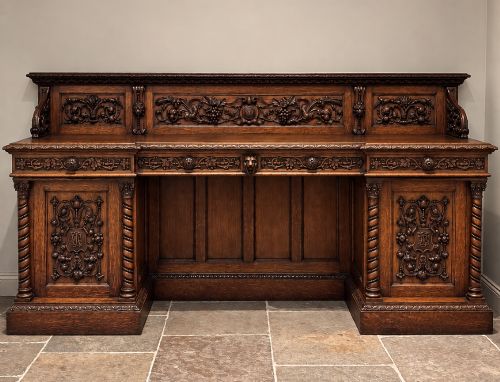
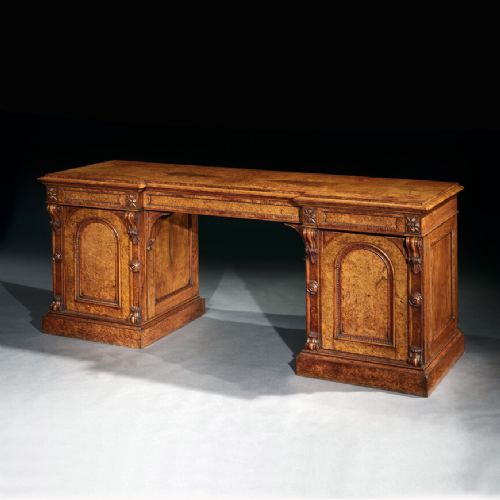
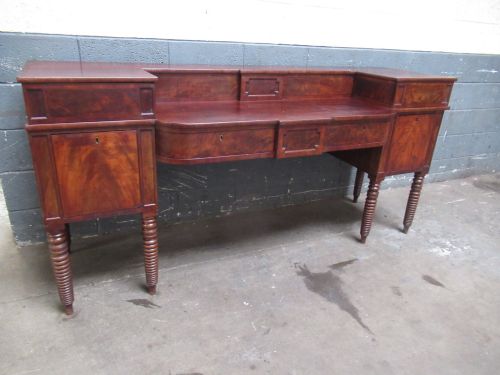
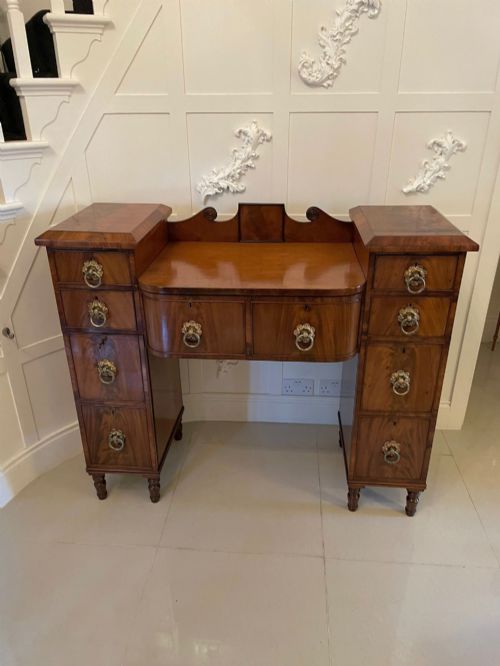
A 19th century pedestal sideboard provides grand dining room storage through flanking cupboards beneath a long central surface. These architectural serving pieces emerged from Georgian design and evolved through Regency and Victorian periods.
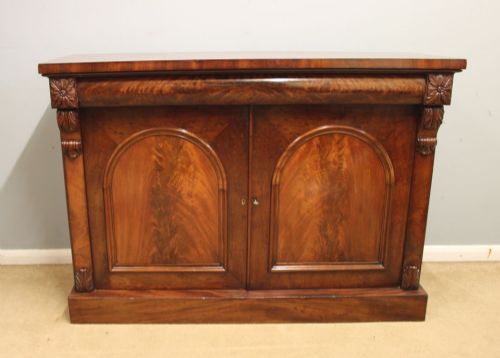
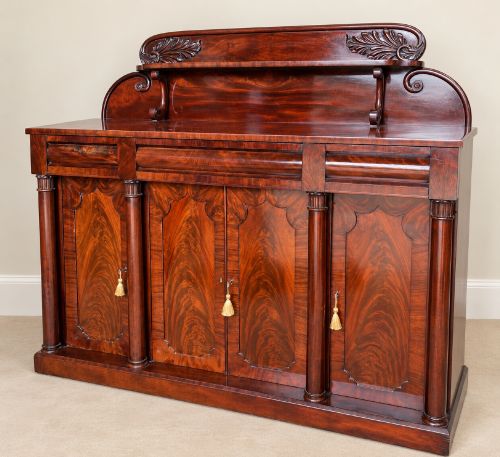
The version most commonly met on this page is constructed from mahogany, often featuring figured veneer or flame patterns across deep cabinet doors. Cabinet makers built these pieces to organise silver, linen, and wine during elaborate Victorian and Georgian dinners.
How They Were Made
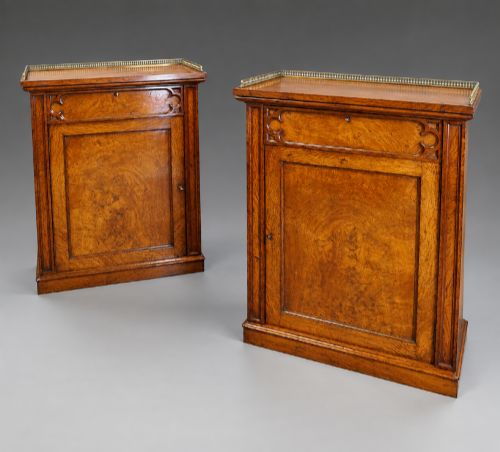
Cabinet makers constructed these large dining room pieces using solid mahogany and oak frameworks, applying carefully selected veneers like flame mahogany or pollard oak to the primary display surfaces. The timber was seasoned, cut, and laid over secondary woods to achieve deep visual grain movement without warping.
Brass fittings such as galleries, handles, and door mounts added functional accents, while carved details in certain Victorian examples displayed manual joinery skill. The heavy pedestals were often built as separate components joined to the backboard and central plinth for transport.
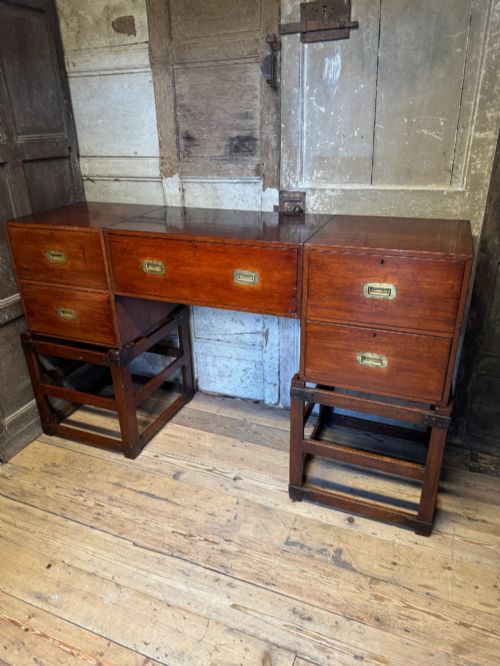
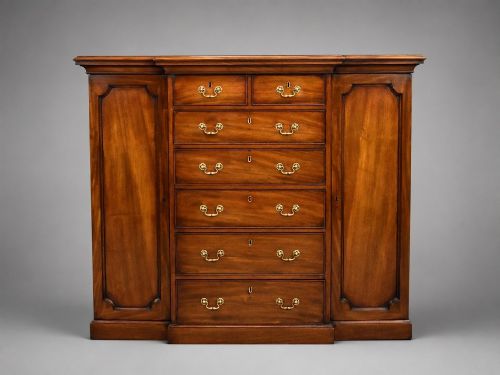
The inventory includes pedestal sideboards, chiffoniers, and campaign tables.
What Varies in Quality
The standard of timber selection separates simpler utility servers from exceptional reception room pieces. The best examples display matched flame mahogany veneers and thoughtful proportions that balance the heavy flanking pedestals.
Joinery execution and internal carcase construction dictate structural longevity in these heavy items. Subtle decorative elements like brass galleries, inlaid marquetry, and carved oak details distinguish workshops of higher ambition from standard production.
Hewetsons London·Gillows
The 19th Century Pedestal Sideboard Glossary
- Pedestal sideboard
- A dining room storage unit comprising two distinct cupboards or pedestals joined by a central sideboard base. These substantial pieces became popular in elite dining rooms during the Georgian and Regency eras.
- Flame mahogany veneer
- A thin slice of timber cut from where a branch joins the main trunk, producing a distinctive flickering flame pattern. Cabinet makers laid this timber over stable secondary woods.
- Brass gallery
- A low metal rail fitted along the rear top edge of a sideboard to prevent serving dishes from sliding off. These fixtures appear frequently on Regency and Georgian examples.
- Chiffonier
- A compact sideboard or low cabinet equipped with doors enclosing shelves, sometimes featuring a raised back. These pieces served similar dining or parlour functions to larger sideboards.
19th Century Pedestal Sideboard: Frequently Asked Questions
What is a pedestal sideboard?
A pedestal sideboard is a large dining room furniture piece featuring two distinct side cupboards connected by a central counter or table section. They were designed to hold serving dishes, cutlery, and wine bottles during formal meals.
The flanking pedestals often conceal bottle drawers, shelving, or cellarets lined for temperature control. Their substantial weight and architectural presence make them the visual anchor of a traditional dining room.
How do I date a sideboard?
Dating relies on examining the timber species, veneer patterns, structural hardware, and stylistic details such as brass galleries or carved oak motifs. Georgian and Regency pieces often show cleaner architectural lines, while Victorian examples frequently incorporate heavier carvings and panelled doors.
Secondary woods inside drawers and back panels also offer clues to the manufacturing decade. Comparing the construction methods to known dated examples helps narrow the period of origin.
Where were sideboards placed?
These pieces traditionally stood against the main wall of a dining room, positioned close to the dining table for efficient service during meals. Servants placed dishes, silver platters, and wine on the top surface before bringing them to diners.
Because of their grand scale and heavy pedestals, they required large rooms with adequate wall space. Today, they function similarly in large dining spaces or wide entrance halls.
How do I care for mahogany?
Maintenance involves dusting with a soft, dry cloth and avoiding placement near direct heat sources or strong sunlight that can dry out the timber. Applying quality beeswax periodically helps nourish the wood and maintain the natural lustre of the polish.
Moisture should be wiped away immediately to protect the delicate veneer surfaces. Proper indoor humidity prevents the solid timber and underlying veneers from splitting.